Ecological processes underlying the emergence of novel enzootic cycles: Arboviruses in the neotropics as a case study
- PMID: 32790670
- PMCID: PMC7425862
- DOI: 10.1371/journal.pntd.0008338
Ecological processes underlying the emergence of novel enzootic cycles: Arboviruses in the neotropics as a case study
Abstract
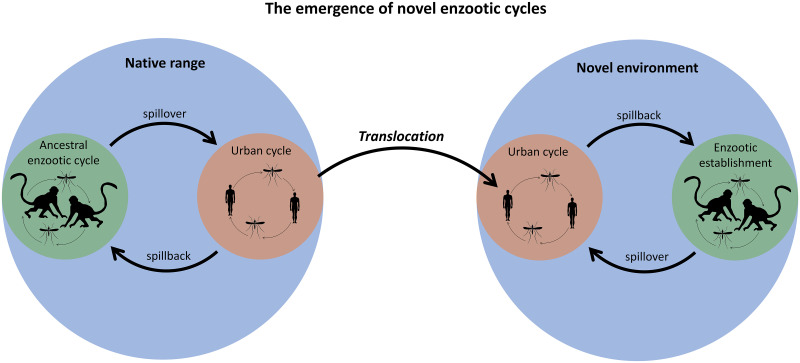
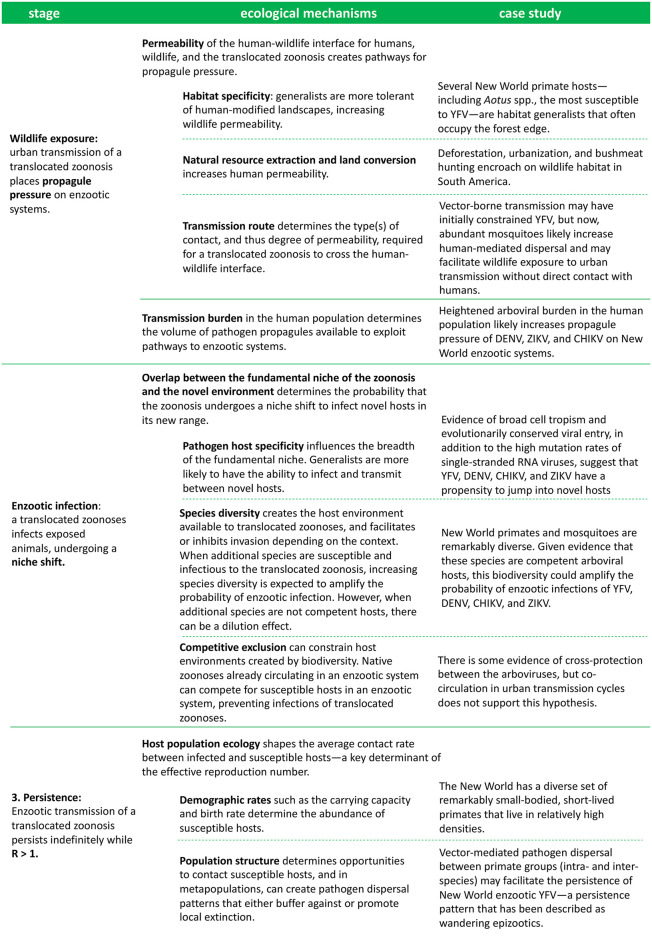
Pathogens originating from wildlife (zoonoses) pose a significant public health burden, comprising the majority of emerging infectious diseases. Efforts to control and prevent zoonotic disease have traditionally focused on animal-to-human transmission, or "spillover." However, in the modern era, increasing international mobility and commerce facilitate the spread of infected humans, nonhuman animals (hereafter animals), and their products worldwide, thereby increasing the risk that zoonoses will be introduced to new geographic areas. Imported zoonoses can potentially "spill back" to infect local wildlife-a danger magnified by urbanization and other anthropogenic pressures that increase contacts between human and wildlife populations. In this way, humans can function as vectors, dispersing zoonoses from their ancestral enzootic systems to establish reservoirs elsewhere in novel animal host populations. Once established, these enzootic cycles are largely unassailable by standard control measures and have the potential to feed human epidemics. Understanding when and why translocated zoonoses establish novel enzootic cycles requires disentangling ecologically complex and stochastic interactions between the zoonosis, the human population, and the natural ecosystem. In this Review, we address this challenge by delineating potential ecological mechanisms affecting each stage of enzootic establishment-wildlife exposure, enzootic infection, and persistence-applying existing ecological concepts from epidemiology, invasion biology, and population ecology. We ground our discussion in the neotropics, where four arthropod-borne viruses (arboviruses) of zoonotic origin-yellow fever, dengue, chikungunya, and Zika viruses-have separately been introduced into the human population. This paper is a step towards developing a framework for predicting and preventing novel enzootic cycles in the face of zoonotic translocations.
Conflict of interest statement
The authors have declared that no competing interests exist.
Figures
References
Publication types
MeSH terms
Grants and funding
LinkOut - more resources
Full Text Sources
Medical