


Molecular and epidemiological characterization of imported malaria cases in Chile
- PMID: 32792011
- PMCID: PMC7427082
- DOI: 10.1186/s12936-020-03353-y
Molecular and epidemiological characterization of imported malaria cases in Chile
Abstract
Background: Chile is one of the South American countries certified as malaria-free since 1945. However, the recent increase of imported malaria cases and the presence of the vector Anopheles pseudopunctipennis in previously endemic areas in Chile require an active malaria surveillance programme.
Methods: Specimens from 268 suspected malaria cases-all imported-collected between 2015 and 2018 at the Public Health Institute of Chile (ISP), were diagnosed by microscopy and positive cases were included for epidemiological analysis. A photo-induced electron transfer fluorogenic primer real-time PCR (PET-PCR) was used to confirm the presence of malaria parasites in available blood samples. Sanger sequencing of drug resistance molecular markers (pfk13, pfcrt and pfmdr1) and microsatellite (MS) analysis were performed in confirmed Plasmodium falciparum samples and results were related to origin of infection.
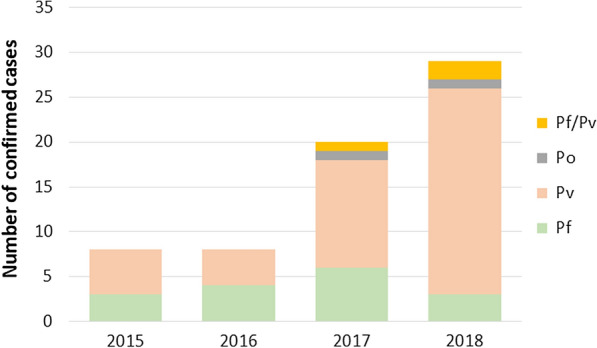
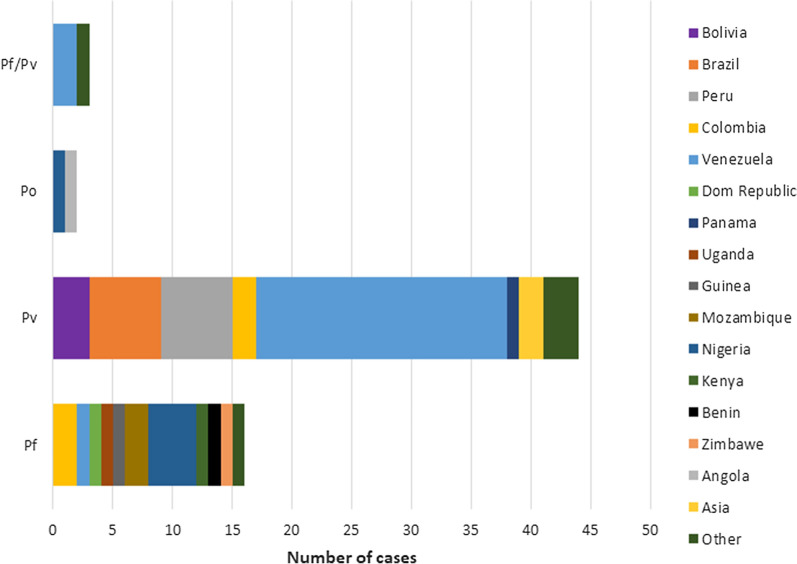
Results: Out of the 268 suspected cases, 65 were Plasmodium spp. positive by microscopy. A total of 63% of the malaria patients were male and 37% were female; 43/65 of the patients acquired infections in South American endemic countries. Species confirmation of available blood samples by PET-PCR revealed that 15 samples were positive for P. falciparum, 27 for Plasmodium vivax and 4 were mixed infections. The P. falciparum samples sequenced contained four mutant pfcrt genotypes (CVMNT, CVMET, CVIET and SVMNT) and three mutant pfmdr1 genotypes (Y184F/S1034C/N1042D/D1246Y, Y184F/N1042D/D1246Y and Y184F). MS analysis confirmed that all P. falciparum samples presented different haplotypes according to the suspected country of origin. Four patients with P. vivax infection returned to the health facilities due to relapses.
Conclusion: The timely detection of polymorphisms associated with drug resistance will contribute to understanding if current drug policies in the country are appropriate for treatment of imported malaria cases and provide information about the most frequent resistant genotypes entering Chile.
Keywords: Chile; Malaria; Microsatellites; PCR; Surveillance; pfcrt; pfmdr1.
Conflict of interest statement
The authors declare that they have no competing interests.
Figures
References
-
- WHO. Malaria. Geneva: World Health Organization. http://www.who.int/ith/diseases/malaria/en/. Accessed 10 Jan 2019.
-
- WHO. World malaria report 2018. Geneva: World Health Organization. https://apps.who.int/iris/bitstream/handle/10665/275867/9789241565653-en.... Accessed 5 Mar 2019.
-
- OPS/OMS. Situación de la Malaria en la Región de las Américas, 2000–2016. Organización Panamericana de la Salud, Organización Mundial de la Salud. https://www.paho.org/hq/index.php?option=com_docman&view=download&catego.... Accessed 10 Jan 2019.
-
- Grillet ME, Villegas L, Oletta JF, Tami A, Conn JE. Malaria in Venezuela requires response. Science. 2018;359:528. - PubMed
MeSH terms
LinkOut - more resources
Full Text Sources
Miscellaneous
