


Intraperitoneal and subcutaneous glucagon delivery in anaesthetized pigs: effects on circulating glucagon and glucose levels
- PMID: 32792580
- PMCID: PMC7426268
- DOI: 10.1038/s41598-020-70813-5
Intraperitoneal and subcutaneous glucagon delivery in anaesthetized pigs: effects on circulating glucagon and glucose levels
Abstract
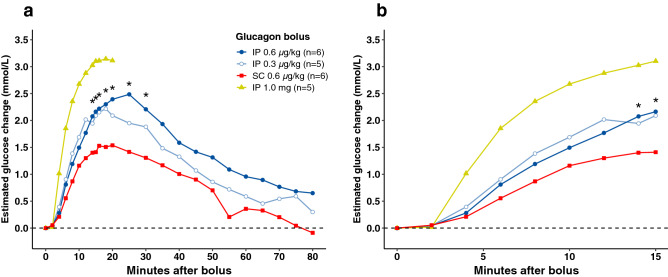
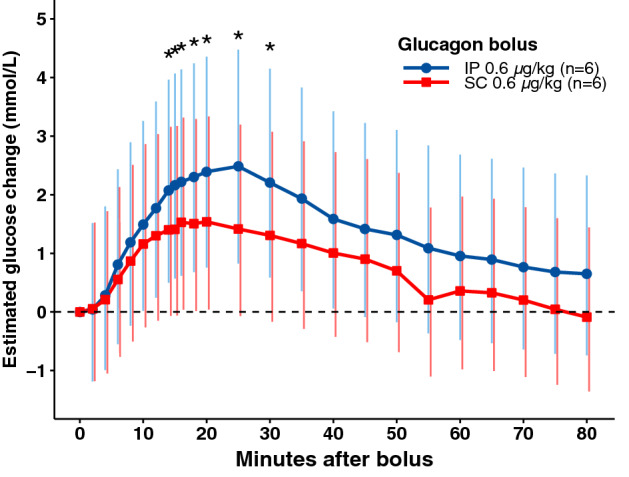
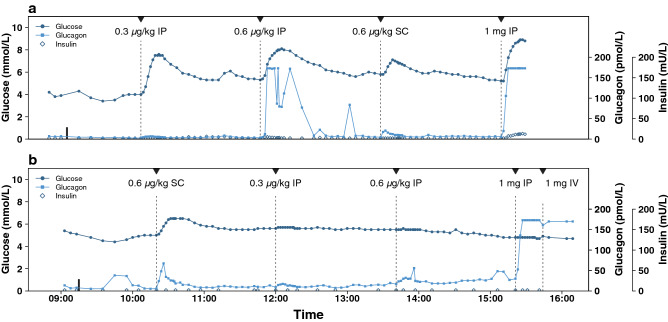
Glucagon is a pancreatic hormone and increases the blood glucose levels. It may be incorporated in a dual hormone artificial pancreas, a device to automatically and continuously control blood glucose levels of individuals with diabetes. Artificial pancreas systems have been developed for use in the subcutaneous tissue; however, the systems are not fully automated due to slow dynamics. The intraperitoneal space is therefore investigated as an alternative location for an artificial pancreas. Glucose dynamics after subcutaneous and intraperitoneal glucagon delivery in ten anaesthetized pigs were investigated. The pigs received intraperitoneal boluses of 0.3 µg/kg and 0.6 µg/kg and a subcutaneous bolus of 0.6 µg/kg in randomized order. They also received an intraperitoneal bolus of 1 mg given at the end of the experiments to test the remaining capacity of rapid glucose release. Six pigs were included in the statistical analysis. The intraperitoneal glucagon bolus of 0.6 µg/kg gave a significantly higher glucose response from 14 to 30 min compared with the subcutaneous bolus. The results indicate that glucagon induces a larger glucose response after intraperitoneal delivery compared with subcutaneous delivery and is encouraging for the incorporation of glucagon in an intraperitoneal artificial pancreas.
Conflict of interest statement
The authors declare no competing interests.
Figures
References
-
- Peters T, Haidar A. Dual-hormone artificial pancreas: benefits and limitations compared with single-hormone systems. Diabet Med. 2018;35:450–459. - PubMed
-
- Blauw H, Wendl I, DeVries JH, Heise T, Jax T. Pharmacokinetics and pharmacodynamics of various glucagon dosages at different blood glucose levels. Diabetes Obes. Metab. 2016;18:34–39. - PubMed
Publication types
MeSH terms
Substances
LinkOut - more resources
Full Text Sources
Other Literature Sources
Medical
