


Alzheimer's Therapeutic Strategy: Photoactive Platforms for Suppressing the Aggregation of Amyloid β Protein
- PMID: 32793545
- PMCID: PMC7385073
- DOI: 10.3389/fchem.2020.00509
Alzheimer's Therapeutic Strategy: Photoactive Platforms for Suppressing the Aggregation of Amyloid β Protein
Abstract
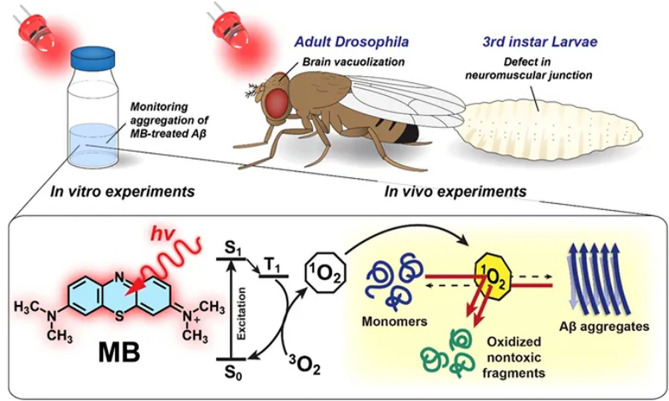
Neurodegenerative diseases such as Alzheimer's disease (AD) have become a public health problem. Progressive cerebral accumulation of amyloid protein (Aβ) was widely considered as the cause of AD. One promising strategy for AD preclinical study is to degrade and clear the deposited amyloid aggregates with β-sheet-rich secondary structure in the brain. Based on the requirement, photo-active materials with the specific excitation and the standardization of the photosensitizer preparation and application in clinics, have attracted increased attention in the study and treatment of neurodegenerative disease as a novel method termed as photodynamic therapy (PDT). This review will focus on the new photosensitizing materials and discuss the trend of PDT techniques for the possible application in the treatment strategy of amyloid-related diseases.
Keywords: amyloid protein; neurodegenerative disease; phostosensitive agent; photocatalyst; photodynamic therapy.
Copyright © 2020 Li, Wang and Liu.
Figures
References
-
- Ahmed M. H., Keyes T. E., Byrne J. A. (2013). The photocatalytic inactivation effect of Ag-TiO2 on β-amyloid peptide (1-42). J. Photochem. Photobiol A. 254, 1–11. 10.1016/j.jphotochem.2012.12.019 - DOI
Publication types
LinkOut - more resources
Full Text Sources
