


Sodium-glucose cotransporter-2 inhibitors: Understanding the mechanisms for therapeutic promise and persisting risks
- PMID: 32796035
- PMCID: PMC7573269
- DOI: 10.1074/jbc.REV120.008387
Sodium-glucose cotransporter-2 inhibitors: Understanding the mechanisms for therapeutic promise and persisting risks
Abstract
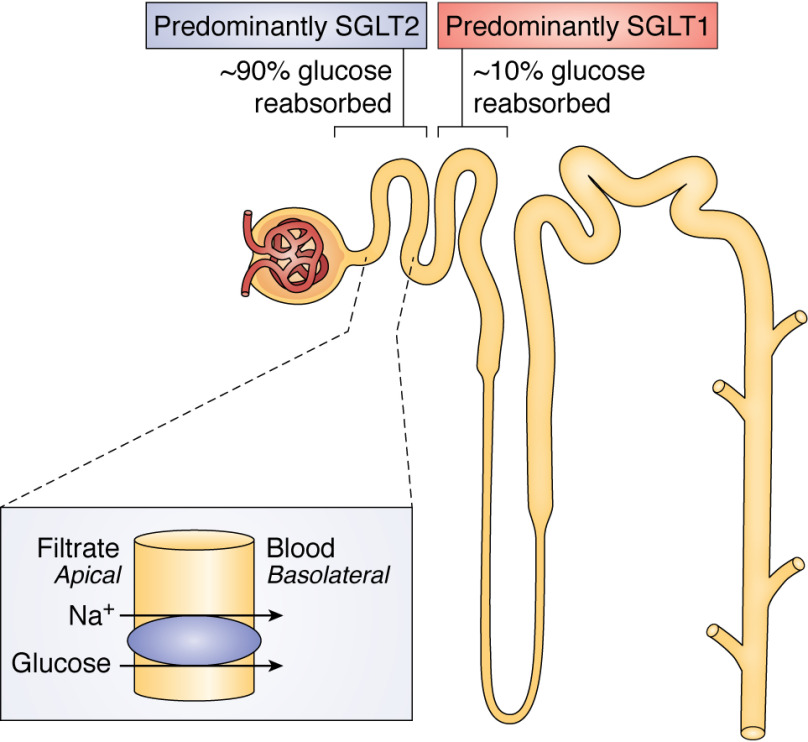
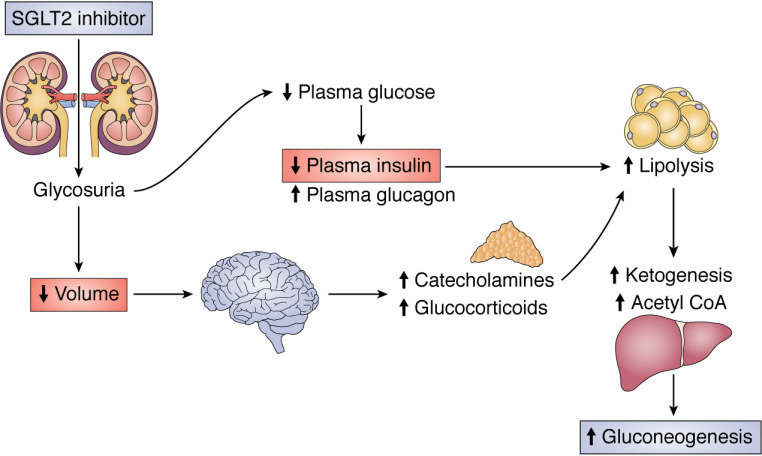
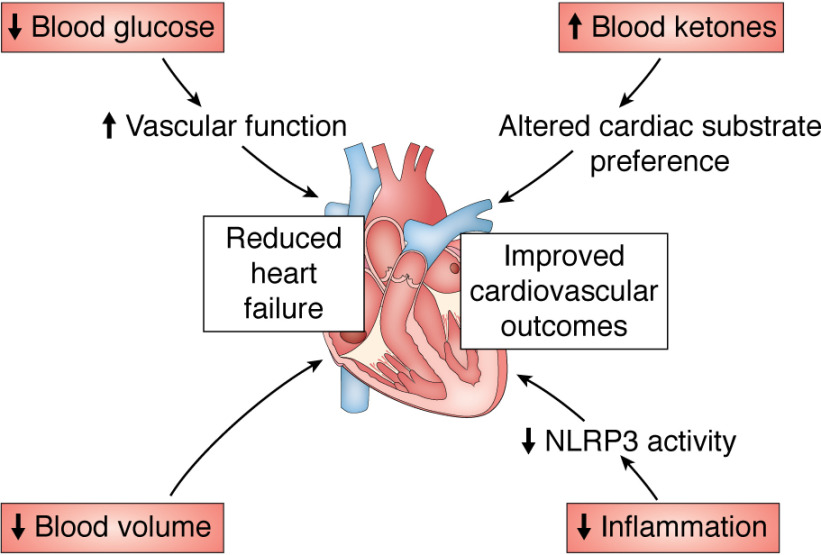
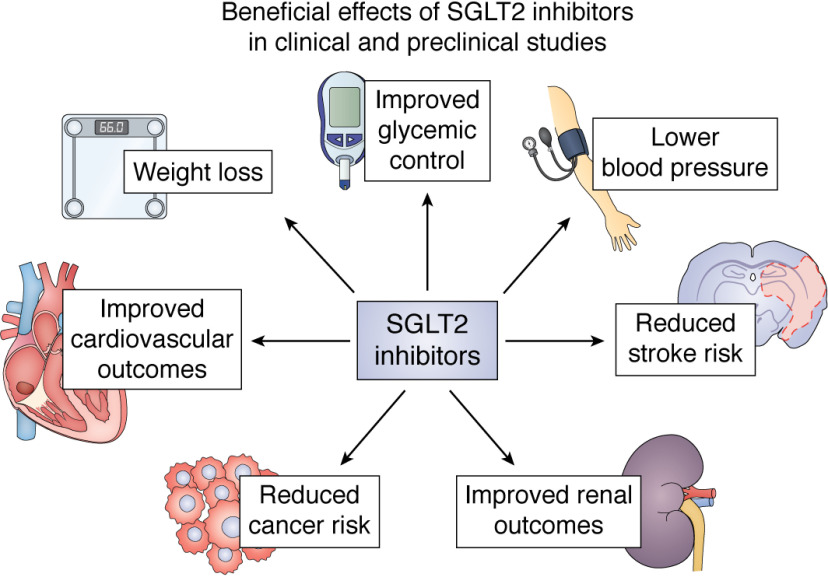
In a healthy person, the kidney filters nearly 200 g of glucose per day, almost all of which is reabsorbed. The primary transporter responsible for renal glucose reabsorption is sodium-glucose cotransporter-2 (SGLT2). Based on the impact of SGLT2 to prevent renal glucose wasting, SGLT2 inhibitors have been developed to treat diabetes and are the newest class of glucose-lowering agents approved in the United States. By inhibiting glucose reabsorption in the proximal tubule, these agents promote glycosuria, thereby reducing blood glucose concentrations and often resulting in modest weight loss. Recent work in humans and rodents has demonstrated that the clinical utility of these agents may not be limited to diabetes management: SGLT2 inhibitors have also shown therapeutic promise in improving outcomes in heart failure, atrial fibrillation, and, in preclinical studies, certain cancers. Unfortunately, these benefits are not without risk: SGLT2 inhibitors predispose to euglycemic ketoacidosis in those with type 2 diabetes and, largely for this reason, are not approved to treat type 1 diabetes. The mechanism for each of the beneficial and harmful effects of SGLT2 inhibitors-with the exception of their effect to lower plasma glucose concentrations-is an area of active investigation. In this review, we discuss the mechanisms by which these drugs cause euglycemic ketoacidosis and hyperglucagonemia and stimulate hepatic gluconeogenesis as well as their beneficial effects in cardiovascular disease and cancer. In so doing, we aim to highlight the crucial role for selecting patients for SGLT2 inhibitor therapy and highlight several crucial questions that remain unanswered.
Keywords: SGLT2 inhibitor; cancer; counterregulation; dehydration; diabetes; diabetic ketoacidosis; euglycemic-ketoacidosis; glucagon; gluconeogenesis; glucose; heart failure; insulinopenia; ketogenesis; lipolysis; type 1 diabetes; type 2 diabetes.
© 2020 Perry and Shulman.
Conflict of interest statement
Conflict of interest—G. I. S. serves on the advisory boards for Merck, AstraZeneca, and Janssen Research and Development and receives investigator-initiated support from Merck and AstraZeneca, who manufacture SGLT2 inhibitors. G. I. S. is also a Scientific Co-Founder of TLC, Inc.
Figures
References
Publication types
MeSH terms
Substances
Grants and funding
LinkOut - more resources
Full Text Sources
Other Literature Sources
Medical
