


The prospects of targeting DUX4 in facioscapulohumeral muscular dystrophy
- PMID: 32796277
- PMCID: PMC7735392
- DOI: 10.1097/WCO.0000000000000849
The prospects of targeting DUX4 in facioscapulohumeral muscular dystrophy
Abstract
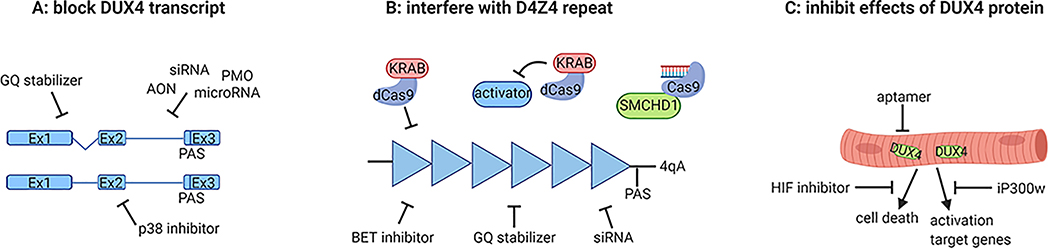
Purpose of review: Facioscapulohumeral muscular dystrophy (FSHD) is a neuromuscular disorder, which is caused by incomplete repression of the transcription factor double homeobox 4 (DUX4) in skeletal muscle. To date, there is no DUX4-targeting treatment to prevent or delay disease progression. In the present review, we summarize developments in therapeutic strategies with the focus on inhibiting DUX4 and DUX4 target gene expression.
Recent findings: Different studies show that DUX4 and its target genes can be repressed with genetic therapies using diverse strategies. Additionally, different small compounds can reduce DUX4 and its target genes in vitro and in vivo.
Summary: Most studies that show DUX4 repression by genetic therapies have only been tested in vitro. More efforts should be made to test them in vivo for clinical translation. Several compounds have been shown to prevent DUX4 and target gene expression in vitro and in vivo. However, their efficiency and specificity has not yet been shown. With emerging clinical trials, the clinical benefit from DUX4 repression in FSHD will likely soon become apparent.
Conflict of interest statement
Conflicts of interest
Silvère M. van der Maarel is co-inventor on several FSHD-related patent applications and consultant for Fulcrum Therapeutics.
Figures
References
Publication types
MeSH terms
Substances
Grants and funding
LinkOut - more resources
Full Text Sources
Other Literature Sources
Research Materials
