


High Throughput Molecular Characterization of Normal Karyotype Acute Myeloid Leukemia in the Context of the Prospective Trial 02/06 of the Northern Italy Leukemia Group (NILG)
- PMID: 32796597
- PMCID: PMC7464263
- DOI: 10.3390/cancers12082242
High Throughput Molecular Characterization of Normal Karyotype Acute Myeloid Leukemia in the Context of the Prospective Trial 02/06 of the Northern Italy Leukemia Group (NILG)
Abstract
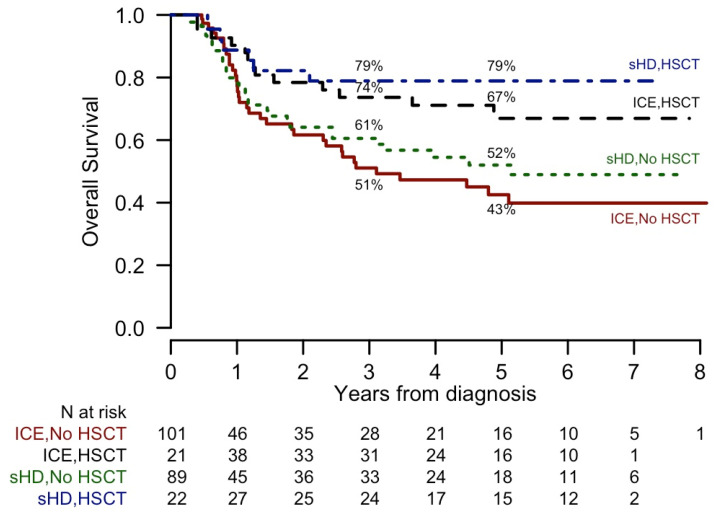
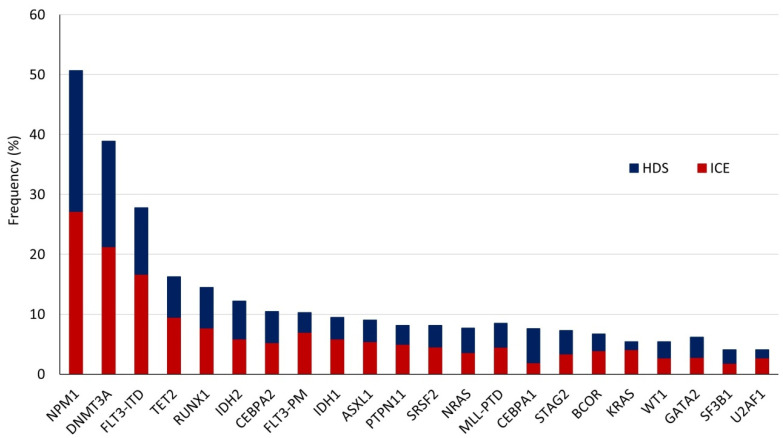
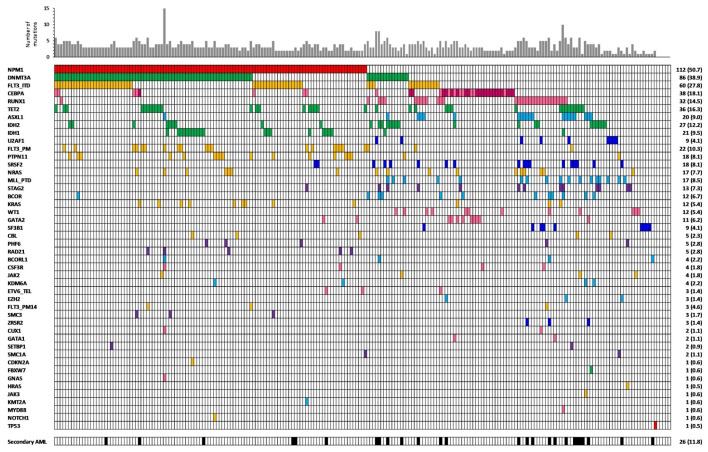
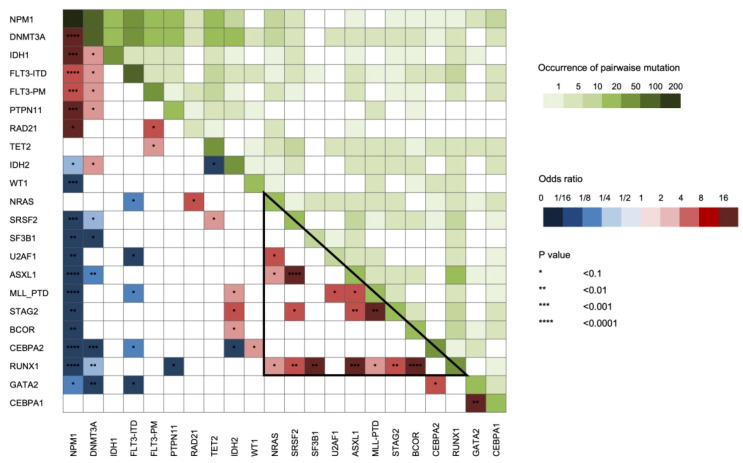
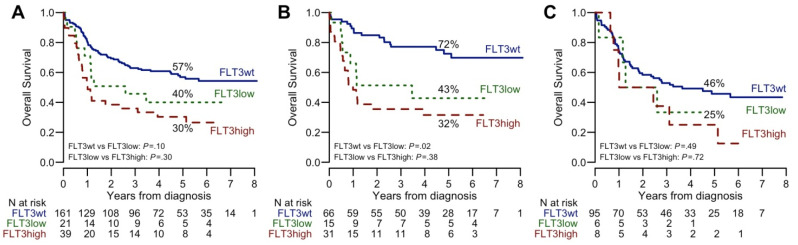
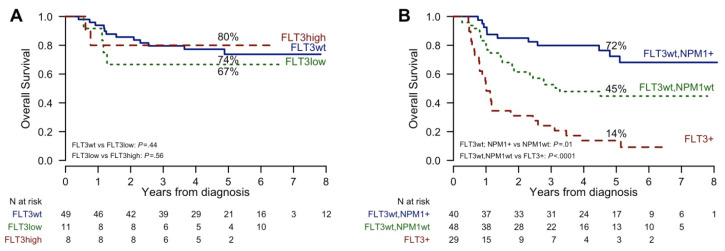
By way of a Next-Generation Sequencing NGS high throughput approach, we defined the mutational profile in a cohort of 221 normal karyotype acute myeloid leukemia (NK-AML) enrolled into a prospective randomized clinical trial, designed to evaluate an intensified chemotherapy program for remission induction. NPM1, DNMT3A, and FLT3-ITD were the most frequently mutated genes while DNMT3A, FLT3, IDH1, PTPN11, and RAD21 mutations were more common in the NPM1 mutated patients (p < 0.05). IDH1 R132H mutation was strictly associated with NPM1 mutation and mutually exclusive with RUNX1 and ASXL1. In the whole cohort of NK-AML, no matter the induction chemotherapy used, by multivariate analysis, the achievement of complete remission was negatively affected by the SRSF2 mutation. Alterations of FLT3 (FLT3-ITD) and U2AF1 were associated with a worse overall and disease-free survival (p < 0.05). FLT3-ITD positive patients who proceeded to alloHSCT had a survival probability similar to FLT3-ITD negative patients and the transplant outcome was no different when comparing high and low-AR-FLT3-ITD subgroups in terms of both OS and DFS. In conclusion, a comprehensive molecular profile for NK-AML allows for the identification of genetic lesions associated to different clinical outcomes and the selection of the most appropriate and effective treatment strategies, including stem cell transplantation and targeted therapies.
Keywords: Acute Myeloid Leukemia; NGS; molecular marker.
Conflict of interest statement
The authors declare no conflict of interest.
Figures
References
-
- Döhner H., Estey E., Grimwade D., Amadori S., Appelbaum F.R., Büchner T., Dombret H., Ebert B.L., Fenaux P., Larson R.A., et al. Diagnosis and management of AML in adults: 2017 ELN recommendations from an international expert panel. Blood. 2017;129:424–447. doi: 10.1182/blood-2016-08-733196. - DOI - PMC - PubMed
-
- Patel J.P., Gonen M., Figueroa M.E., Fernández H., Sun Z., Racevskis J., Van Vlierberghe P., Dolgalev I., Thomas S., Aminova O., et al. Prognostic Relevance of Integrated Genetic Profiling in Acute Myeloid Leukemia. N. Engl. J. Med. 2012;366:1079–1089. doi: 10.1056/NEJMoa1112304. - DOI - PMC - PubMed
Grants and funding
LinkOut - more resources
Full Text Sources
Research Materials
Miscellaneous
