Clinical and Prodromal Ocular Symptoms in Coronavirus Disease: A Systematic Review and Meta-Analysis
- PMID: 32797198
- PMCID: PMC7441339
- DOI: 10.1167/iovs.61.10.29
Clinical and Prodromal Ocular Symptoms in Coronavirus Disease: A Systematic Review and Meta-Analysis
Abstract
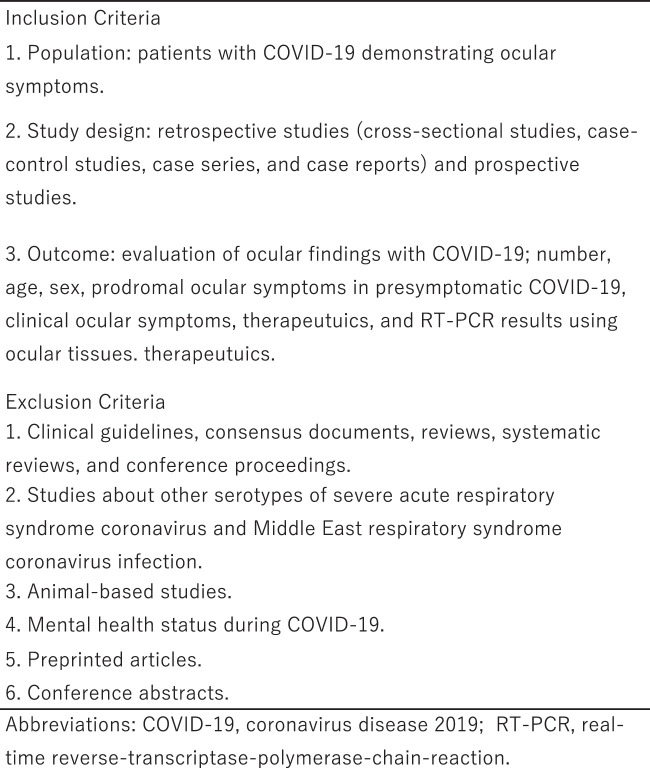
Purpose: This systematic review aimed to determine currently reported clinical and prodromal ocular symptoms in patients with coronavirus disease 2019 (COVID-19).
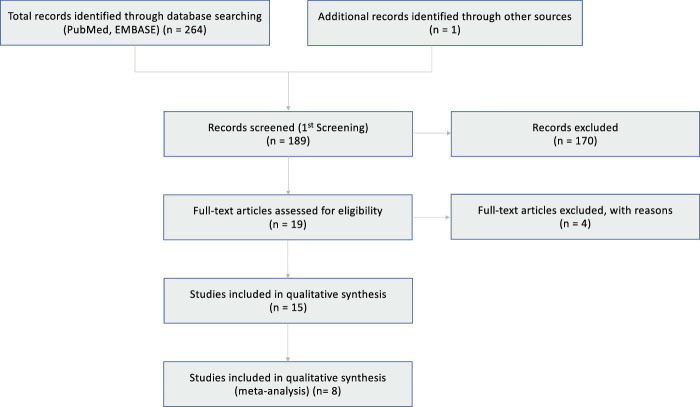
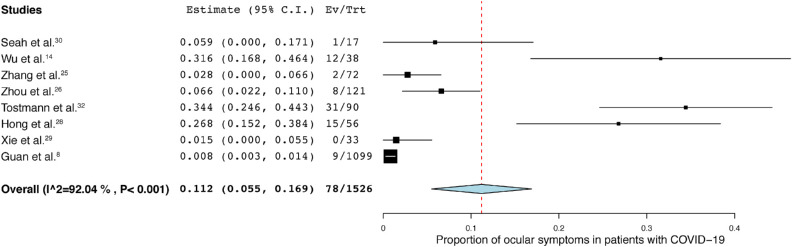
Methods: An online article search was performed in PubMed and EMBASE. Altogether 15 studies (retrospective, prospective, or case studies) involving 1533 patients with COVID-19, reporting on ocular symptoms, and with outcome data available were identified. The Preferred Reporting Items for Systematic Reviews and Meta-Analyses reporting guidelines were followed. Study-specific estimates (incidence rates of ocular symptoms in patients with COVID-19) of cases were combined using one-group meta-analysis in a random-effects model.
Results: Of all included studies, 11.2% (95% confidence interval, 5.5-16.9; 78/1526 cases) reported ocular symptoms. The most common ocular finding was conjunctivitis. Prodromal ocular symptoms occurred in 12.5% (13/104 cases) of patients with COVID-19. Positive real-time polymerase chain reaction results were obtained for 16.7% (10/60 cases) of conjunctival samples and 0% (0/17 cases) of tear samples. Twelve ocular conjunctival swab samples tested positive for SARS-CoV-2. Ten cases were from subjects showing ocular symptoms (16.7%, 10/60 cases), and the remaining two cases were from subjects without ocular manifestation (1.8%, 2/113 cases). Limitations included the short study period, small sample size, findings were limited to the Asian population, only seven articles included ophthalmologic examination details, and there is currently no consensus on COVID-19 management.
Conclusions: Ocular symptoms may occur in the presymptomatic phase as a prodromal symptom (12.5%, 13/104 cases), suggesting the possibility of viral transmission from the conjunctiva.
Conflict of interest statement
Disclosure:
Figures
References
-
- World Health Organization (WHO). WHO Director-General's remarks at the media briefing on 2019-nCoV on 11 February 2020. Geneva: World Health Organization; Available at: https://www.who.int/dg/speeches/detail/who-director-general-s-remarks-at.... Accessed June 10, 2020.
-
- COVID, CSSE. Dashboard by the Center for Systems Science and Engineering (CSSE) at Johns Hopkins University (JHU). 2020. (19)
Publication types
MeSH terms
Substances
LinkOut - more resources
Full Text Sources
Miscellaneous