


Protecting healthcare workers during COVID-19 pandemic with nanotechnology: A protocol for a new device from Egypt
- PMID: 32798183
- PMCID: PMC7396966
- DOI: 10.1016/j.jiph.2020.07.015
Protecting healthcare workers during COVID-19 pandemic with nanotechnology: A protocol for a new device from Egypt
Abstract
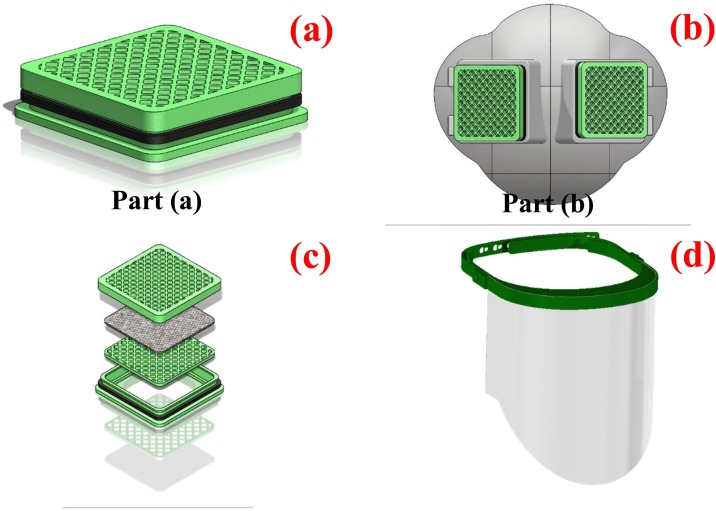
The outbreak of the coronavirus disease 2019 (COVID-19) caused by severe acute respiratory syndrome coronavirus 2 (SARS-CoV-2) is thought to have occurred first in Wuhan, China in December 2019, before spreading to over 120 countries in the months that followed. It was declared a "public health emergency of international concern" by the World Health Organization on January 31, 2020 and recognized as a pandemic on March 11, 2020. The primary route of SARS-CoV-2 transmission from human to human is through inhalation of respiratory droplets. Devising protective technologies for stopping the spread of the droplets of aerosol containing the viral particles is a vital requirement to curb the ongoing outbreak. However, the current generations of protective respirator masks in use are noted for their imperfect design and there is a need to develop their more advanced analogues, with higher blockage efficiency and the ability to deactivate the trapped bacteria and viruses. It is likely that one such design will be inspired by nanotechnologies. Here we describe a new design from Egypt, utilizing a reusable, recyclable, customizable, antimicrobial and antiviral respirator facial mask feasible for mass production. The novel design is based on the filtration system composed of a nanofibrous matrix of polylactic acid and cellulose acetate containing copper oxide nanoparticles and graphene oxide nanosheets and produced using the electrospinning technique. Simultaneously, the flat pattern fabricated from a thermoplastic composite material is used to provide a solid fit with the facial anatomy. This design illustrates an effort made in a developing setting to provide innovative solutions for combating the SARS-CoV-2 pandemic of potentially global significance.
Keywords: COVID-19; Cellulose acetate; Face mask; Nanofiber; Polylactic acid.
Copyright © 2020. Published by Elsevier Ltd.
Figures
References
MeSH terms
Substances
LinkOut - more resources
Full Text Sources
Medical
Miscellaneous
