


Laboratory findings in COVID-19 diagnosis and prognosis
- PMID: 32798514
- PMCID: PMC7426219
- DOI: 10.1016/j.cca.2020.08.019
Laboratory findings in COVID-19 diagnosis and prognosis
Abstract
Background: Since its first description, severe acute respiratory syndrome coronavirus 2 (SARS-CoV-2), formerly known as 2019-nCoV, has attracted tremendous attention in a short period of time as the death toll and number of confirmed cases grows unceasingly.
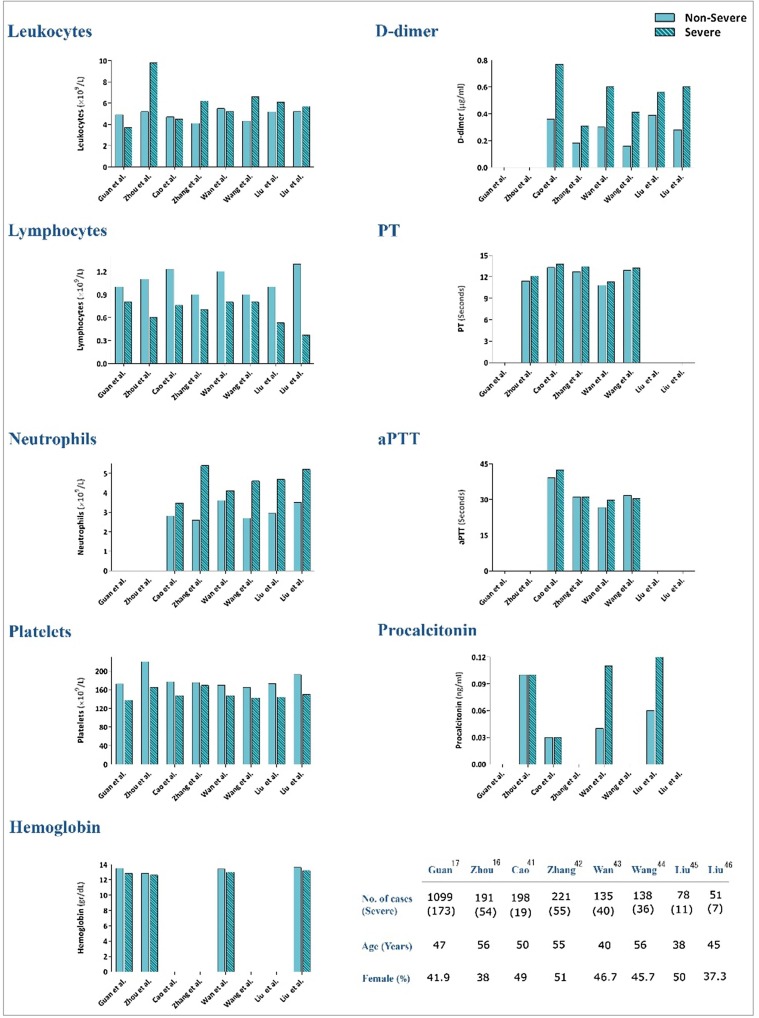
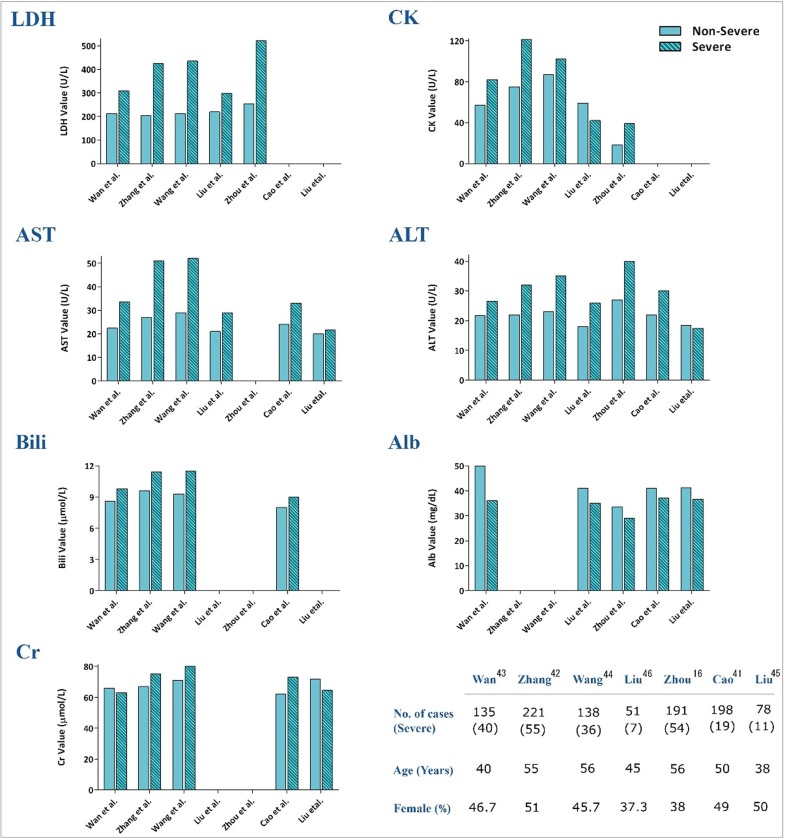
Methods: To provide a better understanding of the importance of abnormal laboratory findings in COVID-19 diagnosis and prognosis, we searched the Scopus, PubMed, and Web of Science medical databases and selected 19 articles (totaling 2988 patients, 484 of whom [16.1%] had severe disease) that reported panels of laboratory examinations in patients with COVID-19.
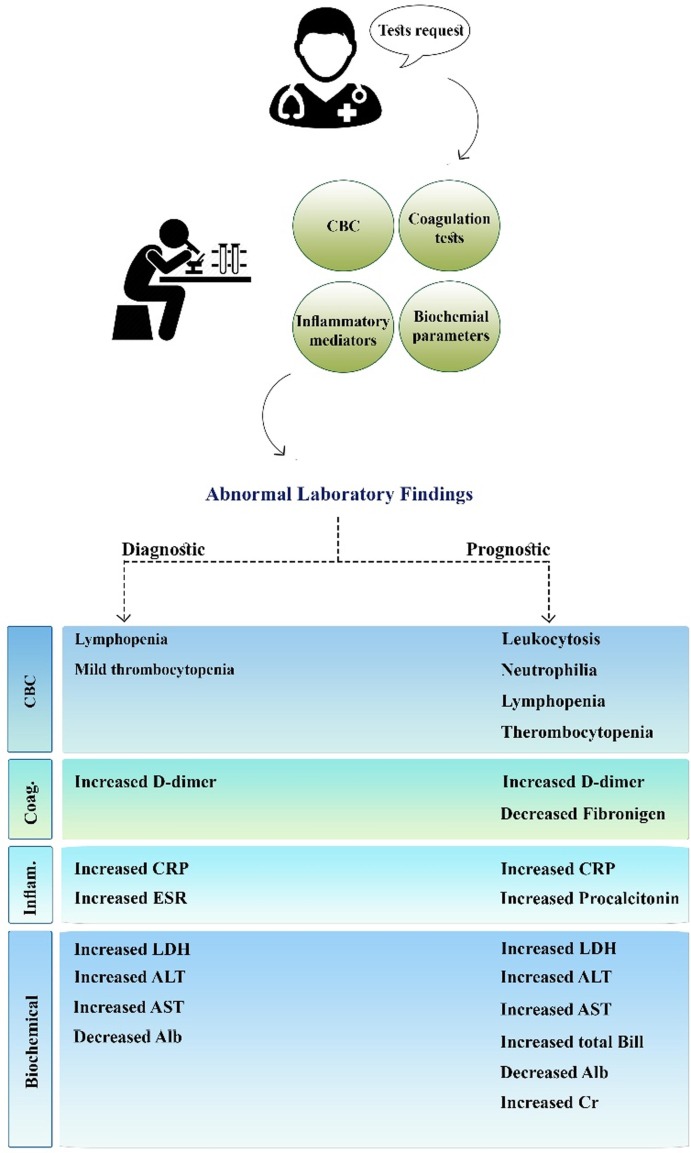
Results: Although in vitro diagnostics, primarily using PCR- and ELISA-based methods, efficiently contribute to the etiological identification of SARS-CoV-2 infection, we suggest that laboratory medicine may also be of significant assistance when differentiating between severe and non-severe COVID-19.
Conclusion: When we wrote this article, our ability to provide a definitive conclusion may have been adversely affected by some limitations, such as the low sample size, differently applied methods, dissimilar reference ranges, non-synchronized representations of results, and variety of the patients' panels. Despite the limitations, the analysis of the current scientific literature demonstrates the value of laboratory parameters as simple, rapid, and cost-effective biomarkers in COVID-19 patients.
Keywords: COVID-19; Coronavirus; Diagnosis; Laboratory findings; Prognosis; SARS-CoV-2.
Copyright © 2020 Elsevier B.V. All rights reserved.
Conflict of interest statement
Declaration of Competing Interest The authors declare no potential conflicts of interest concerning the research, authorship, and/or publication of this article.
Figures
References
-
- Wu Z., McGoogan J.M. Characteristics of and important lessons from the coronavirus disease 2019 (COVID-19) outbreak in China: summary of a report of 72 314 cases from the Chinese Center for Disease Control and Prevention. JAMA. 2020 - PubMed
-
- Lippi G., Plebani M. Laboratory abnormalities in patients with COVID-2019 infection. Clin. Chem. Lab. Med. (CCLM) 2020;1(ahead-of-print) - PubMed
Publication types
MeSH terms
LinkOut - more resources
Full Text Sources
Medical
Miscellaneous
