Review
. 2020 Oct 15:288:198118.
doi: 10.1016/j.virusres.2020.198118. Epub 2020 Aug 13.

Swine influenza virus: Current status and challenge

Affiliations
Review

Swine influenza virus: Current status and challenge

Wenjun Ma. Virus Res. .

Abstract

Since swine influenza virus was first isolated in 1930, it has become endemic in pigs worldwide. Although large amount of swine influenza vaccines has been used in swine industry, swine influenza still cannot be efficiently controlled and has been an important economic disease for swine industry. The high diversity and varied distribution of different subtypes and genotypes of swine influenza viruses circulating in pigs globally is a major challenge to produce broadly effective vaccines and control disease. Importantly, swine influenza virus is able to cross species barrier to infect humans and even caused influenza pandemic in 2009. Herein, current status and challenge of swine influenza viruses is reviewed and discussed.

Keywords: Challenge; Current status; Swine influenza virus.


Figures

Figure 1:
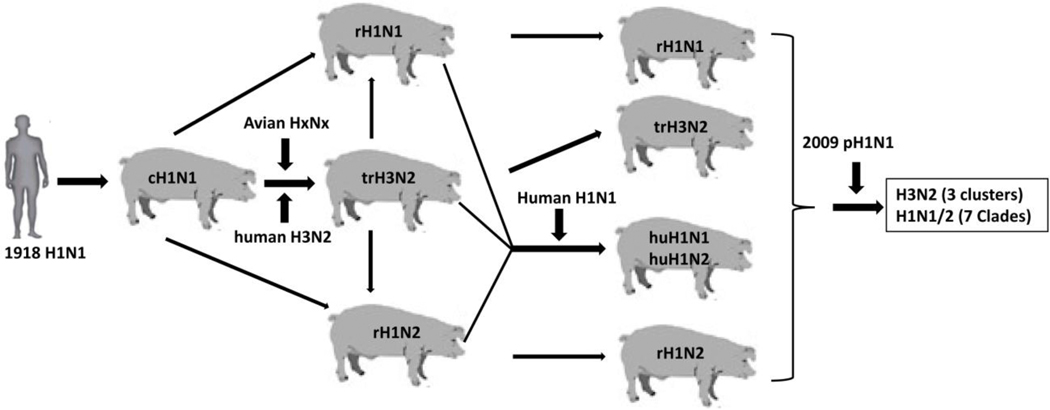
Figure 1:. Major subtypes and genotype of swine influenza viruses in North America.
The 1918 Spanish flu H1N1 virus was transmitted to pigs and evolved into the cH1N1 swine virus. Introductions of avian and human seasonal influenza viruses into the swine herds resulted in generation triple reassortant H1 and H3 viruses that are maintained in pigs. After 2009, reassortment between 2009 pH1N1 and endemic triple reassortant H1 and H3 viruses generated different genotypes of viruses that are circulating in swine herds in North America.
Figure 2:
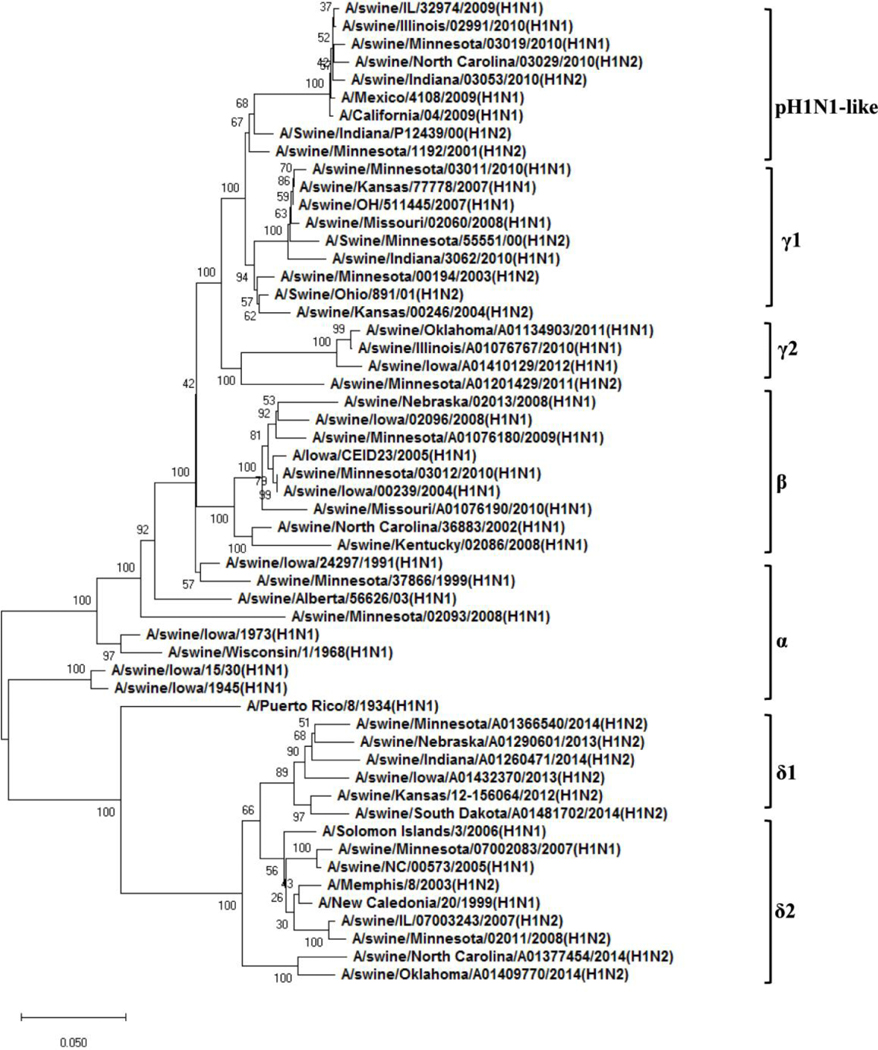
Figure 2:. Phylogenetic trees of H1 and H3 genes of swine influenza viruses in North America.
A) Phylogenetic tree of HA of H1 viruses; B) Phylogenetic tree of HA of H3 viruses. The trees were generated by software MEGA 4.1 with the distance-based neighbor-joining method. The reliability of the tree was assessed by bootstrap analysis with 1,000 replications. The H1 viruses have at least 7 genetically and antigenically distinct clades and the H3 viruses have 4 antigenically distinct clusters. The cluster IV H3 viruses have several genetically different (a-f) clades.
Figure 2:
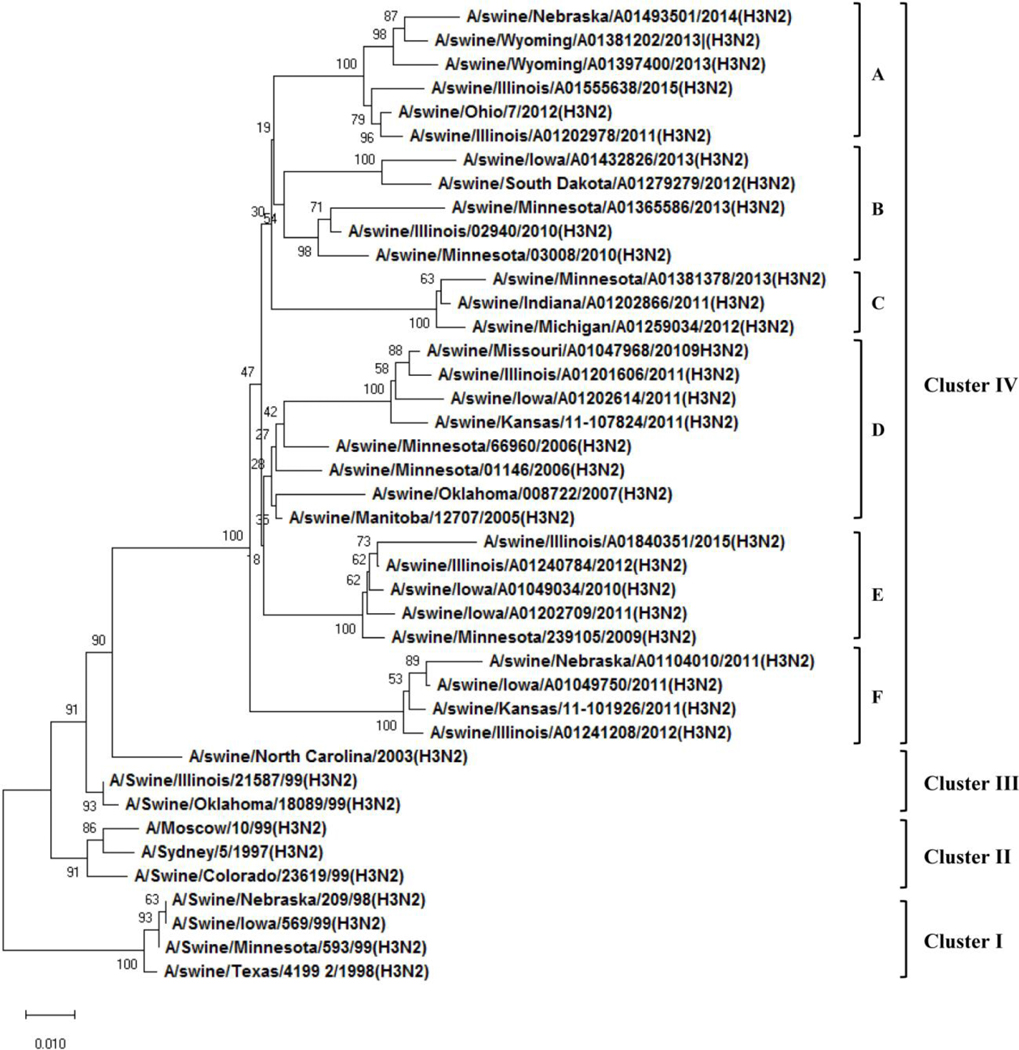
Figure 2:. Phylogenetic trees of H1 and H3 genes of swine influenza viruses in North America.
A) Phylogenetic tree of HA of H1 viruses; B) Phylogenetic tree of HA of H3 viruses. The trees were generated by software MEGA 4.1 with the distance-based neighbor-joining method. The reliability of the tree was assessed by bootstrap analysis with 1,000 replications. The H1 viruses have at least 7 genetically and antigenically distinct clades and the H3 viruses have 4 antigenically distinct clusters. The cluster IV H3 viruses have several genetically different (a-f) clades.
Figure 3:
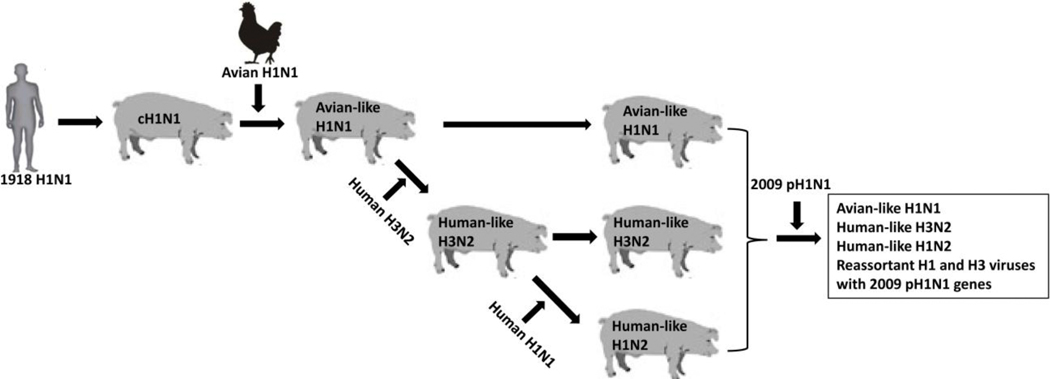
Figure 3:. Major subtypes and genotype of swine influenza viruses in Europe.
A complete avian-like H1N1 virus emerged and became to be dominant virus in pigs after the cH1N1 has been circulated in pigs for several decades. Transmission of human seasonal H3N2 and H1N1 viruses to pigs resulted in human-like H3N2 and H1N2 viruses. Multiple genotype viruses have been produced by reassortment between 2009 pH1N1 and endemic swine viruses with introduction of 2009 pH1N1 into European swine herds.
Figure 4:
Figure 4:. Major subtypes and genotype of swine influenza viruses in Asia.
With introduction of the human H3N2 virus into pigs, reassortant H1N2 and human-like H3N2 virus were produced by reassorting with the endemic cH1N1 virus, the latter one died out from the swine herds. Later, the Eurasian avian-like H1N1 and North American triple reassortant H1 and H3 swine viruses were introduced into the pigs in Asian countries by importing breeding pigs and became prevalent and co-circulated with the endemic viruses in pigs. Endemic H1 and H3 viruses as well as multiple reassortant viruses produced by 2009 pH1N1 reassorting with endemic swine viruses were detected and circulated in pigs after 2009.

References

    1. Alexander DJ and Brown IH (2000) Recent zoonoses caused by influenza A viruses. Rev Sci Tech 19(1), 197–225. - PubMed
    1. Anderson TK, Chang J, Arendsee ZW, Venkatesh D, Souza CK, Kimble JB, Lewis NS, Davis CT and Vincent AL (2020) Swine Influenza A Viruses and the Tangled Relationship with Humans. Cold Spring Harb Perspect Med. - PMC - PubMed
    1. Anderson TK, Nelson MI, Kitikoon P, Swenson SL, Korslund JA and Vincent AL (2013) Population dynamics of cocirculating swine influenza A viruses in the United States from 2009 to 2012. Influenza Other Respir Viruses 7 Suppl 4, 42–51. - PMC - PubMed
    1. Arikawa J, Yamane N, Odagiri T. and Ishida N. (1979) Serological evidence of H1 influenza virus infection among Japanese hogs. Acta Virol 23(6), 508–11. - PubMed
    1. Arikawa J, Yamane N, Totsukawa K. and Ishida N. (1982) The follow-up study of swine and Hong Kong influenza virus infection among Japanese hogs. Tohoku J Exp Med 136(4), 353–8. - PubMed

Publication types

MeSH terms

Substances

LinkOut - more resources