. 2020 Dec;88(6):1065-1076.
doi: 10.1002/ana.25874. Epub 2020 Sep 29.

Remote Blood Biomarkers of Longitudinal Cognitive Outcomes in a Population Study

Affiliations

Remote Blood Biomarkers of Longitudinal Cognitive Outcomes in a Population Study

Kumar B Rajan et al. Ann Neurol. 2020 Dec.

Abstract

Objective: The longitudinal association of the blood biomarkers total tau (t-tau), neurofilament light (Nf-L), and glial fibrillary acidic protein (GFAP) with common sporadic Alzheimer disease (AD) and cognitive decline is not established.

Methods: Using a single molecule array technology, ultrasensitive immunoassays for serum concentrations of t-tau, Nf-L, and GFAP were measured in a population sample of 1,327 participants (60% African Americans and women) who had a clinical evaluation for AD, had completed in-home cognitive assessments, and had undergone 1.5T structural magnetic resonance imaging.

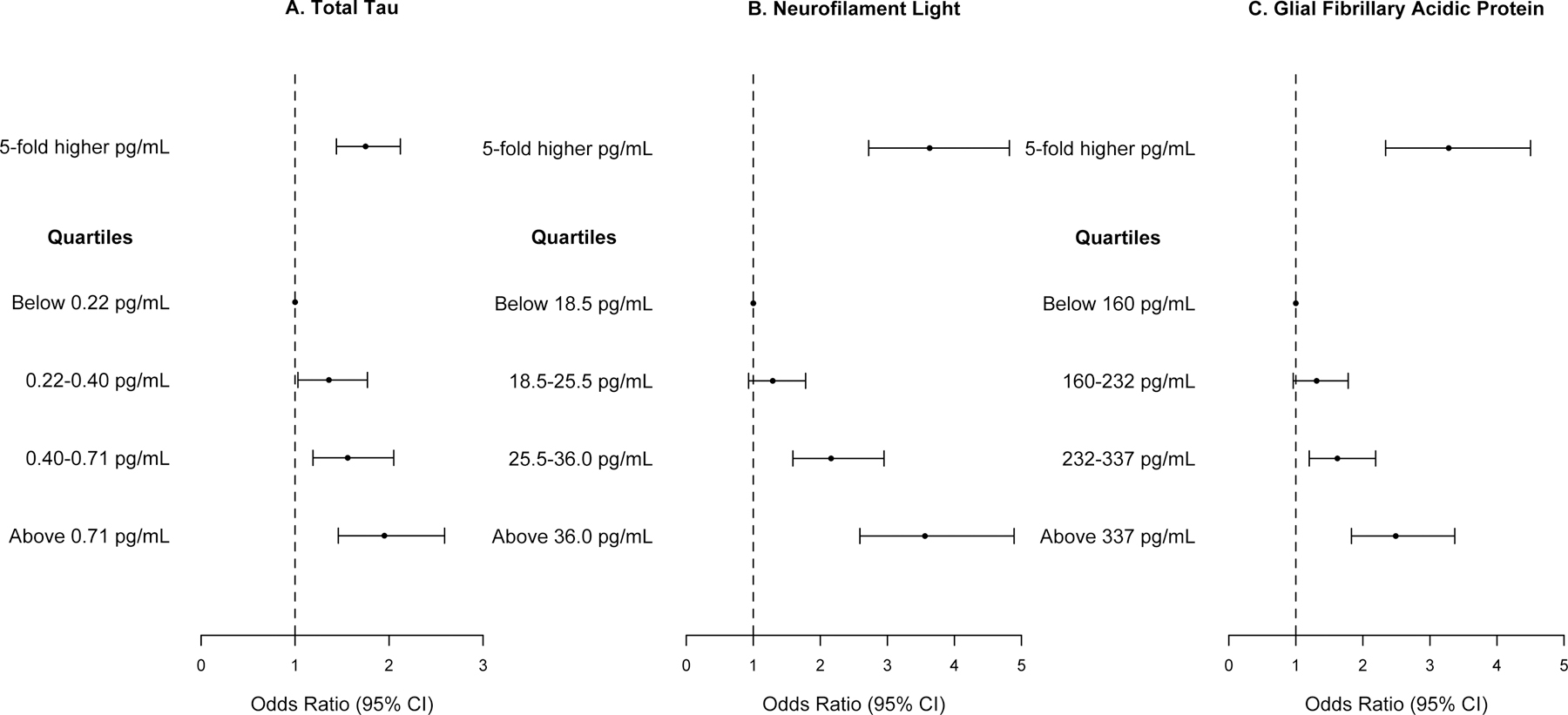
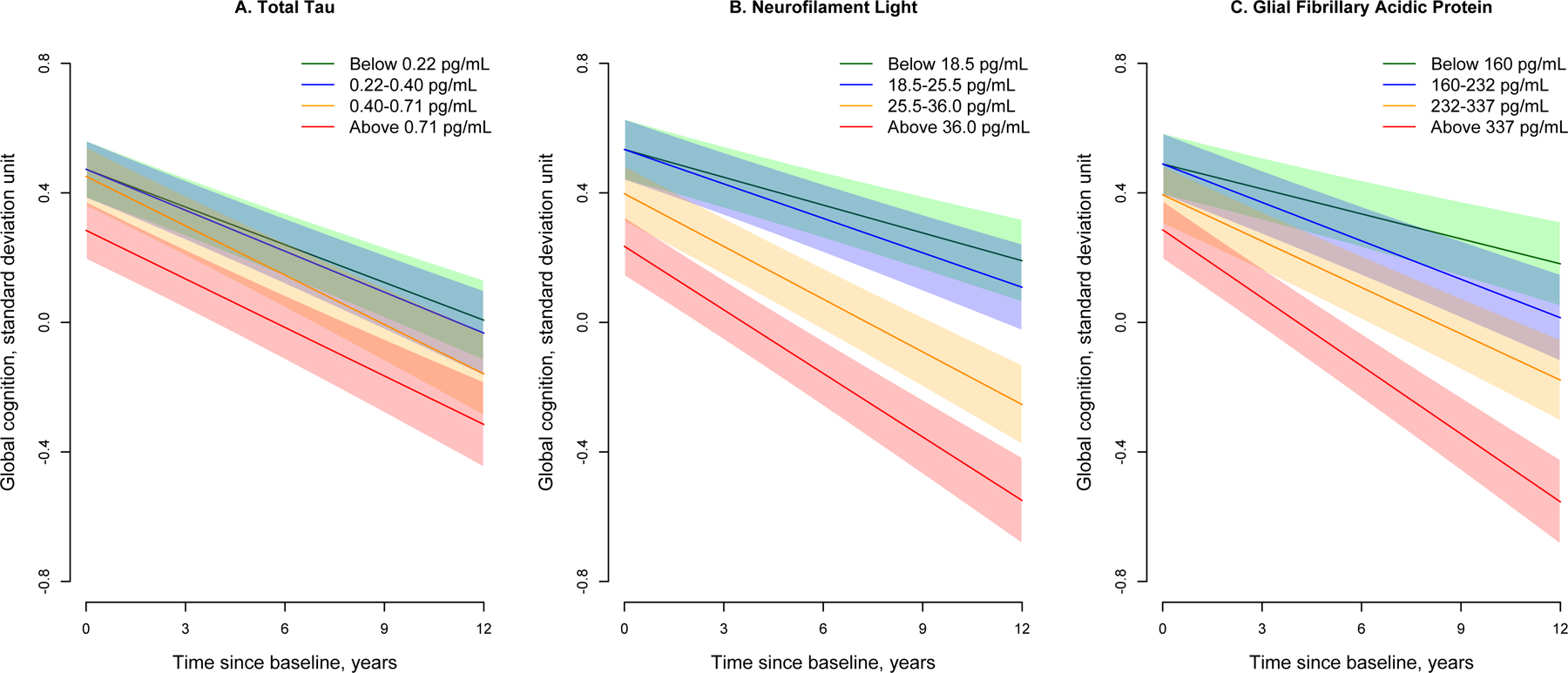
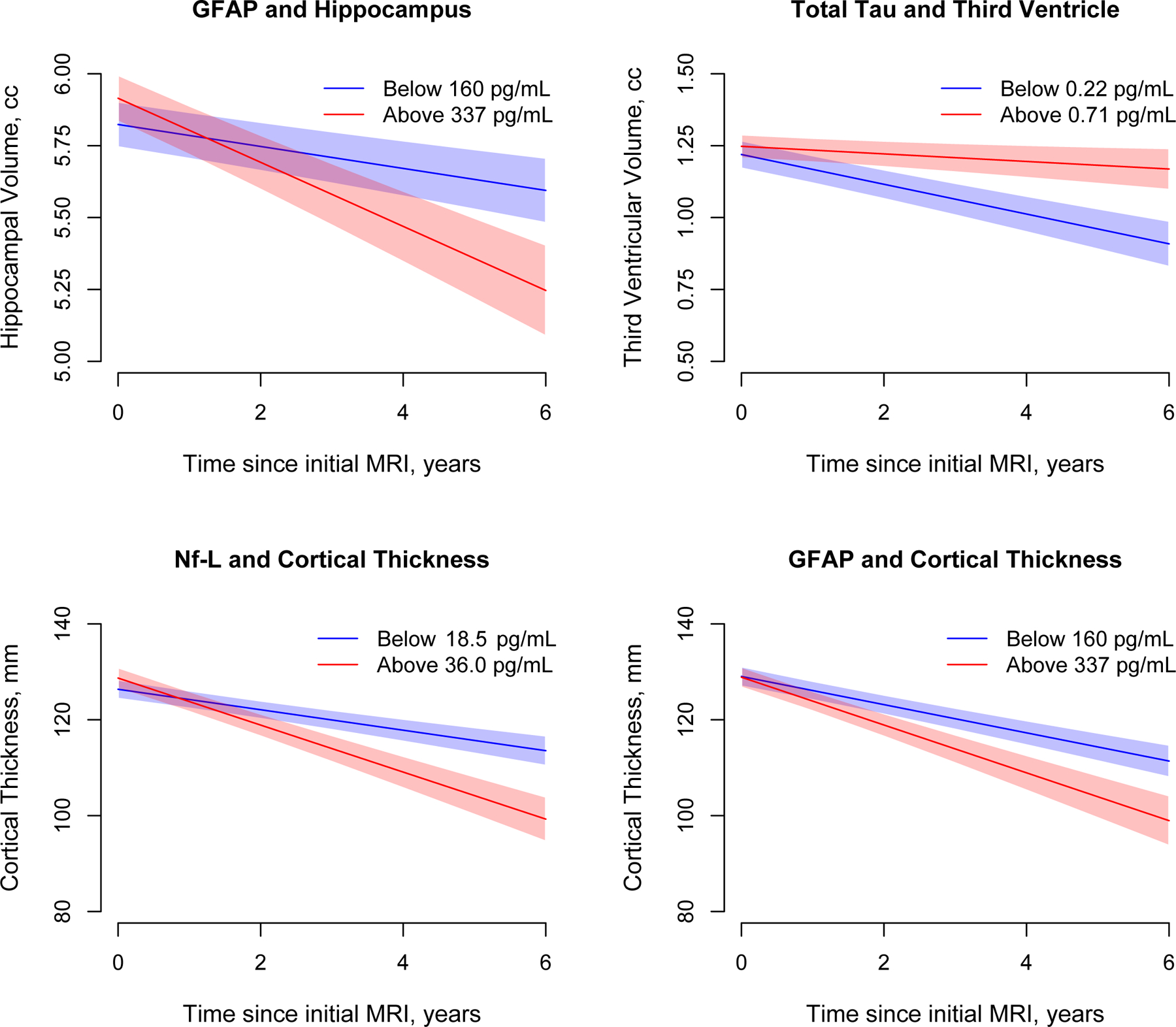
Results: Higher concentrations of serum biomarkers were associated with the development of clinical AD; especially, the time-specific associations were notable: t-tau 8 to 16 years, and Nf-L and GFAP 4 to 8 years prior to clinical AD. Serum biomarkers were associated with faster cognitive decline over 16 years; baseline t-tau > 0.40pg/ml had 30% faster decline, Nf-L > 25.5pg/ml had 110% faster decline, and GFAP > 232pg/ml had 130% faster decline compared to those in the lowest quartile. Participants with baseline GFAP > 232pg/ml showed 160% faster decline in hippocampal volume compared to those with values < 160pg/ml. Additionally, higher baseline t-tau was associated with faster increase in 3rd ventricular volume, and baseline Nf-L and GFAP were associated with faster decline in cortical thickness.

Interpretation: Serum t-tau, Nf-L, and GFAP predict the development of sporadic AD and cognitive decline, and changes in structural brain characteristics, suggesting their usefulness not only as screening and predictive biomarkers, but also in capturing the pathogenesis of Alzheimer dementia. ANN NEUROL 2020;88:1065-1076.


Conflict of interest statement

Potential Conflicts of Interest: The authors have no potential conflicts of interest.

Figures

Figure 1:
Figure 1:
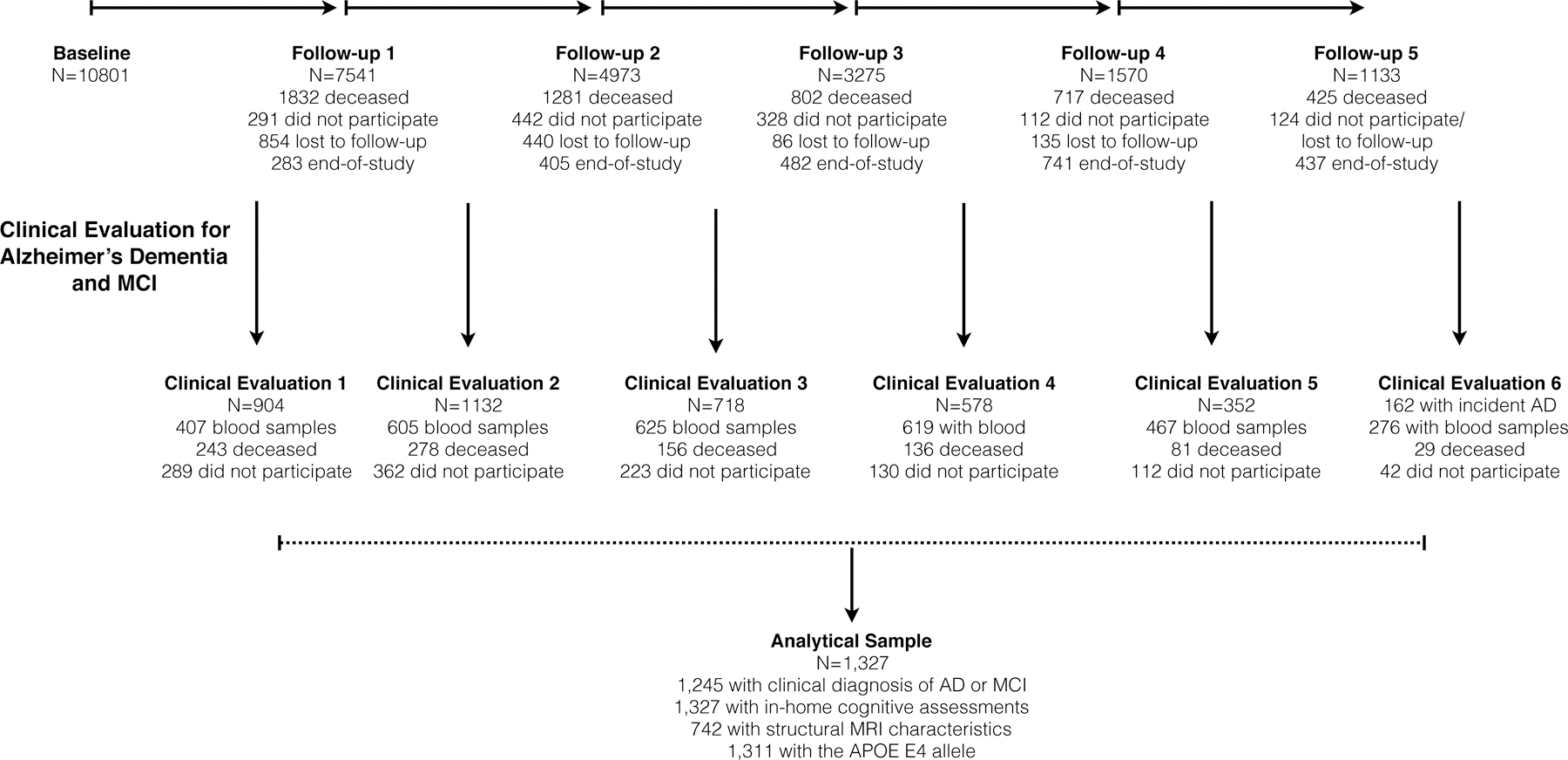
Study Design and Sample Selection for Clinical Evaluation and Blood Collection in a Population Sample Note: End-of-study: Successive age cohorts who had less follow-up than the original cohort
Figure 2.
Figure 2.
Association of Serum Total Tau, Neurofilament Light Chain, and Glial Fibrillary Acidic Protein with Clinically Diagnosed AD Compared to No Cognitive Impairment in 1,245 Participants from a Biracial Population Sample Odds ratios and 95% confidence intervals for clinical AD based on quasibinomial logistic regression models adjusted for age, gender, race/ethnicity, education, time between blood draw and clinical diagnosis, and the presence of the APOE ε4 allele.
Figure 3:
Figure 3:
Longitudinal Trajectories of Global Cognition for Quartiles of Serum Total Tau, Neurofilament Light, and Glial Fibrillary Acidic Protein in 1,327 Participants from a Biracial Population Sample Cognitive trajectories are based on linear mixed effects regression models adjusted for age, gender, race/ethnicity, education, and the presence of the APOE ε4 allele. Green line shows the lowest quartile, blue shows the 2nd quartile, orange shows the 3rd quartile, and red shows the highest quartile of biomarker concentrations. The 95% confidence bands for predicted cognitive scores are also shown.
Figure 4:
Figure 4:
Longitudinal Changes in Structural MRI Characteristics for Quartiles of Serum Total Tau, Neurofilament Light, and Glial Fibrillary Acidic Protein in 742 Participants from a Biracial Population Sample Change in structural MRI characteristics of hippocampal and third ventricular volumes, and cortical thickness are based on linear mixed effects regression models adjusted for age, gender, race/ethnicity, education, and the presence of the APOE ε4 allele. Green line shows the lowest quartile and red shows the highest quartile of biomarker concentrations. The 95% confidence bands for predicted values are also shown.

References

    1. Gan ZS, Stein SC, Swanson R, et al. Blood biomarkers for traumatic brain injury: A quantitative assessment of diagnostic and prognostic accuracy. Front Neurol 2019;10:446. - PMC - PubMed
    1. Sandelius Å, Zetterberg H, Blennow K, et al. Plasma neurofilament light chain concentration in the inherited peripheral neuropathies. Neurology 2018;90:e518–e524. - PMC - PubMed
    1. Lin CH, Li CH, Yang KC, et al. Blood NfL: A biomarker for disease severity and progression in Parkinson disease. Neurology 2019;93:e1104–e1111. - PubMed
    1. Hansson O, Janelidze S, Hall S, et al. Blood-based NfL: A biomarker for differential diagnosis of parkinsonian disorder. Neurology 2017;88:930–937. - PMC - PubMed
    1. Lu CH, Macdonald-Wallis C, Gray E, et al. Neurofilament light chain: A prognostic biomarker in amyotrophic lateral sclerosis [published correction appears in Neurology. 2015 Sep 8;85(10):921]. Neurology 2015;84:2247–2257. - PMC - PubMed

Publication types

MeSH terms