. 2020 Aug 15;21(1):561.
doi: 10.1186/s12864-020-06970-8.

Genome-wide characterization and expression analysis of geranylgeranyl diphosphate synthase genes in cotton (Gossypium spp.) in plant development and abiotic stresses

Affiliations

Genome-wide characterization and expression analysis of geranylgeranyl diphosphate synthase genes in cotton (Gossypium spp.) in plant development and abiotic stresses

Faiza Ali et al. BMC Genomics. .

Abstract

Background: GGPP (geranylgeranyl diphosphate) is produced in the isoprenoid pathway and mediates the function of various plant metabolites, which is synthesized by GGPPS (GGPP synthases) in plants. GGPPS characterization has not been performed in any plant species except Arabidopsis thaliana. Here, we performed a complete computational and bioinformatics analysis of GGPPS and detected their transcription expression pattern in Gossypium hirsutum for the first time so that to explore their evolutionary relationship and potential functions. Finally, we unravelled evolutionary relationship, conserved sequence logos, gene duplication and potential involvement in plant development and abiotic stresses tolerance of GGPPS genes in G. hirsutum and other plant species.

Results: A total of 159 GGPPS genes from 18 plant species were identified and evolutionary analysis divided these GGPPS genes into five groups to indicate their divergence from a common ancestor. Further, GGPPS family genes were conserved during evolution and underwent segmental duplication. The identified 25 GhGGPPS genes showed diverse expression pattern particularly in ovule and fiber development indicating their vital and divers roles in the fiber development. Additionally, GhGGPPS genes exhibited wide range of responses when subjected to abiotic (heat, cold, NaCl and PEG) stresses and hormonal (BL, GA, IAA, SA and MeJA) treatments, indicating their potential roles in various biotic and abiotic stresses tolerance.

Conclusions: The GGPPS genes are evolutionary conserved and might be involve in different developmental stages and stress response. Some potential key genes (e.g. GhGGPP4, GhGGPP9, and GhGGPP15) were suggested for further study and provided valuable source for cotton breeding to improve fiber quality and resistant to various stresses.

Keywords: Collinearity; GGPP; Gibberelline; Gossypium hirsutum; Sequence logos; cis-elements.


Conflict of interest statement

The authors declare no conflict of interest.

Figures
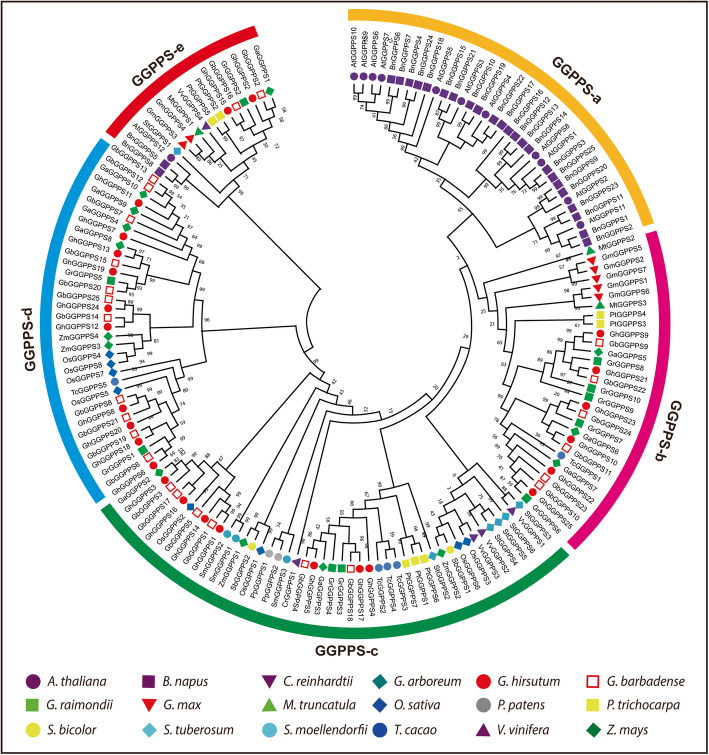
Fig. 1
Fig. 1
Evolutionary relationship among 159 GGPPS genes from 18 plant species. Prefixes At, Os, Sb, Gm, Sm, Pp, Cr, Zm, Pt, Vv, St, Mt, Bn, Tc, Ga, Gr, Gb, and Gh were used to recognize the GGPPS genes from Arabidopsis, O. sativa, S. bicolor, G. max, S. moellendorfii, P. patens, C. reinhardtii, Z. mays, P. taeda, V. vinifera, S. tuberosum, M. truncatula, B. napus, T. cacao, G. arboretum, G. raimondii, G. barbadense, and G. hirsutum respectively
Fig. 2
Fig. 2
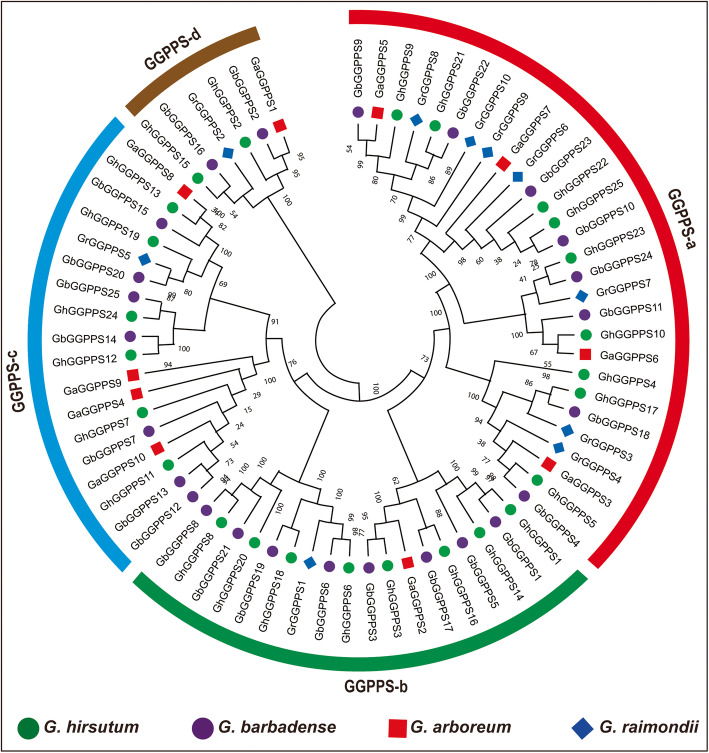
Phylogenetic analysis of GGPPS genes in G. arboreum, G. barbadense, G. hirsutum, and G. raimondii. The different color indicated different groups of GGPPS gene family
Fig. 3
Fig. 3
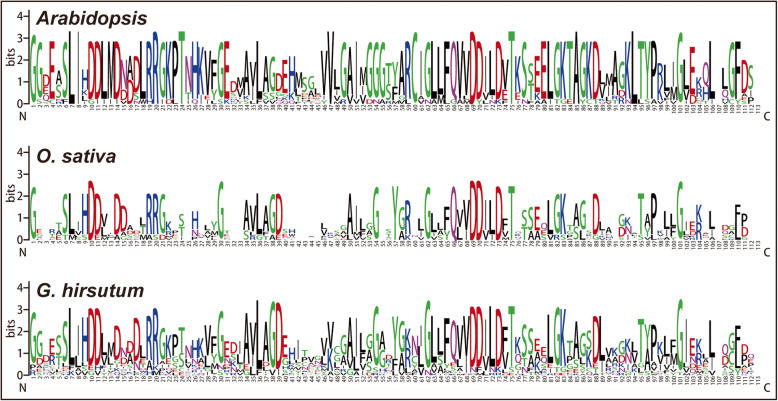
Sequence logos of Arabidopsis, O. sativa, and G. hirsutum. The N-terminal and C-terminal of GGPPS gene domain are indicated by using ‘N’ and ‘C’
Fig. 4
Fig. 4
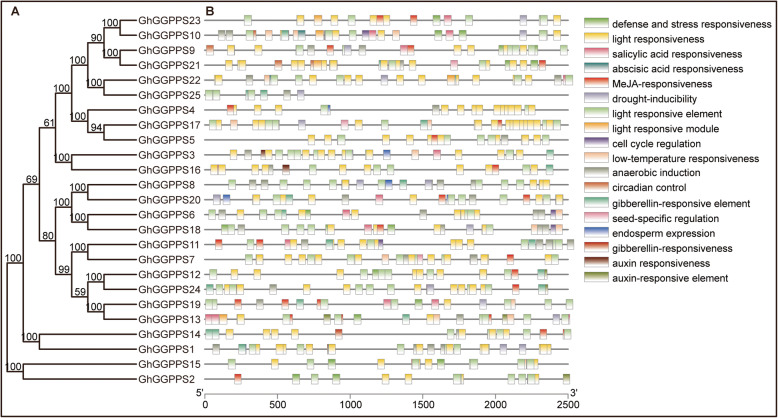
Promoter cis-elements analysis of GhGGPPS genes. a Phylogenetic tree of 25 members of GhGGPPS gene family. b GhGGPPS promoter cis-elements distribution and list of names of promoter cis-elements with different colors was given to recognize different promoter cis-elements
Fig. 5
Fig. 5
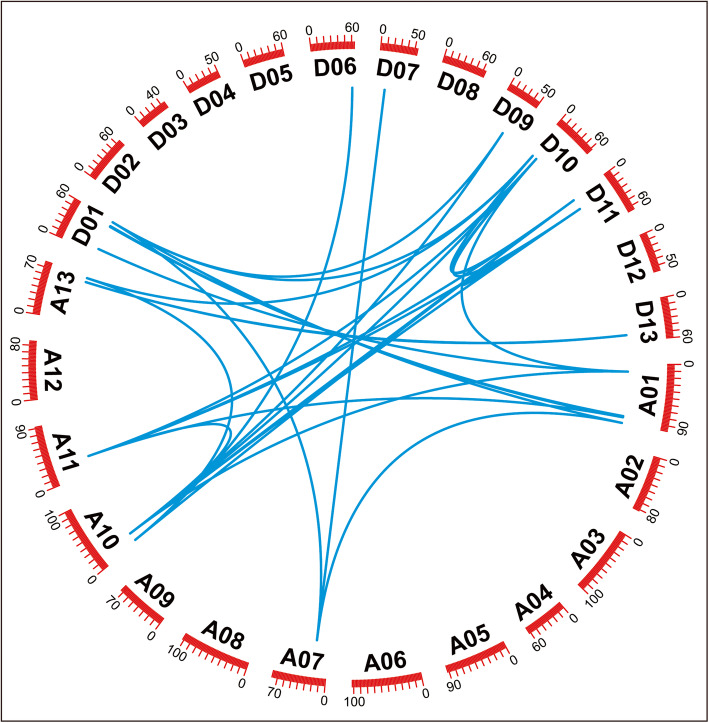
Collinearity analysis of GhGGPPS genes. A01-A13 represented At sub-genomes chromosomes while D01-D13 represented Dt sub-genomes chromosome. The orthologous/paralogous gene pairs were specifying by blue color lines
Fig. 6
Fig. 6
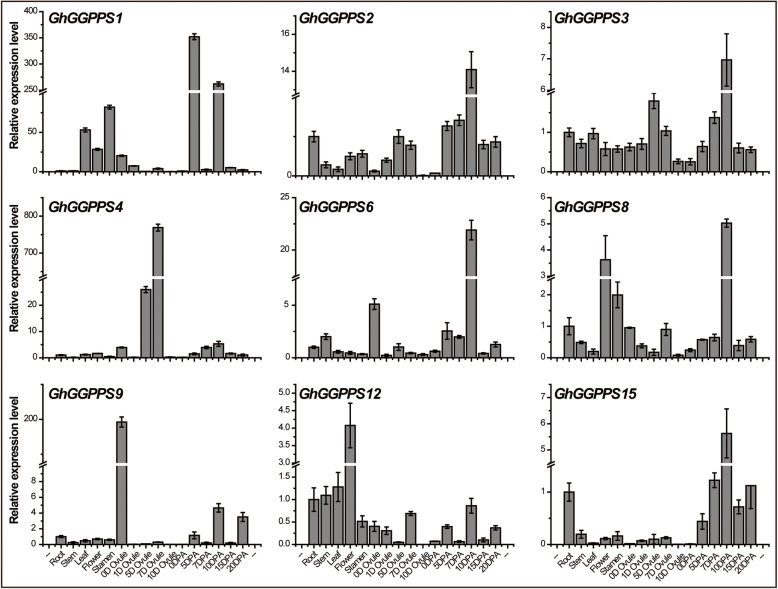
Expression patterns of GhGGPSgenes in different tissues of G. hirsutum. qRT-PCR analysis was performed for nine segmentally duplicated GhGGPPS genes. Plant tissues were collected at different developmental stages such as root, stem, leaf, flower, stamen, 0, 1, 5, 7, and 10 DPA ovule tissues as well as 0, 5,7, 10, 15, and 20 DPA fiber tissues
Fig. 7
Fig. 7
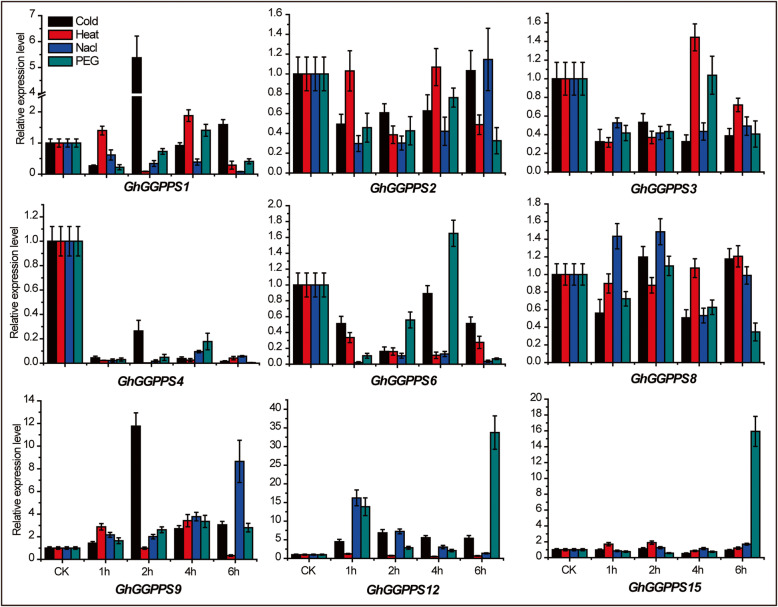
Expression patterns of GhGGPPS genes under various abiotic stresses at different time points. The relative expression was normalized to the CK (0 h) whereas error bars represented the standard deviation (SD) of three replicates
Fig. 8
Fig. 8
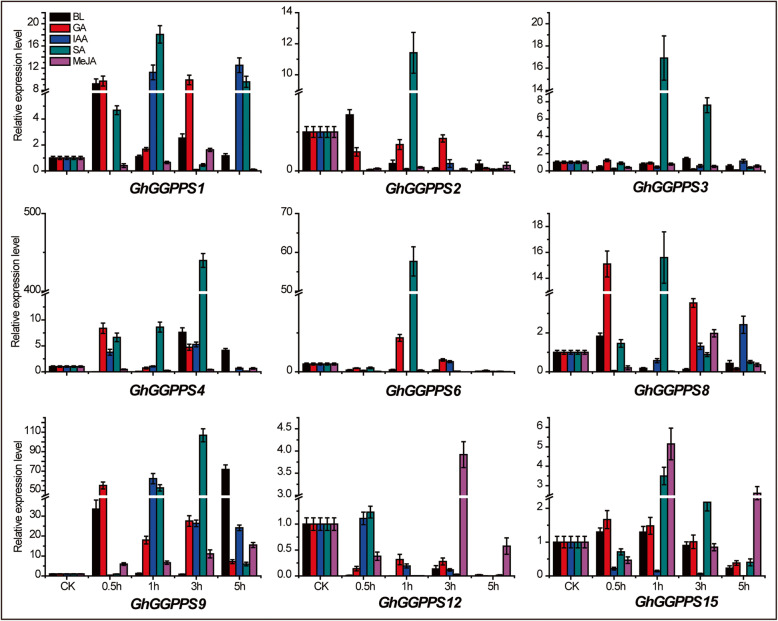
Relative expression patterns of GhGGPPS genes with five hormonal (BL, GA, IAA, SA, and MeJA) stresses at different time points

References

    1. Bouvier F, Rahier A, Camara B. Biogenesis, molecular regulation and function of plant isoprenoids. Prog Lipid Res. 2005;44(6):357–429. doi: 10.1016/j.plipres.2005.09.003. - DOI - PubMed
    1. Liang P-H. Reaction kinetics, catalytic mechanisms, conformational changes, and inhibitor design for prenyltransferases. Biochemistry. 2009;48(28):6562–6570. doi: 10.1021/bi900371p. - DOI - PubMed
    1. Vranová E, Coman D, Gruissem W. Structure and dynamics of the isoprenoid pathway network. Mol Plant. 2012;5(2):318–333. doi: 10.1093/mp/sss015. - DOI - PubMed
    1. Beck G, Coman D, Herren E, Ruiz-Sola MA, Rodríguez-Concepción M, Gruissem W, et al. Characterization of the GGPP synthase gene family in Arabidopsis thaliana. Plant Mol Biol. 2013;82(4–5):393–416. - PubMed
    1. Vandermoten S, Haubruge É, Cusson M. New insights into short-chain prenyltransferases: structural features, evolutionary history and potential for selective inhibition. Cell Mol Life Sci. 2009;66(23):3685–3695. doi: 10.1007/s00018-009-0100-9. - DOI - PMC - PubMed

LinkOut - more resources