. 2020 Jul;12(7):3725-3736.
doi: 10.21037/jtd-20-1050.

Effect of high-flow nasal cannula versus conventional oxygen therapy and non-invasive ventilation for preventing reintubation: a Bayesian network meta-analysis and systematic review

Affiliations

Effect of high-flow nasal cannula versus conventional oxygen therapy and non-invasive ventilation for preventing reintubation: a Bayesian network meta-analysis and systematic review

Ling Sang et al. J Thorac Dis. 2020 Jul.

Abstract

Background: Adequate respiratory support can improve clinical outcomes in patients who are ready for weaning from a ventilator. We aimed to investigate the efficacy of respiratory methods in adults undergoing planned extubation using a Bayesian network meta-analysis.

Methods: We searched PubMed, Embase, and ClinicalTrials.gov for unpublished and ongoing trials up to November 2019 for randomized controlled trials (RCTs) published in English that compared conventional oxygen therapy (COT), a high-flow nasal cannula (HFNC), and noninvasive ventilation (NIV) for post-extubation respiratory support. Screening of citations, study selection, data extraction, and assessment of risk were performed independently by two authors. The primary outcome was the reintubation rate.

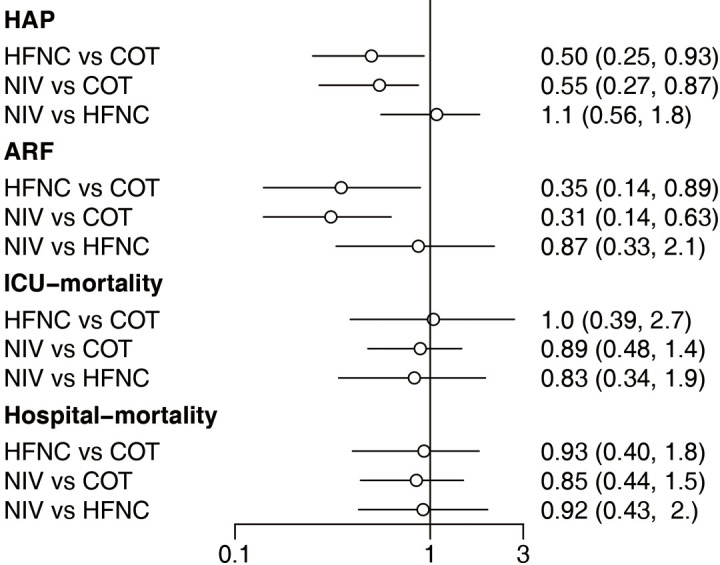
Results: Twenty-two studies (4,218 patients) were included in our meta-analysis. Extubated patients supported with NIV had a significantly lower incidence of reintubation than those supported with COT [odds ratio (OR): 0.63, 95% confidence interval (CI): 0.42, 0.89]. However, there was no significant difference in the reintubation rate between the HFNC and NIV, and HFNC and COT groups (OR: 1.05, 95% CI: 0.60, 1.81; OR: 0.60, 95% CI: 0.33, 1.02, respectively). HFNC and NIV reduced the incidence of hospital-acquired pneumonia (HAP) (OR: 0.50, 95% CI: 0.25, 0.93; OR: 0.55, 95% CI: 0.27, 0.87, respectively) and post-extubation acute respiratory failure (ARF) (OR: 0.35, 95% CI: 0.14, 0.89; OR: 0.31, 95% CI: 0.14, 0.63, respectively) compared with COT. There was no significant difference in a decreased incidence of HAP (OR: 1.1, 95% CI: 0.56, 1.8) or post-extubation ARF (OR: 0.87, 95% CI: 0.33, 2.1) between NIV and HFNC. There were also no significant differences in improvements in other clinical outcomes, including intensive care unit (ICU) and hospital mortality and the length of stay (LOS) between NIV and HFNC.

Conclusions: NIV reduces the reintubation rate in adult patients undergoing planned extubation compared with COT and HFNC.

Keywords: Reintubation; conventional oxygen therapy (COT); high-flow nasal cannula (HFNC); meta-analysis; noninvasive ventilation (NIV).


Conflict of interest statement

Conflicts of Interest: All authors have completed the ICMJE uniform disclosure form (available at http://dx.doi.org/10.21037/jtd-20-1050). The authors have no conflicts of interest to declare.

Figures
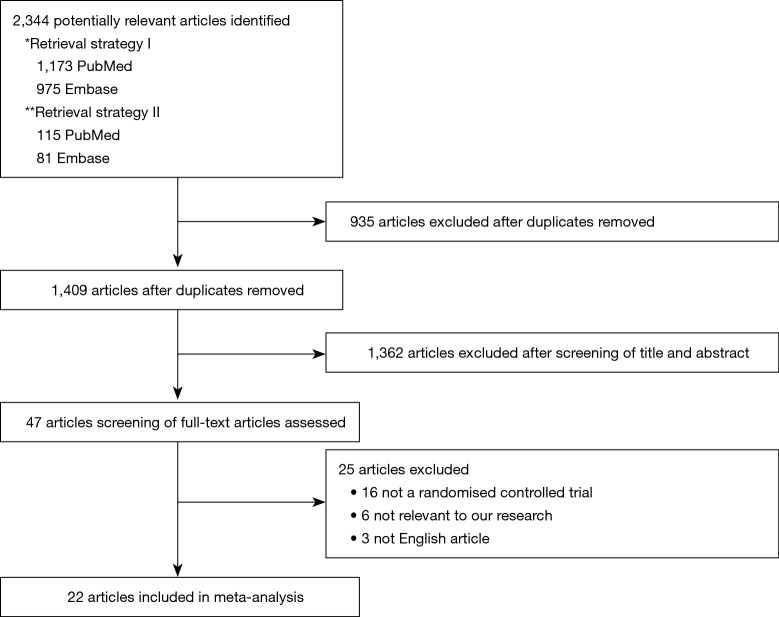
Figure 1
Figure 1
PRISMA flowchart. *Retrieval strategy I: “nippv” or “bipap” or “cpap” or “niv” or “nipsv” or “noninvasive positive pressure ventilation” or “non invasive positive pressure ventilation” or “noninvasive ventilation” or “non invasive ventilation” or “bilevel positive airway pressure” or “continuous positive airway pressure” or “noninvasive pressure support ventilation” or “non invasive pressure support ventilation” or “mask ventilation” or “nasal ventilation”) and (airway extubation or ventilator weaning); **Retrieval strategy II: “high flow nasal cannula” or “high flow nasal therapy” or “high flow nasal oxygen” or “high flow oxygen therapy” or “high flow therapy” or “optiflow (respiration)” or “nasal highflow”) and (airway extubation or ventilator weaning).
Figure 2
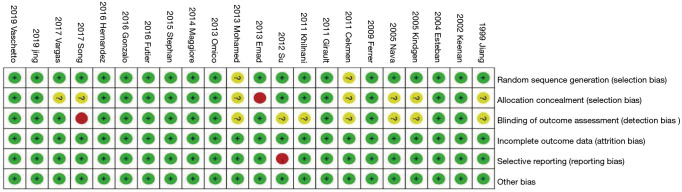
Figure 2
RoB in eligible studies. RoB, risk of bias.
Figure 3
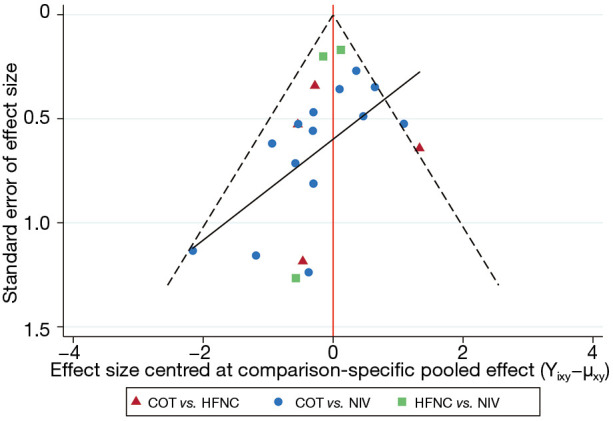
Figure 3
Funnel plot of association between estimated effect size for each study. NIV, noninvasive ventilation; COT, conventional oxygen therapy; HFNC, high-flow nasal cannula.
Figure 4
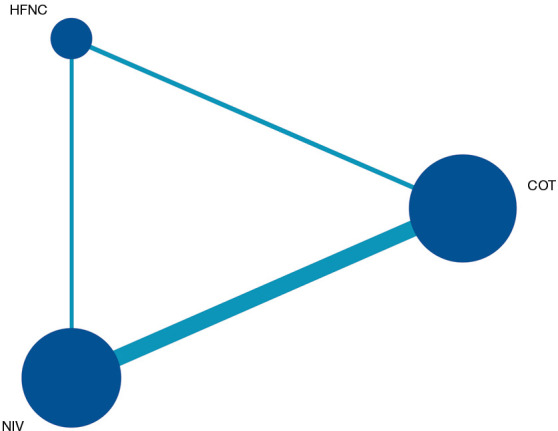
Figure 4
Network of comparisons for Bayesian network meta-analysis. The size of the nodes is proportional to the number of patients (in parentheses) randomized to receive the treatment. The width of the lines is proportional to the number of trials (beside the line) comparing the connected treatments. NIV, noninvasive ventilation; COT, conventional oxygen therapy; HFNC, high-flow nasal cannula.
Figure 5
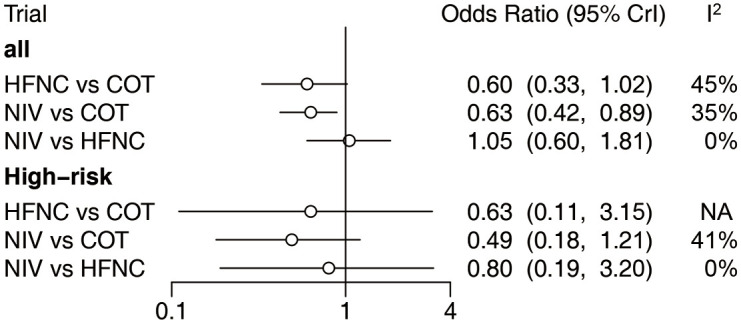
Figure 5
Forest plot of included trials and trials focusing on high-risk patients. High-risk patients for reintubation were defined as patients who fulfilled at least one of the following criteria: (I) age >65 years; (II) APACHE II score >12 on the extubation day; (III) inability to cope with respiratory secretions; (IV) patients with difficult weaning or prolonged MV made the first attempt to disconnect the ventilator; (V) two or more comorbidities; (VI) heart failure as the main indication for MV; (VII) moderate to severe chronic obstructive pulmonary disease; (VIII) airway patency problems, including a high risk of developing throat edema; and (IX) MV for >7 days. MV, mechanical ventilation; NIV, noninvasive ventilation; COT, conventional oxygen therapy; HFNC, high-flow nasal cannula; CI, confidence interval.
Figure 6
Figure 6
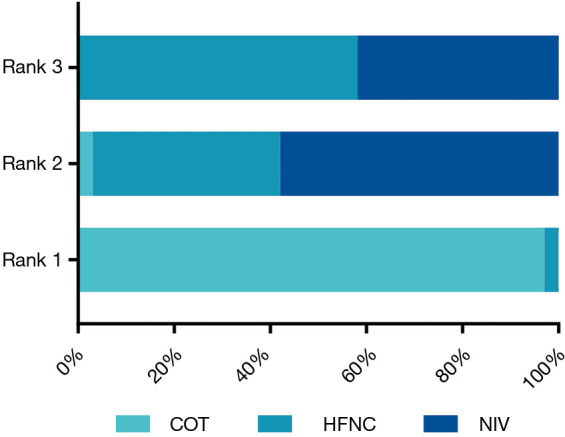
Ranking of treatments in terms of reintubation. NIV, noninvasive ventilation; COT, conventional oxygen therapy; HFNC, high-flow nasal cannula.
Figure 7
Figure 7
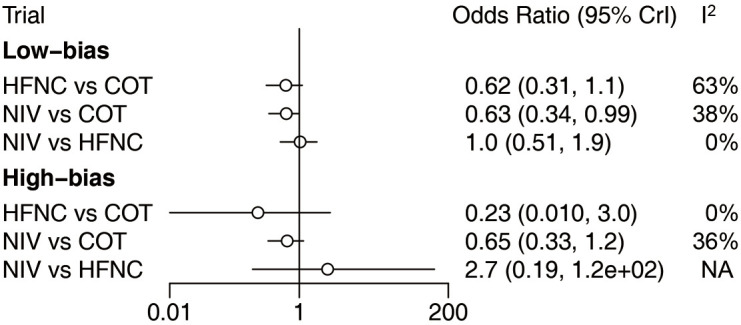
Forest plot for low-bias and high-bias trials. NIV, noninvasive ventilation; COT, conventional oxygen therapy; HFNC, high-flow nasal cannula; CI, confidence interval.
Figure 8
Figure 8
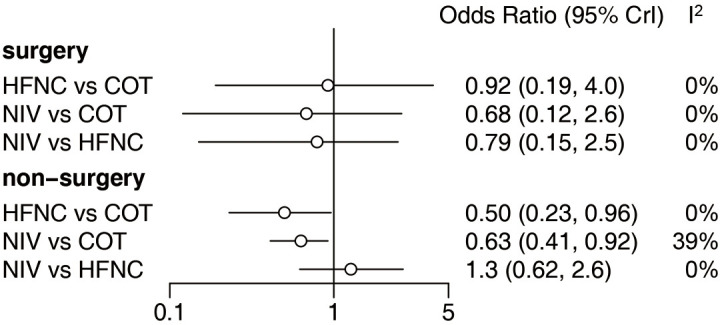
Forest plot for surgery and non-surgery subgroups. NIV, noninvasive ventilation; COT, conventional oxygen therapy; HFNC, high-flow nasal cannula; CI, confidence interval.
Figure 9
Figure 9
Forest plot for the secondary outcome. HAP, hospital-acquired pneumonia; ARF, acute respiratory failure; ICU, intensive care unit; NIV, noninvasive ventilation; COT, conventional oxygen therapy; HFNC, high-flow nasal cannula; CI, confidence interval.
Figure 10
Figure 10
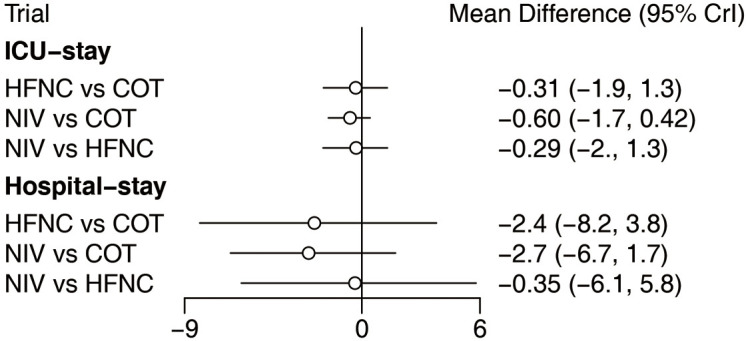
Forest plot for ICU and hospital LOS. ICU, intensive care unit; LOS, length of stay; NIV, noninvasive ventilation; COT, conventional oxygen therapy; HFNC, high-flow nasal cannula; CI, confidence interval.
Figure 11
Figure 11
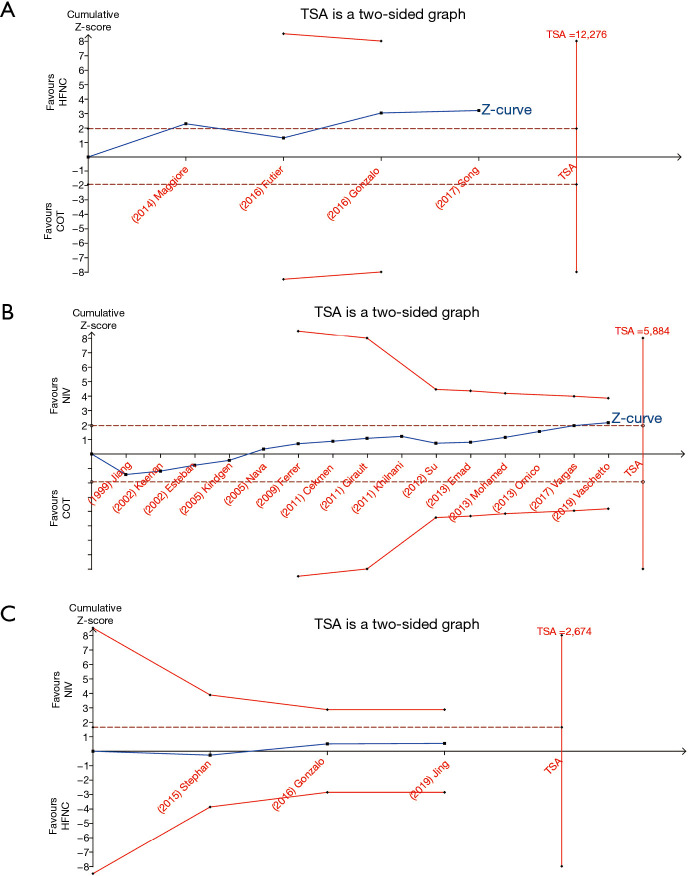
Plot of TSA for the effect of HFNC, COT, and NIV for preventing reintubation. (A) TSA for HFNC vs. COT; (B) TSA for NIV vs. COT; and (C) TSA for NIV vs. HFNC. TSA, trial sequential analysis; NIV, noninvasive ventilation; COT, conventional oxygen therapy; HFNC, high-flow nasal cannula.

References

    1. Coplin WM, Pierson DJ, Cooley KD, et al. Implications of extubation delay in brain-injured patients meeting standard weaning criteria. Am J Respir Crit Care Med 2000;161:1530-6. 10.1164/ajrccm.161.5.9905102 - DOI - PubMed
    1. Thille AW, Harrois A, Schortgen F, et al. Outcomes of extubation failure in medical intensive care unit patients. Crit Care Med 2011;39:2612-8. 10.1097/CCM.0b013e3182282a5a - DOI - PubMed
    1. Epstein SK, Ciubotaru RL, Wong JB. Effect of failed extubation on the outcome of mechanical ventilation. Chest 1997;112:186-92. 10.1378/chest.112.1.186 - DOI - PubMed
    1. Fan E, Zakhary B, Amaral A, et al. Liberation from mechanical ventilation in critically ill adults. An official ATS/ACCP clinical practice guideline. Ann Am Thorac Soc 2017;14:441-3. 10.1513/AnnalsATS.201612-993CME - DOI - PubMed
    1. Glossop AJ, Shephard N, Bryden DC, et al. Non-invasive ventilation for weaning, avoiding reintubation after extubation and in the postoperative period: a meta-analysis. Br J Anaesth 2012;109:305-14. 10.1093/bja/aes270 - DOI - PubMed