


Review
doi: 10.1007/s13340-020-00439-5.
eCollection 2020 Jul.
Japanese Clinical Practice Guideline for Diabetes 2019
Affiliations
- PMID: 32802702
- PMCID: PMC7387396
- DOI: 10.1007/s13340-020-00439-5
Item in Clipboard
Review
Japanese Clinical Practice Guideline for Diabetes 2019
Diabetol Int.
.
No abstract available
Keywords: Diabetes; Diagnosis; Guideline; Treatment.
Figures
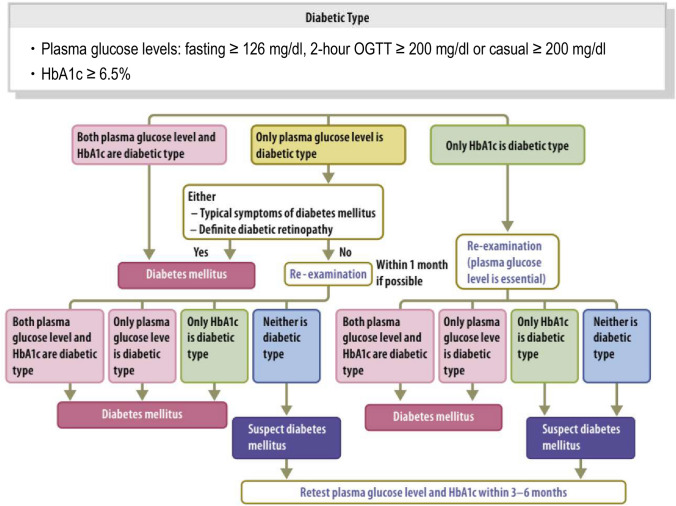
Flowchart outlining the steps in the clinical diagnosis of diabetes mellitus. OGTT oral glucose tolerance test [4]

Categories of glycemia as indicated by fasting plasma glucose levels and 75 g OGTT results. *1 The impaired fasting glucose (IFG) category refers to individuals with fasting plasma glucose (FPG) levels of 110–125 mg/dL and 2-hour plasma glucose (PG) levels of < 140 mg/dL in a 75 g OGTT (WHO), with the caveat, however, that IFG is defined as an FPG 100–125 mg/dL and only FPG is used in the diagnosis of IFG in the American Diabetes Association criteria. *2 Individuals with FPG 100–109 mg/dL are defined as the normal high FPG sub-category as part of the normal FPG category. It is advisable to perform OGTTs in this population who are shown to be quite heterogeneous in their susceptibility to diabetes or the severity of IGT confirmed at OGTT. *3 As one of the definitions included in the diagnostic criteria proposed by the WHO, IGT is diagnosed in individuals with FPG < 126 mg/dL or 2-hour 75 g OGTT PG ranging between 140 and 199 mg/dL
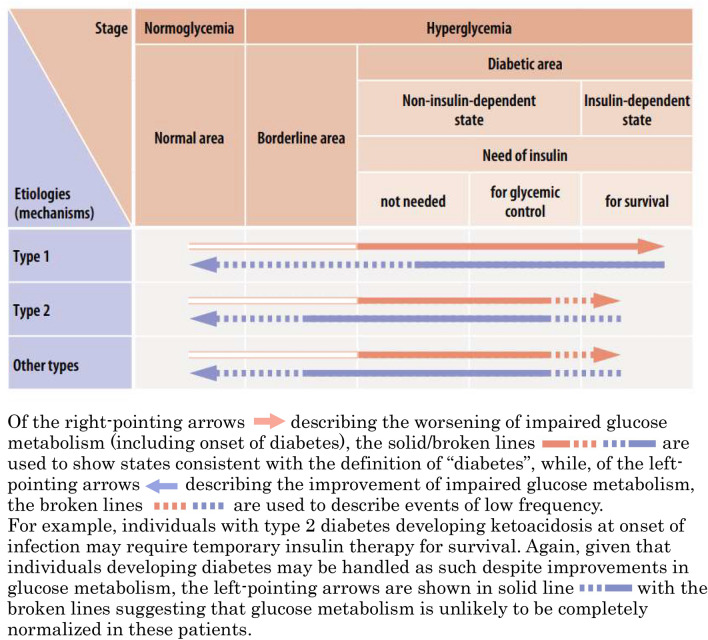
Schematic diagram showing the etiology (mechanisms of onset) and pathophysiological stages (phases) of diabetes mellitus [4]
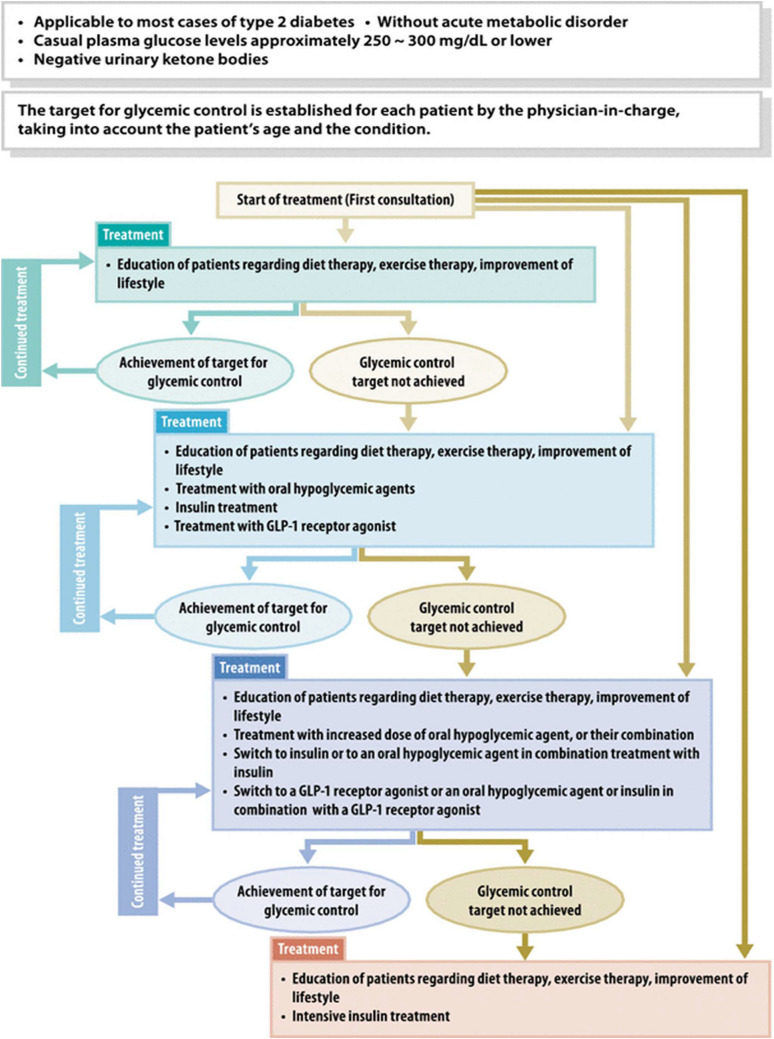
Treatment of type 2 diabetes patients in non-insulin-dependent state. This provides a guide to the management of patients without acute metabolic disorder [i.e., those who had a casual blood glucose level of 250–300 mg/dL or less than 250–300 mg/dL with a negative urinary ketone test]. The glycemic goal should be determined individually depending on the disease condition or age of the patient but is generally set at HbA1c < 7.0%. “Diet therapy” and “exercise therapy” are referred to as “medical nutrition therapy (MNT)” and “physical activity/exercise”, respectively, elsewhere in this guideline
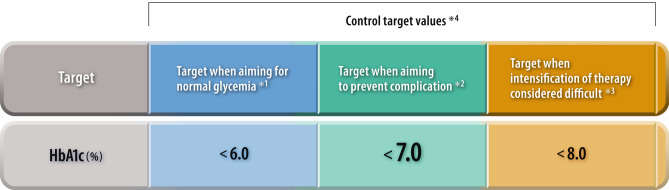
Glycemic control targets (see Fig. 8 for those for patients 65 years of age or older). The glycemic control target should be determined for each individual in light of his/her age, duration of diabetes, presence of organ damage, risk of hypoglycemia, and access to any support available. *1 Intended for individuals capable of achieving glycemic control with appropriate diet therapy (MNT) or exercise therapy or those capable of achieving glycemic control while on pharmacotherapy without developing hypoglycemia. *2 Defined as HbA1c < 7.0% for prevention of diabetic complications, which is assumed to correspond to fasting glucose < 130 mg/dL and postprandial 2-hour glucose < 180 mg/dL as measured glucose values. *3 Intended for individuals deemed less amenable to treatment intensification due to associated hypoglycemia or for some other reason. *4 All these targets are intended for use by adults except for pregnant women
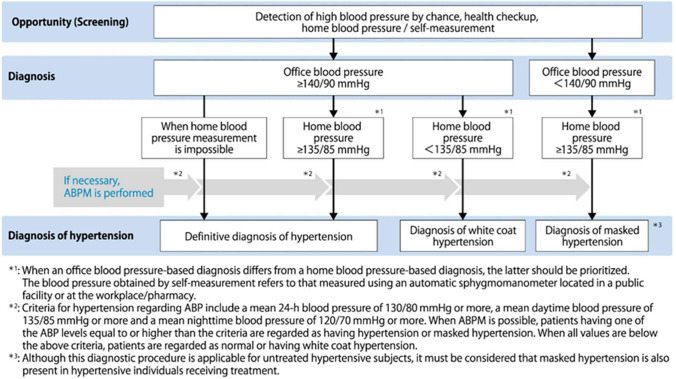
Blood pressure measurement and procedure for hypertension diagnosis (Cited from Umemura, S., Arima, H., Arima, S. et al. The Japanese Society of Hypertension Guidelines for the Management of Hypertension (JSH 2019) Hypertens Res. 2019 Sep;42(9):1256. 10.1038/s41440-019-0284-9, with the permission of the JSH)
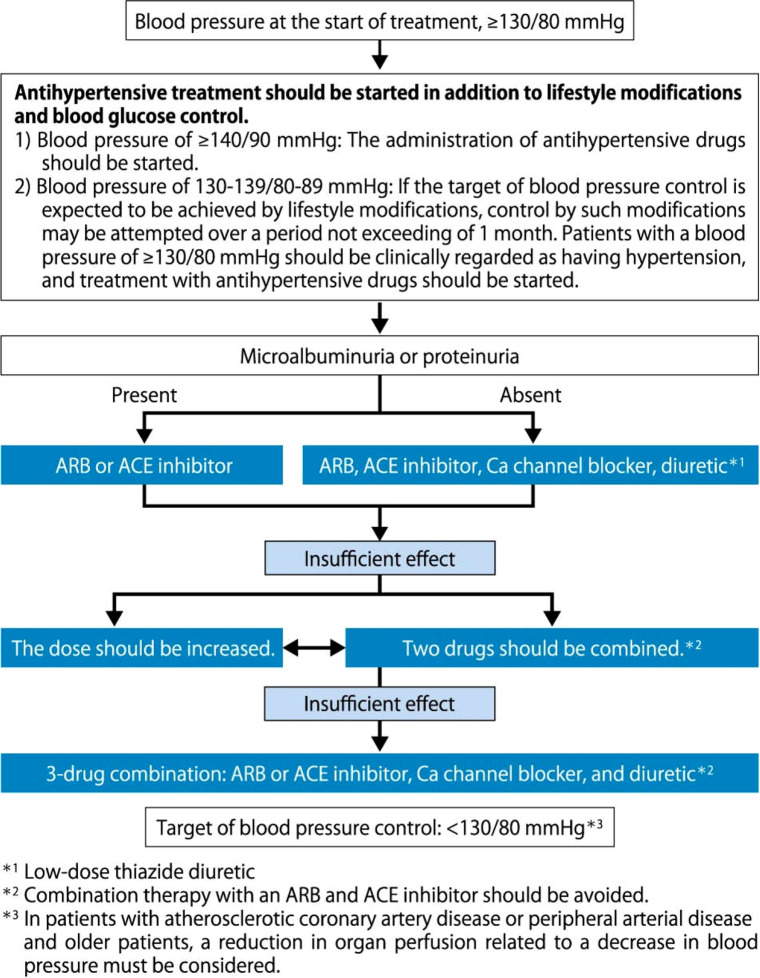
Treatment plan for hypertension complicated by diabetes mellitus (Cited from Umemura, S., Arima, H., Arima, S. et al. The Japanese Society of Hypertension Guidelines for the Management of Hypertension (JSH 2019) Hypertens Res. 2019 Sep;42(9):1356. 10.1038/s41440-019-0284-9, with the permission of the JSH)

Glycemic control targets (HbA1c values) for elderly patients with diabetes. The glycemic target is to be determined for each patient by taking into account his/her age, duration of diabetes, risk for hypoglycemia, and any support available to the patient, as well as the patient’s cognitive function, basic/instrumental ADL, and comorbidities/functional impairments, while noting the potential risk of hypoglycemia that increases with age in each patient. Note (1): Refer to the Japan Geriatrics Society website (https://www.jpn-geriat-soc.or.jp/tool/index.html), for the evaluation of the cognitive function, basic ADL (e.g. self-care abilities such as dressing, mobility, bathing, and toileting), and instrumental ADL (e.g. abilities to maintain an independent household such as shopping, meal preparation, taking medication, and handling finances). In end-of-life care, priority is to be given to preventing significant hyperglycemia and subsequent dehydration and acute complications through appropriate therapeutic measures. Note (2): As in other age groups, the glycemic target is set at < 7.0% in the elderly for preventing diabetic complications. However, this could be set at < 6.0% for those likely to achieve glycemic control through diet and exercise therapy alone or those likely to achieve glycemic control with drug therapy without adverse reactions, or 8.0% for those in whom intensifying therapy may prove difficult. In either case, no lower limit is specified for the glycemic target. A glycemic target of < 8.5% may be allowed in patients thought to be in category III and therefore at risk of developing adverse reactions to multi-drug combination therapy or in those with serious comorbidities or poor social support. Note (3): In patients in whom priority should be given to preventing the onset/progression of diabetic complications due to their duration of disease, the glycemic control target or its lower limit may be set for each elderly patient with appropriate measures in order to prevent severe hypoglycemia. In patients in whom any of these agents was initiated before the age of 65 and whose HbA1c values are shown to fall below their glycemic control targets described above, current treatments are to be continued, with utmost care being taken to avoid potential severe hypoglycemia. Glinides may be classified as drugs unlikely to be associated with severe hypoglycemia, as the onset of severe hypoglycemia varies depending on the type and amount of glinide used in a particular patient relative to the patient’s glucose level (Cited from Haneda, M., Inagaki, N., Suzuki, R. et al. Glycemic targets for elderly patients with diabetes. Diabetol Int 7, 331–333 (2016). 10.1007/s13340-016-0293-8)
References
1. Guideline for the diagnosis of diabetes mellitus
-
- Kosaka K, Akanuma Y, Goto Y, et al. Report of Committee on the classification and diagnostic criteria of diabetes mellitus. J Jpn Diabetes Soc. 1982;25:859–866.
-
- World Health Organization. Report of a WHO consultation: definition, diagnosis and classification of diabetes mellitus and its complications. Part 1: diagnosis and classification of diabetes mellitus. Geneva: World Health Organization Department of Noncommunicable Disease Surveillance. 1999. http://www.staff.ncl.ac.uk/philip.home/who_dmc.htm.
-
- Kuzuya T, Nakagawa S, Satoh J, et al. Report of the Committee of Japan Diabetes Society on the classification and diagnostic criteria of diabetes mellitus. J Jpn Diabetes Soc. 1999;42:385–404.
-
- American Diabetes Association Classification and Diagnosis of Diabetes: Standards of Medical Care in Diabetes—2018. Diabetes Care. 2018;41(Suppl 1):S13–S27. - PubMed
2. Goals and strategies for diabetes management
-
- United Kingdom Prospective Diabetes Study (UKPDS) Group: Intensive blood-glucose control with sulphonylureas or insulin compared with conventional treatment and risk of complications in patients with type 2 diabetes (UKPDS 33). Lancet. 1998;352:837–853. - PubMed
-
- Look ARG, Gregg EW, Jakicic JM, et al. Association of the magnitude of weight loss and changes in physical fitness with long-term cardiovascular disease outcomes in overweight or obese people with type 2 diabetes: a post-hoc analysis of the Look AHEAD randomised clinical trial. Lancet Diabetes Endocrinol. 2016;4:913–921. - PMC - PubMed
-
- Sone H, Tanaka S, Tanaka S, et al. Serum level of triglycerides is a potent risk factor comparable to LDL cholesterol for coronary heart disease in Japanese patients with type 2 diabetes: subanalysis of the Japan Diabetes Complications Study (JDCS) J Clin Endocrinol Metab. 2011;96:3448–3456. - PubMed
-
- Ueki K, Sasako T, Okazaki Y, Group JDS et al. Effect of an intensified multifactorial intervention on cardiovascular outcomes and mortality in type 2 diabetes (J-DOIT3): an open-label, randomised controlled trial. Lancet Diabetes Endocrinol. 2017;5:951–964. - PubMed
3. Medical nutrition therapy (MNT)
-
- Tuomilehto J, Lindström J, Eriksson JG, et al. Prevention of type 2 diabetes mellitus by changes in lifestyle among subjects with impaired glucose tolerance. N Engl J Med. 2001;344:1343–50 [level 1] - PubMed
-
- Terranova CO, Brakenridge CL, Lawler SP, et al. Effectiveness of lifestyle-based weight loss interventions for adults with type 2 diabetes: a systematic review and meta-analysis. Diabetes Obes Metab. 2015;17:371–8 [level 1] - PubMed
-
- Chen L, Pei JH, Kuang J, et al. Effect of lifestyle intervention in patients with type 2 diabetes: a meta-analysis. Metabolism. 2015;64:338–47 [level 1] - PubMed
4. Physical activity/exercise
-
- Umpierre D, Ribeiro PA, Kramer CK, et al. Physical activity advice only or structured exercise training and association with HbA1c levels in type 2 diabetes: a systematic review and meta-analysis. JAMA. 2011;305:1790–9 [level 1+] - PubMed
-
- Boulé NG, Haddad E, Kenny GP, et al. Effects of exercise on glycemic control and body mass in type 2 diabetes mellitus: a meta-analysis of controlled clinical trials. JAMA. 2001;286:1218–27 [level 2] - PubMed
-
- Pai LW, Li TC, Hwu YJ, et al. The effectiveness of regular leisure-time physical activities on long-term glycemic control in people with type 2 diabetes: a systematic review and meta-analysis. Diabetes Res Clin Pract. 2016;113:77–85 [level 2] - PubMed
-
- Boniol M, Dragomir M, Autier P, et al. Physical activity and change in fasting glucose and HbA1c: a quantitative meta-analysis of randomized trials. Acta Diabetol. 2017;54:983–91 [level 1+] - PubMed
-
- MacLeod SF, Terada T, Chahal BS, et al. Exercise lowers postprandial glucose but not fasting glucose in type 2 diabetes: a meta-analysis of studies using continuous glucose monitoring. Diabetes Metab Res Rev. 2013;29:593–603 [level 2] - PubMed
5. Treatment with glucose-lowering agents (excluding insulin)
-
- Intensive blood-glucose control with sulphonylureas or insulin compared with conventional treatment and risk of complications in patients with type 2 diabetes (UKPDS 33). UK Prospective Diabetes Study (UKPDS) Group. Lancet. 1998;352:837–53. - PubMed
-
- Bennett WL, Wilson LM, Bolen S, et al. Oral diabetes medications for adults with type 2 diabetes: an update. Agency for Healthcare Research and Quality (US), Rockville (MD); 2011.
-
- Effect of intensive blood-glucose control with metformin on complications in overweight patients with type 2 diabetes (UKPDS 34). UK Prospective Diabetes Study (UKPDS) Group. Lancet. 1998;352:854–65. - PubMed
6. Insulin therapy
-
- The Diabetes Control and Complications Trial (DCCT) Research Group: early worsening of diabetic retinopathy in the Diabetes Control and Complications Trial. Arch Ophthalmol. 1998;116:874–86. - PubMed
-
- Takahashi Y, Takayama S, Ito T, et al. Clinical features of eighty-six diabetic patients with post-treatment painful neuropathy. J Jpn Diabetes Soc. 1998;41:165–170.
-
- United Kingdom Prospective Diabetes Study (UKPDS) Group: United Kingdom Prospective Diabetes Study 24: a 6-year, randomized, controlled trial comparing sulfonylurea, insulin, and metformin therapy in patients with newly diagnosed type 2 diabetes that could not be controlled with diet therapy. Ann Intern Med. 1998;128:165–75. - PubMed
-
- The Diabetes Control and Complications Trial (DCCT) Research Group: The effect of intensive treatment of diabetes on the development and progression of long-term complications in insulin-dependent diabetes mellitus. N Engl J Med. 1993;329:977–86 [level 1] - PubMed
7. Diabetes self-management education and support for the self‑management of diabetes
-
- He X, Li J, Wang B, et al. Diabetes self-management education reduces risk of all-cause mortality in type 2 diabetes patients: a systematic review and meta-analysis. Endocrine. 2017;55:712–31 [level 1+] - PubMed
-
- Ismail K, Winkley K, Rabe-Hesketh S. Systematic review and meta-analysis of randomised controlled trials of psychological interventions to improve glycaemic control in patients with type 2 diabetes. Lancet. 2004;363(9421):1589–97 [level 2] - PubMed
-
- Pillay J, Armstrong MJ, Butalia S, et al. Behavioral programs for type 2 diabetes mellitus: a systematic review and network meta-analysis. Ann Intern Med. 2015;163:848–60 [level 2] - PubMed
-
- Pillay J, Armstrong MJ, Butalia S, et al. Behavioral programs for type 1 diabetes mellitus: a systematic review and meta-analysis. Ann Intern Med. 2015;163:836–47 [level 2] - PubMed
-
- Rickheim PL, Weaver TW, Flader JL, et al. Assessment of group versus individual diabetes education: a randomized study. Diabetes Care. 2002;25:269–74 [level 1] - PubMed
8. Diabetic retinopathy
-
- Klein R, Klein BE, Moss SE, et al. The Wisconsin Epidemiologic Study of Diabetic Retinopathy: IX. Four-year incidence and progression of diabetic retinopathy when age at diagnosis is less than 30 years. Arch Ophthalmol. 1989;107:237–43 [level 2] - PubMed
-
- Klein R, Klein BE, Moss SE, et al. The Wisconsin Epidemiologic Study of Diabetic Retinopathy: X. Four-year incidence and progression of diabetic retinopathy when age at diagnosis is 30 years or more. Arch Ophthalmol. 1989;107:244–9 [level 2] - PubMed
-
- Younis N, Broadbent DM, Vora JP, et al. Incidence of sight-threatening retinopathy in patients with type 2 diabetes in the Liverpool Diabetic Eye Study: a cohort study. Lancet. 2003;361:195–200 [level 2] - PubMed
-
- Misra A, Bachmann MO, Greenwood RH, et al. Trends in yield and effects of screening intervals during 17 years of a large UK community-based diabetic retinopathy screening programme. Diabet Med. 2009;26:1040–7 [level 2] - PubMed
-
- Diabetes Control and Complications Trial Research Group. The effect of intensive treatment of diabetes on the development and progression of long-term complications in insulin-dependent diabetes mellitus. N Engl J Med. 1993;329:977–86 [level 1] - PubMed
9. Diabetic nephropathy
-
- Matsuo S, Imai E, Horio M, et al. Revised equations for estimated GFR from serum creatinine in Japan. Am J Kidney Dis. 2009;53:982–992. - PubMed
-
- Horio M, Imai E, Yasuda Y, et al. GFR estimation using standardized serum cystatin C in Japan. Am J Kidney Dis. 2013;61:197–203. - PubMed
-
- Diabetes C, Complications Trial Research G, Nathan DM, et al. The effect of intensive treatment of diabetes on the development and progression of long-term complications in insulin-dependent diabetes mellitus. N Engl J Med. 1993;329:977–86 [level 1] - PubMed
10. Diabetic neuropathy
-
- Hotta N, Toyoda R, et al. Diabetic neuropathy. Kanehara, Tokyo; 1996. p. 145–54 (in Japanese).
-
- Boulton AJ, Vinik AI, Arezzo JC, et al. Diabetic neuropathies: a statement by the American Diabetes Association. Diabetes Care. 2005;28:956–962. - PubMed
-
- Tesfaye S, Chaturvedi N, Eaton SE, et al. Vascular risk factors and diabetic neuropathy. N Engl J Med. 2005;352:341–350. - PubMed
11. Diabetic foot
-
- IWGDF Guidelines on the prevention and management of diabetic foot disease https://iwgdfguidelines.org/wp-content/uploads/2019/05/IWGDF-Guidelines-...
-
- Frykberg RG, Zgonis T, Armstrong DG, et al. Diabetic foot disorders: a clinical practice guideline (2006 revision) J Foot Ankle Surg. 2006;45:S1–S66. - PubMed
-
- Krishinan S, Nash F, Baker N, et al. Reduction in diabetic amputations over 11 years in a defined U.K. population benefits of multidisciplinary team work and continuous prospective audit. Diabetes Care. 2008;31:99–101 [level 2] - PubMed
-
- Malone JM, Snyder M, Anderson G, et al. Prevention of amputation by diabetic education. Am J Surg. 1989;158:520–4 [level 1] - PubMed
12. Diabetic macroangiopathy
-
- Gaede P, Vedel P, Larsen N, et al. Multifactorial intervention and cardiovascular disease in patients with type 2 diabetes. N Engl J Med. 2003;348:383–393. - PubMed
-
- Gaede P, Lund-Andersen H, Parving HH, et al. Effect of a multifactorial intervention on mortality in type 2 diabetes. N Engl J Med. 2008;358:580–591. - PubMed
-
- Ueki K, Sasako T, Okazaki Y, et al. Effect of an intensified multifactorial intervention on cardiovascular outcomes and mortality in type 2 diabetes (J-DOIT3): an open-label, randomised controlled trial. Lancet Diabetes Endocrinol. 2017;5:951–964. - PubMed
13. Diabetes and periodontitis
-
- Takahashi K, Nishimura F, Kurihara M, et al. Subgingival microflora and antibody responses against periodontal bacteria of young Japanese patients with type 1 diabetes mellitus. J Int Acad Periodontol. 2001;3:104–111. - PubMed
-
- Morita I, Inagaki K, Nakamura F, et al. Relationship between periodontal status and levels of glycated hemoglobin. J Dent Res. 2012;91:161–166. - PubMed
-
- Graziani F, Gennai S, Solini A, et al. A systematic review and meta-analysis of epidemiologic observational evidence on the effect of periodontitis on diabetes An update of the EFP-AAP review. J Clin Periodontol. 2018;45:167–187. - PubMed
14. Diabetes complicated by obesity (including metabolic syndrome)
-
- Matsuzawa Y, Sakata T, Ikeda Y, et al. Guidelines for the management of obesity disease. 2006;2006:1–91.
-
- Examination Committee of Criteria for ‘Obesity Disease’ in Japan, Japan Society for the Study of Obesity; New criteria for ‘obesity disease’ in Japan. Circ J. 2002;66:987–92 - PubMed
-
- Hayashi T, Boyko EJ, McNeely MJ, et al. Minimum waist and visceral fat values for identifying Japanese Americans at risk for the metabolic syndrome. Diabetes Care. 2007;30:120–127. - PubMed
-
- Kashihara H, Lee JS, Kawakubo K, Tamura M, Akabayashi A. Criteria of waist circumference according to computed tomography-measured visceral fat area and the clustering of cardiovascular risk factors. Circ J. 2009;73:1881–1886. - PubMed
-
- Hiuge-Shimizu A, Kishida K, Funahashi T, et al. Absolute value of visceral fat area measured on computed tomography scans and obesity-related cardiovascular risk factors in large-scale Japanese general population (the VACATION-J study) Ann Med. 2012;44:82–92. - PubMed
15. Hypertension associated with diabetes
-
- Umemura S, Arima H, Arima S, et al. The Japanese Society of Hypertension Guidelines for the Management of Hypertension (JSH 2019) Hypertens Res. 2019;42:1235–1481. - PubMed
-
- Ueki K, Sasako T, Okazaki Y, Kato M, et al. Effect of an intensified multifactorial intervention on cardiovascular outcomes and mortality in type 2 diabetes (J-DOIT3): an open-label, randomised controlled trial. Lancet Diabetes Endcrinol. 2017;5:951–64 [level 1] - PubMed
-
- Baba S. Nifedipine and enalapril equally reduce the progression of nephropathy in hypertensive type 2 diabetics. Diabetes Res Clin Pract. 2001;54:191–201 [level 1] - PubMed
-
- Berl T, Hunsicker LG, Lewis JB, et al. Cardiovascular outcomes in the Irbesartan Diabetic Nephropathy Trial of patients with type 2 diabetes and overt nephropathy. Ann Intern Med. 2003;138:542–9 [level 1] - PubMed
16. Dyslipidemia associated with diabetes
-
- Sacks FM, Hermans MP, Fioretto P, et al. Association between plasma triglycerides and high-density lipoprotein cholesterol and microvascular kidney disease and retinopathy in type 2 diabetes mellitus: a global case-control study in 13 countries. Circulation. 2014;129:999–1008. - PubMed
-
- Heilbronn LK, Noakes M, Clifton PM. Effect of energy restriction, weight loss, and diet composition on plasma lipids and glucose in patients with type 2 diabetes. Diabetes Care. 1999;22:889–95 [level 2] - PubMed
17. Impaired glucose metabolism in pregnancy
-
- Ray JG, O’Brien TE, Chan WS. Preconception care and the risk of congenital anomalies in the offspring of women with diabetes mellitus: a meta-analysis. QJM. 2001;94:435–44 [level 2] - PubMed
-
- Griffin ME, Coffey M, Johnson H, et al. Universal vs. risk factor-based screening for gestational diabetes mellitus: detection rates, gestation at diagnosis and outcome. Diabet Med. 2000;17:26–32. - PubMed
18. Pediatric/adolescent diabetes
-
- ISPAD Clinical Practice Consensus Guidelines for Pediatric and Adolescent Diabetes 2014. Nankodo, Tokyo; 2015.
-
- Ascerini C, Craig ME, de Beaufort C, et al. ISPAD clinical practice consensus guidelines 2014 compendium. Introduction. Pediatr Diabetes. 2014;15(Suppl 20):1–3. - PubMed
-
- Craig ME, Jefferies C, Dabelea D, et al. ISPAD clinical practice consensus guidelines 2014 compendium. Definition, epidemiology, and classification of diabetes in children and adlescents. Pediatr Diabetes. 2014;15(Suppl 20):4–17. - PubMed
-
- White NH, Cleary PA, Dahms W, et al. (Diabetes Control and Complications Trial (DCCT)/Epidemiology of Diabetes Interventions and Complications (EDIC) Research Group). Beneficial effects of intensive therapy of diabetes during adolescence: outcomes after the conclusion of the Diabetes Control and Complications Trial (DCCT). J Pediatr. 2001;139:804–12. - PubMed
-
- Urakami T, Morimoto S, Nitadori Y, et al. Urine glucose screening program at schools in Japan to detect children with diabetes and its outcome: incidence and clinical characteristics of childhood type 2 diabetes in Japan. Pediatr Res. 2007;61:141–145. - PubMed
20. Acute metabolic complications of diabetes, sick days, and infectious diseases
-
- Nyenwe EA, Kitabchi AE. Evidence-based management of hyperglycemic emergencies in diabetes mellitus. Diabetes Res Clin Pract. 2011;94:340–351. - PubMed
-
- Wolfsdorf JI, Allgrove J, Craig ME, Edge J, Glaser N, Jain V, Lee WW, Mungai LN, Rosenbloom AL, Sperling MA, Hanas R; International Society for Pediatric and Adolescent Diabetes. ISPAD Clinical Practice Consensus Guidelines 2014. Diabetic ketoacidosis and hyperglycemic hyperosmolar state. Pediatr Diabetes. 2014;15(Suppl 20):154–79 - PubMed
-
- Jeffrey A, Kraut MD, Nicolaos E, et al. Lactic acidosis. N Engl J Med. 2014;371:2309–2319. - PubMed
-
- American Diabetes Association Standards of medical care in diabetes–2018. Diabetes Care. 2018;41:S1–S157. - PubMed
21. Prevention of type 2 diabetes
-
- Doi Y, Ninomiya T, Hata J, et al. Two risk score models for predicting incident type 2 diabetes in Japan. Diabet Med. 2012;29:107–14 - PubMed
-
- Heianza Y, Arase Y, Hsieh SD, et al. Development of a new scoring system for predicting the 5 year incidence of type 2 diabetes in Japan: the Toranomon Hospital Health Management Center Study 6 (TOPICS 6) Diabetologia. 2012;55:3213–3223. - PubMed
Appendix ① Diabetes and cancer
-
- Larsson SC, Orsini N, Wolk A. Diabetes mellitus and risk of colorectal cancer: a meta-analysis. J Natl Cancer Inst. 2005;97:1679–1687. - PubMed
-
- Larsson SC, Orsini N, Brismar K, et al. Diabetes mellitus and risk of bladder cancer: a meta-analysis. Diabetologia. 2006;49:2819–2823. - PubMed
-
- Giovannucci E, Harlan DM, Archer MC, et al. Diabetes and cancer: a consensus report. CA Cancer J Clin. 2010;60:207–221. - PubMed
Appendix ② Diabetes and bone mineral metabolism
-
- Guidelines for Prevention and Treatment of Osteoporosis. Life Science publishing.
-
- Janghorbani M, Van Dam RM, Willett WC, et al. Systematic review of type 1 and type 2 diabetes mellitus and risk of fracture. Am J Epidemiol. 2007;166:495–505. - PubMed
-
- Vestergaard P. Discrepancies in bone mineral density and fracture risk in patients with type 1 and type 2 diabetes: a meta-analysis. Osteoporos Int. 2007;18:427–444. - PubMed
Appendix ③ Pancreas/islet transplantation
-
- Saito T, Gotoh M, Satomi S, et al. Islet transplantation using donors after cardiac death: report of the Japan Islet Transplantation Registry. Transplantation. 2010;90:740–747. - PubMed
-
- Hering BJ, Kandaswamy R, Ansite JD, et al. Single-donor, marginal-dose islet transplantation in patients with type 1 diabetes. JAMA. 2005;293:830–835. - PubMed
Appendix ④ Large-scale clinical trials in Japanese patients with diabetes
-
- Ueki K, Sasako T, Okazaki Y, et al. Effect of an intensified multifactorial intervention on cardiovascular outcomes and mortality in type 2 diabetes (J-DOIT3): an open-label, randomised controlled trial. Lancet Diabetes Endocrinol 2017 - PubMed
Publication types
LinkOut - more resources
Full Text Sources