


Progression of Diabetic Retinopathy and Declining Renal Function in Patients with Type 2 Diabetes
- PMID: 32802891
- PMCID: PMC7403926
- DOI: 10.1155/2020/8784139
Progression of Diabetic Retinopathy and Declining Renal Function in Patients with Type 2 Diabetes
Abstract
Background: At a university hospital in Korea, we conducted a retrospective study to determine the association of the progression of diabetic retinopathy (DR) with declining renal function in type 2 diabetes.
Methods: We included a total of 1527 patients with type 2 diabetes who followed up in our diabetes clinic and underwent fundus photographic examinations from August 2006 to February 2014. DR was assessed by retinal ophthalmologists using comprehensive ophthalmologic examinations.
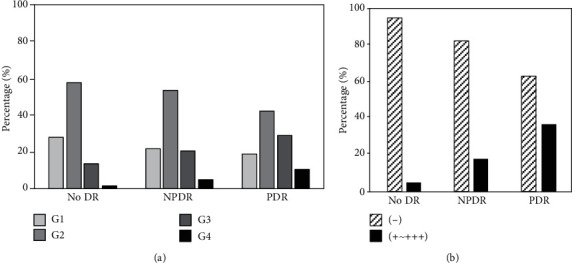
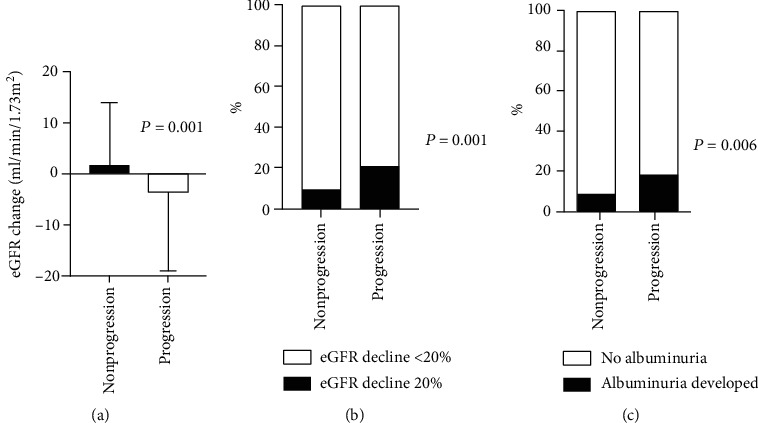
Results: The baseline prevalence of nonproliferative DR (NPDR) and proliferative DR (PDR) was 26.5% and 14.7%, respectively. Among 1303 patients with no DR and NPDR, 134 (10.3%) patients progressed to NPDR or PDR. The progression group had longer duration of diabetes, higher fasting plasma glucose, higher HbA1c, and a higher rate of ≥20% decline in eGFR during the follow-up period. After multivariate analysis, ≥20% decline in eGFR (odds ratio 2.553, 95% CI 1.219-5.348, p = 0.013) was an independent risk factor for progression of DR in patients with NPDR.
Conclusion: Declining renal function was independently associated with DR progression in patients with NPDR, suggesting that investigation of DR status should be recommended for patients with declining renal function.
Copyright © 2020 AJin Cho et al.
Conflict of interest statement
The authors report no conflict of interest.
Figures
References
Publication types
MeSH terms
LinkOut - more resources
Full Text Sources
Medical
Research Materials
Miscellaneous
