Protocol: Leveraging a demographic and health surveillance system for Covid-19 Surveillance in rural KwaZulu-Natal
- PMID: 32802963
- PMCID: PMC7424917
- DOI: 10.12688/wellcomeopenres.15949.2
Protocol: Leveraging a demographic and health surveillance system for Covid-19 Surveillance in rural KwaZulu-Natal
Abstract
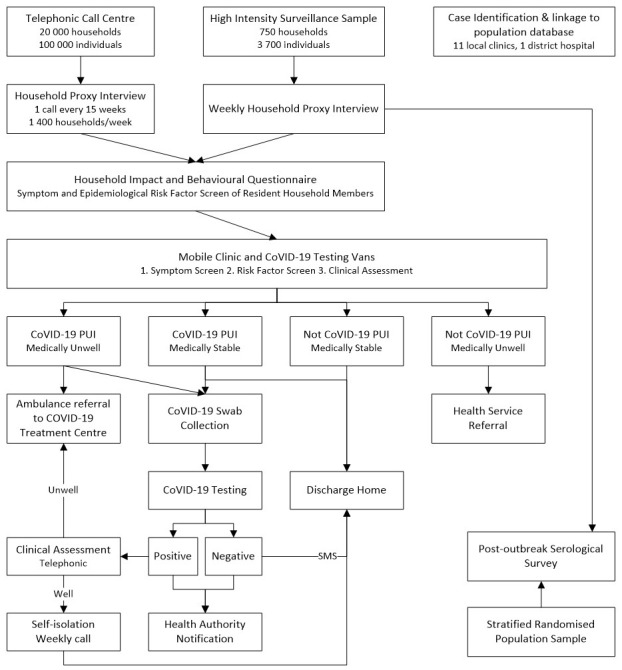
A coordinated system of disease surveillance will be critical to effectively control the coronavirus disease 2019 (Covid-19) pandemic. Such systems enable rapid detection and mapping of epidemics and inform allocation of scarce prevention and intervention resources. Although many lower- and middle-income settings lack infrastructure for optimal disease surveillance, health and demographic surveillance systems (HDSS) provide a unique opportunity for epidemic monitoring. This protocol describes a surveillance program at the Africa Health Research Institute's Population Intervention Platform site in northern KwaZulu-Natal. The program leverages a longstanding HDSS in a rural, resource-limited setting with very high prevalence of HIV and tuberculosis to perform Covid-19 surveillance. Our primary aims include: describing the epidemiology of the Covid-19 epidemic in rural KwaZulu-Natal; determining the impact of the Covid-19 outbreak and non-pharmaceutical control interventions (NPI) on behaviour and wellbeing; determining the impact of HIV and tuberculosis on Covid-19 susceptibility; and using collected data to support the local public-sector health response. The program involves telephone-based interviews with over 20,000 households every four months, plus a sub-study calling 750 households every two weeks. Each call asks a household representative how the epidemic and NPI are affecting the household and conducts a Covid-19 risk screen for all resident members. Any individuals screening positive are invited to a clinical screen, potential test and referral to necessary care - conducted in-person near their home following careful risk minimization procedures. In this protocol we report the details of our cohort design, questionnaires, data and reporting structures, and standard operating procedures in hopes that our project can inform similar efforts elsewhere.
Keywords: Covid-19; Health and Demographic Surveillance System; Screening; South Africa; Surveillance.
Copyright: © 2020 Siedner MJ et al.
Conflict of interest statement
No competing interests were disclosed.
References
-
- World Health Organisation: Coronavirus disease (COVID-2019) situation reports.2020. Reference Source
-
- Ferguson N, Laydon D, Nedjati Gilani G, et al. : Report 9: Impact of non-pharmaceutical interventions (NPIs) to reduce COVID19 mortality and healthcare demand.2020. Reference Source - PMC - PubMed
-
- Intensive Care National Audit and Research Centre: ICNARC report on COVID-19 in critical care: 24 April 2020.London: ICNARC;2020. Reference Source
Grants and funding
LinkOut - more resources
Full Text Sources
Miscellaneous