


A prospective study of the association between rate of nicotine metabolism and alcohol use in tobacco users in the United States
- PMID: 32805549
- PMCID: PMC7609495
- DOI: 10.1016/j.drugalcdep.2020.108210
A prospective study of the association between rate of nicotine metabolism and alcohol use in tobacco users in the United States
Abstract
Background: Rate of nicotine metabolism has been identified as a biochemical risk factor for nicotine use and dependence; however, its role in alcohol consumption and related outcomes is not well understood. The current research examined nicotine metabolism rate as a risk factor for alcohol use among current tobacco users. We also examined sex differences in these associations.
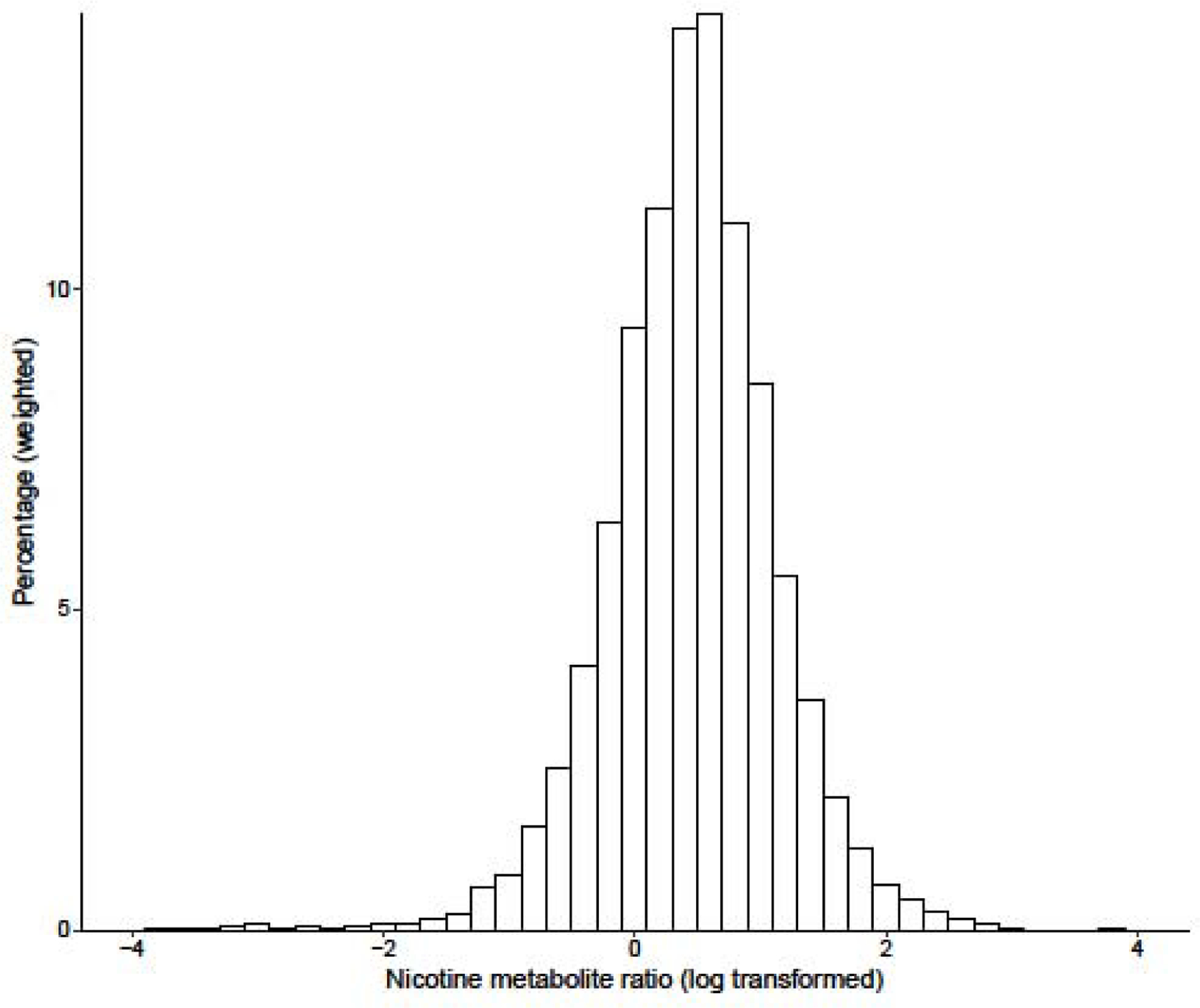
Method: Data were taken from Waves 1 and 2 of the Population Assessment of Tobacco and Health (PATH) study, a national longitudinal study of tobacco use and associated health outcomes. The nicotine metabolite ratio (NMR) was calculated as the ratio of trans-3' hydroxycotinine to cotinine in urine samples provided at wave 1. Alcohol use outcomes included past 30-day NIAAA-defined hazardous drinking status, total drinks, and alcohol-related consequences. All analyses controlled for alcohol use at Wave 1.
Results: NMR at Wave 1 predicted increased odds of meeting hazardous drinking criteria, adjusted odds ratio (aOR) = 1.14, 95 % CI = 1.06; 1.23, p = 0.001, greater total alcohol consumption amount, adjusted rate ratio (aRR) = 1.21, 95 % CI = 1.12; 1.30, p < 0.001, and more alcohol consequences, aRR = 1.07, 95 % CI = 1.01; 1.13, p = 0.018, at wave 2. No significant sex differences were identified. NMR remained a significant predictor of alcohol use in models controlling for severity of nicotine exposure in cigarette smokers.
Conclusions: NMR may be a shared risk factor for harmful nicotine and alcohol use that contributes to their co-occurrence.
Keywords: Alcohol use; Nicotine metabolite ratio; Risk factors; Tobacco use.
Copyright © 2020 Elsevier B.V. All rights reserved.
Conflict of interest statement
Figures
References
-
- Chenoweth MJ, Novalen M, Hawk LW Jr., Schnoll RA, George TP, Cinciripini PM, Lerman C, Tyndale RF, 2014. Known and novel sources of variability in the nicotine metabolite ratio in a large sample of treatment-seeking smokers. Cancer Epidemiol Biomarkers Prev 23(9), 1773–1782. doi: 10.1158/1055-9965.EPI-14-0427 - DOI - PMC - PubMed
Publication types
MeSH terms
Substances
Grants and funding
LinkOut - more resources
Full Text Sources
Medical
Miscellaneous
