Perioperative neurocognitive dysfunction: thinking from the gut?
- PMID: 32805716
- PMCID: PMC7467368
- DOI: 10.18632/aging.103738
Perioperative neurocognitive dysfunction: thinking from the gut?
Abstract
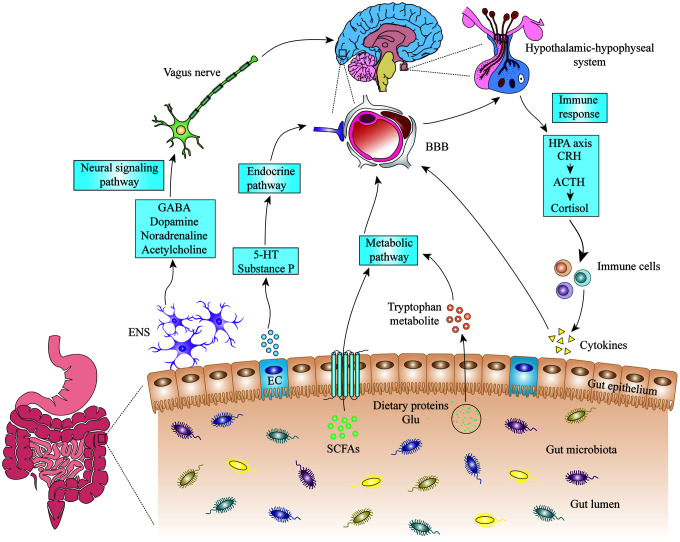
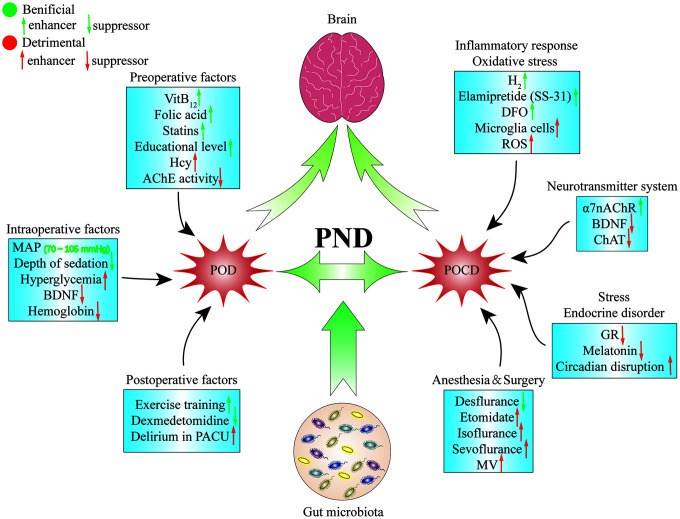
With the aging of the world population, and improvements in medical and health technologies, there are increasing numbers of elderly patients undergoing anaesthesia and surgery. Perioperative neurocognitive dysfunction has gradually attracted increasing attention from academics. Very recently, 6 well-known journals jointly recommended that the term perioperative neurocognitive dysfunction (defined according to the Diagnostic and Statistical Manual of Mental Disorders, fifth edition) should be adopted to improve the quality and consistency of academic communications. Perioperative neurocognitive dysfunction currently includes preoperatively diagnosed cognitive decline, postoperative delirium, delayed neurocognitive recovery, and postoperative cognitive dysfunction. Increasing evidence shows that the gut microbiota plays a pivotal role in neuropsychiatric diseases, and in central nervous system functions via the microbiota-gut-brain axis. We recently reported that abnormalities in the composition of the gut microbiota might underlie the mechanisms of postoperative cognitive dysfunction and postoperative delirium, suggesting a critical role for the gut microbiota in perioperative neurocognitive dysfunction. This article therefore reviewed recent findings on the linkage between the gut microbiota and the underlying mechanisms of perioperative neurocognitive dysfunction.
Keywords: brain-gut axis; gut microbiota; perioperative neurocognitive dysfunction; postoperative cognitive dysfunction; postoperative delirium.
Conflict of interest statement
Figures
References
-
- Evered L, Silbert B, Knopman DS, Scott DA, DeKosky ST, Rasmussen LS, Oh ES, Crosby G, Berger M, Eckenhoff RG, and Nomenclature Consensus Working Group. Recommendations for the nomenclature of cognitive change associated with anaesthesia and surgery-20181. J Alzheimers Dis. 2018; 66:1–10. 10.3233/JAD-189004 - DOI - PubMed
-
- Moller JT, Cluitmans P, Rasmussen LS, Houx P, Rasmussen H, Canet J, Rabbitt P, Jolles J, Larsen K, Hanning CD, Langeron O, Johnson T, Lauven PM, et al. Long-term postoperative cognitive dysfunction in the elderly ISPOCD1 study. Ispocd investigators. International study of post-operative cognitive dysfunction. Lancet. 1998; 351:857–61. 10.1016/s0140-6736(97)07382-0 - DOI - PubMed
Publication types
MeSH terms
LinkOut - more resources
Full Text Sources
Medical