


Multifaceted Roles of DNA Methylation in Neoplastic Transformation, from Tumor Suppressors to EMT and Metastasis
- PMID: 32806509
- PMCID: PMC7463745
- DOI: 10.3390/genes11080922
Multifaceted Roles of DNA Methylation in Neoplastic Transformation, from Tumor Suppressors to EMT and Metastasis
Abstract
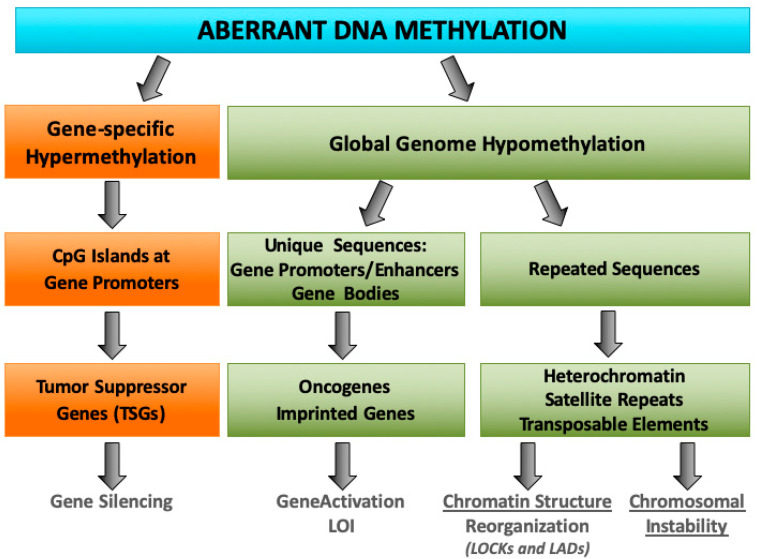
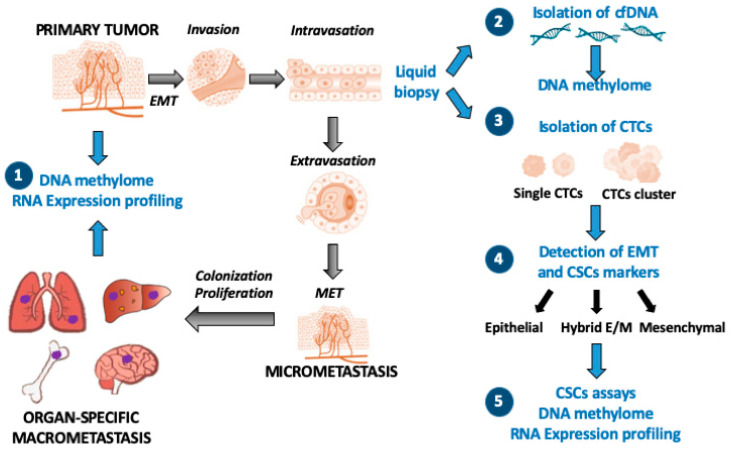
Among the major mechanisms involved in tumorigenesis, DNA methylation is an important epigenetic modification impacting both genomic stability and gene expression. Methylation of promoter-proximal CpG islands (CGIs) and transcriptional silencing of tumor suppressors represent the best characterized epigenetic changes in neoplastic cells. The global cancer-associated effects of DNA hypomethylation influence chromatin architecture and reactivation of repetitive elements. Moreover, recent analyses of cancer cell methylomes highlight the role of the DNA hypomethylation of super-enhancer regions critically controlling the expression of key oncogenic players. We will first summarize some basic aspects of DNA methylation in tumorigenesis, along with the role of dysregulated DNA methyltransferases and TET (Ten-Eleven Translocation)-family methylcytosine dioxygenases. We will then examine the potential contribution of epimutations to causality and heritability of cancer. By reviewing some representative genes subjected to hypermethylation-mediated silencing, we will survey their oncosuppressor functions and roles as biomarkers in various types of cancer. Epithelial-to-mesenchymal transition (EMT) and the gain of stem-like properties are critically involved in cancer cell dissemination, metastasis, and therapeutic resistance. However, the driver vs passenger roles of epigenetic changes, such as DNA methylation in EMT, are still poorly understood. Therefore, we will focus our attention on several aspects of DNA methylation in control of EMT and metastasis suppressors, including both protein-coding and noncoding genes.
Keywords: DNA methylation; biomarkers; cancer stem cells; epithelial-to-mesenchymal transition; metastasis; neoplastic transformation; tumor suppressors.
Conflict of interest statement
The authors declare no conflict of interest.
Figures
References
-
- Grimm C., Chavez L., Vilardell M., Farrall A.L., Tierling S., Böhm J.W., Grote P., Lienhard M., Dietrich J., Timmermann B., et al. DNA-methylome analysis of mouse intestinal adenoma identifies a tumour-specific signature that is partly conserved in human colon cancer. PLoS Genet. 2013;9:e1003250. doi: 10.1371/journal.pgen.1003250. - DOI - PMC - PubMed
Publication types
MeSH terms
Substances
LinkOut - more resources
Full Text Sources
Medical
