


Obesity and COVID-19: Molecular Mechanisms Linking Both Pandemics
- PMID: 32806722
- PMCID: PMC7460849
- DOI: 10.3390/ijms21165793
Obesity and COVID-19: Molecular Mechanisms Linking Both Pandemics
Abstract
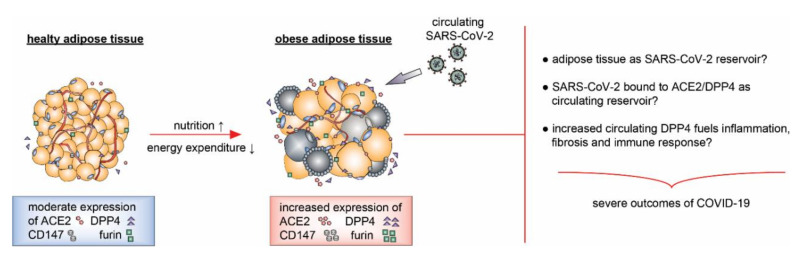
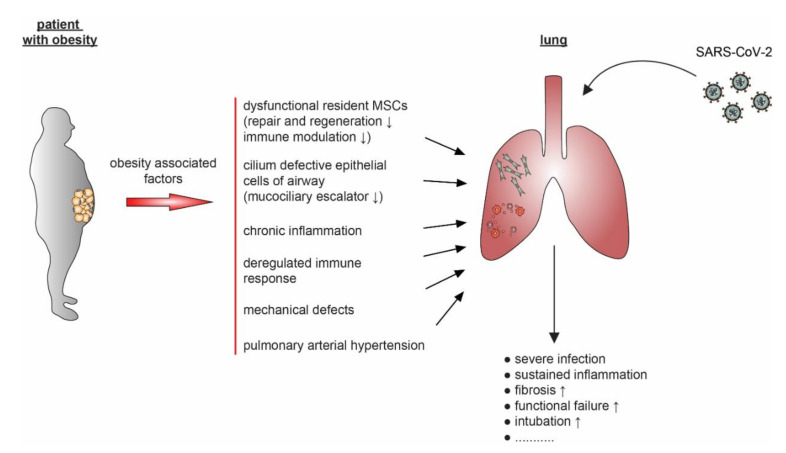
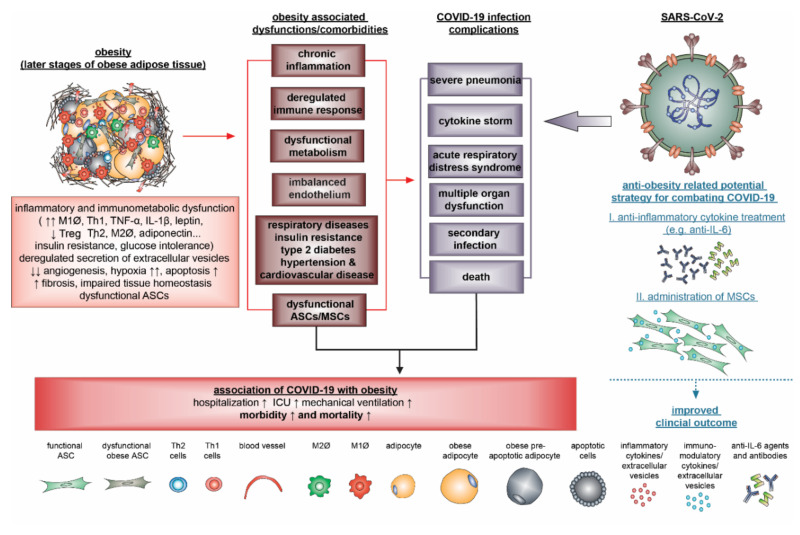
The coronavirus disease 2019 COVID-19 pandemic is rapidly spreading worldwide and is becoming a major public health crisis. Increasing evidence demonstrates a strong correlation between obesity and the COVID-19 disease. We have summarized recent studies and addressed the impact of obesity on COVID-19 in terms of hospitalization, severity, mortality, and patient outcome. We discuss the potential molecular mechanisms whereby obesity contributes to the pathogenesis of COVID-19. In addition to obesity-related deregulated immune response, chronic inflammation, endothelium imbalance, metabolic dysfunction, and its associated comorbidities, dysfunctional mesenchymal stem cells/adipose-derived mesenchymal stem cells may also play crucial roles in fueling systemic inflammation contributing to the cytokine storm and promoting pulmonary fibrosis causing lung functional failure, characteristic of severe COVID-19. Moreover, obesity may also compromise motile cilia on airway epithelial cells and impair functioning of the mucociliary escalators, reducing the clearance of severe acute respiratory syndrome coronavirus (SARS-CoV-2). Obese diseased adipose tissues overexpress the receptors and proteases for the SARS-CoV-2 entry, implicating its possible roles as virus reservoir and accelerator reinforcing violent systemic inflammation and immune response. Finally, anti-inflammatory cytokines like anti-interleukin 6 and administration of mesenchymal stromal/stem cells may serve as potential immune modulatory therapies for supportively combating COVID-19. Obesity is conversely related to the development of COVID-19 through numerous molecular mechanisms and individuals with obesity belong to the COVID-19-susceptible population requiring more protective measures.
Keywords: COVID-19; adipose-derived mesenchymal stem/stromal cells; cytokine storm; immune response; inflammation; obesity.
Conflict of interest statement
The authors declare no conflict of interest. The sponsors had no role in the design, execution, interpretation, or writing of the review.
Figures
References
-
- Zhong N.S., Zheng B.J., Li Y.M., Poon L.L.M., Xie Z.H., Chan K.H., Li P.H., Tan S.Y., Chang Q., Xie J.P., et al. Epidemiology and cause of severe acute respiratory syndrome (SARS) in Guangdong, People’s Republic of China, in February, 2003. Lancet. 2003;362:1353–1358. doi: 10.1016/S0140-6736(03)14630-2. - DOI - PMC - PubMed
-
- WHO . WHO Coronavirus Disease (COVID-19) Dashboard. World Health Organization; Geneva, Switzerland: 2020.
Publication types
MeSH terms
Substances
Grants and funding
LinkOut - more resources
Full Text Sources
Other Literature Sources
Medical
Miscellaneous
