


4HNE Impairs Myocardial Bioenergetics in Congenital Heart Disease-Induced Right Ventricular Failure
- PMID: 32806952
- PMCID: PMC7606813
- DOI: 10.1161/CIRCULATIONAHA.120.045470
4HNE Impairs Myocardial Bioenergetics in Congenital Heart Disease-Induced Right Ventricular Failure
Abstract
Background: In patients with complex congenital heart disease, such as those with tetralogy of Fallot, the right ventricle (RV) is subject to pressure overload stress, leading to RV hypertrophy and eventually RV failure. The role of lipid peroxidation, a potent form of oxidative stress, in mediating RV hypertrophy and failure in congenital heart disease is unknown.
Methods: Lipid peroxidation and mitochondrial function and structure were assessed in right ventricle (RV) myocardium collected from patients with RV hypertrophy with normal RV systolic function (RV fractional area change, 47.3±3.8%) and in patients with RV failure showing decreased RV systolic function (RV fractional area change, 26.6±3.1%). The mechanism of the effect of lipid peroxidation, mediated by 4-hydroxynonenal ([4HNE] a byproduct of lipid peroxidation) on mitochondrial function and structure was assessed in HL1 murine cardiomyocytes and human induced pluripotent stem cell-derived cardiomyocytes.
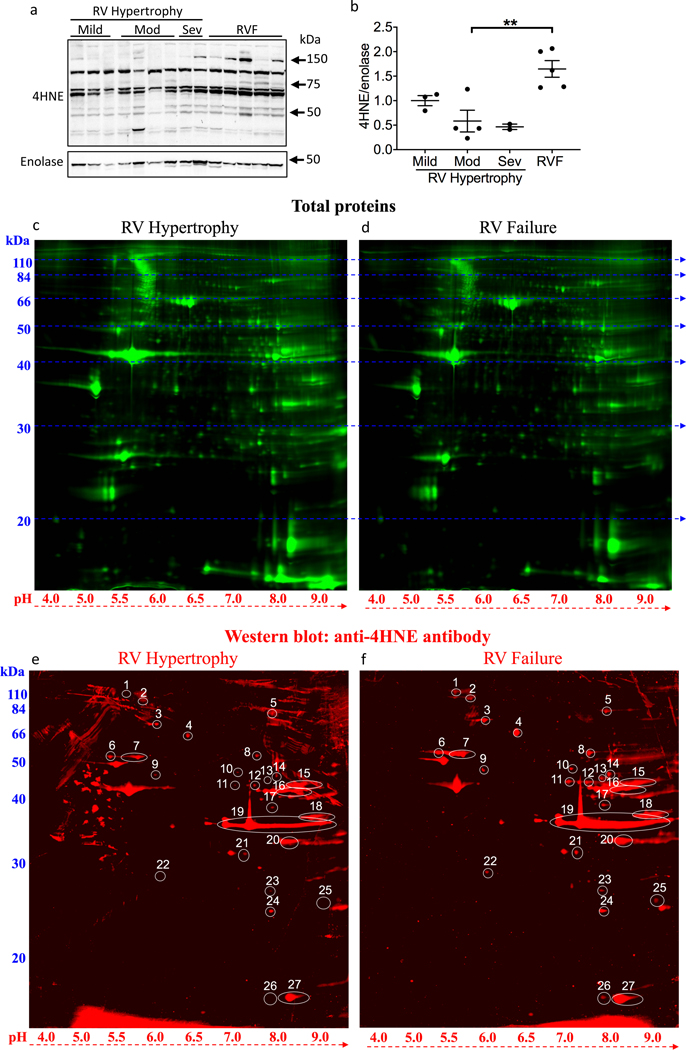
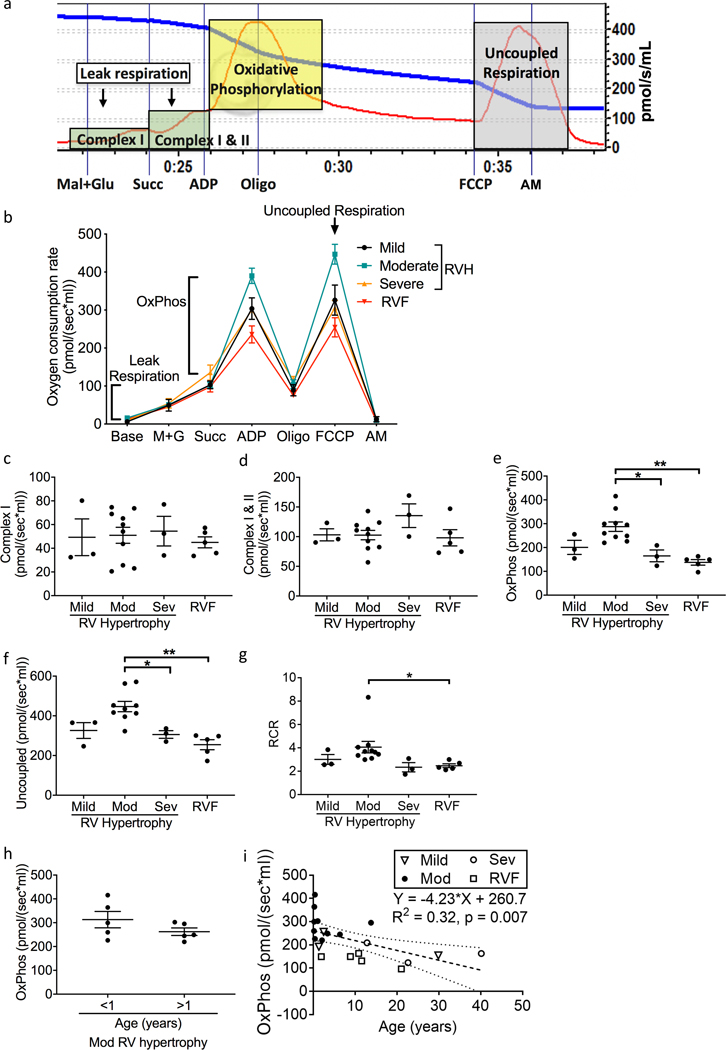
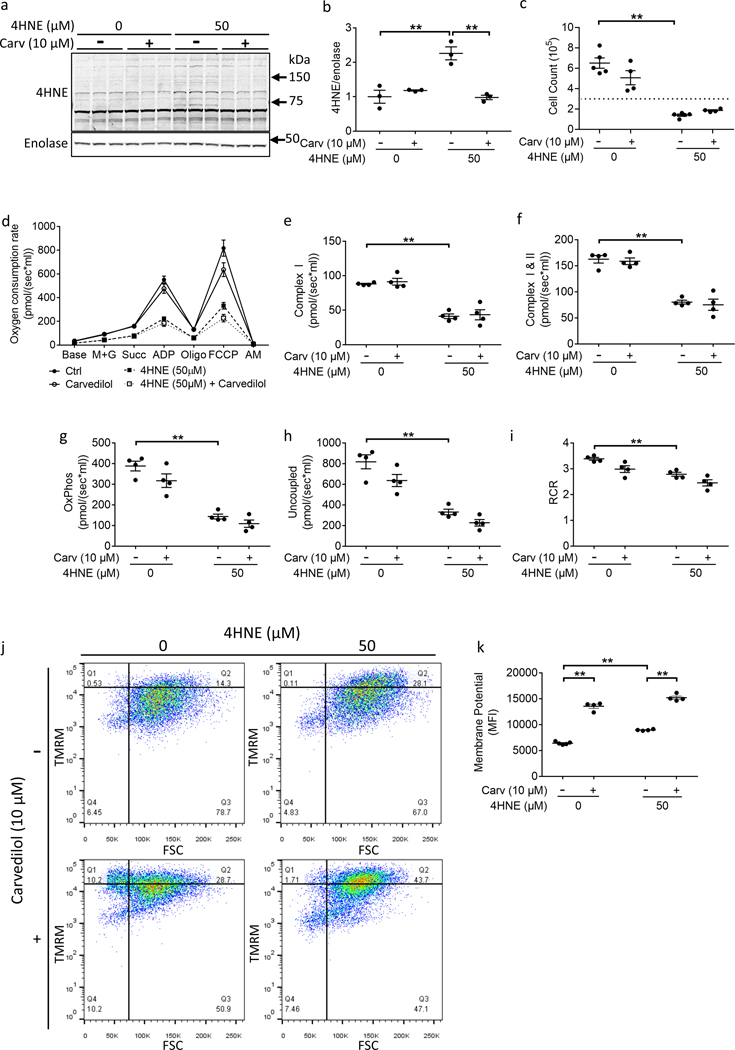
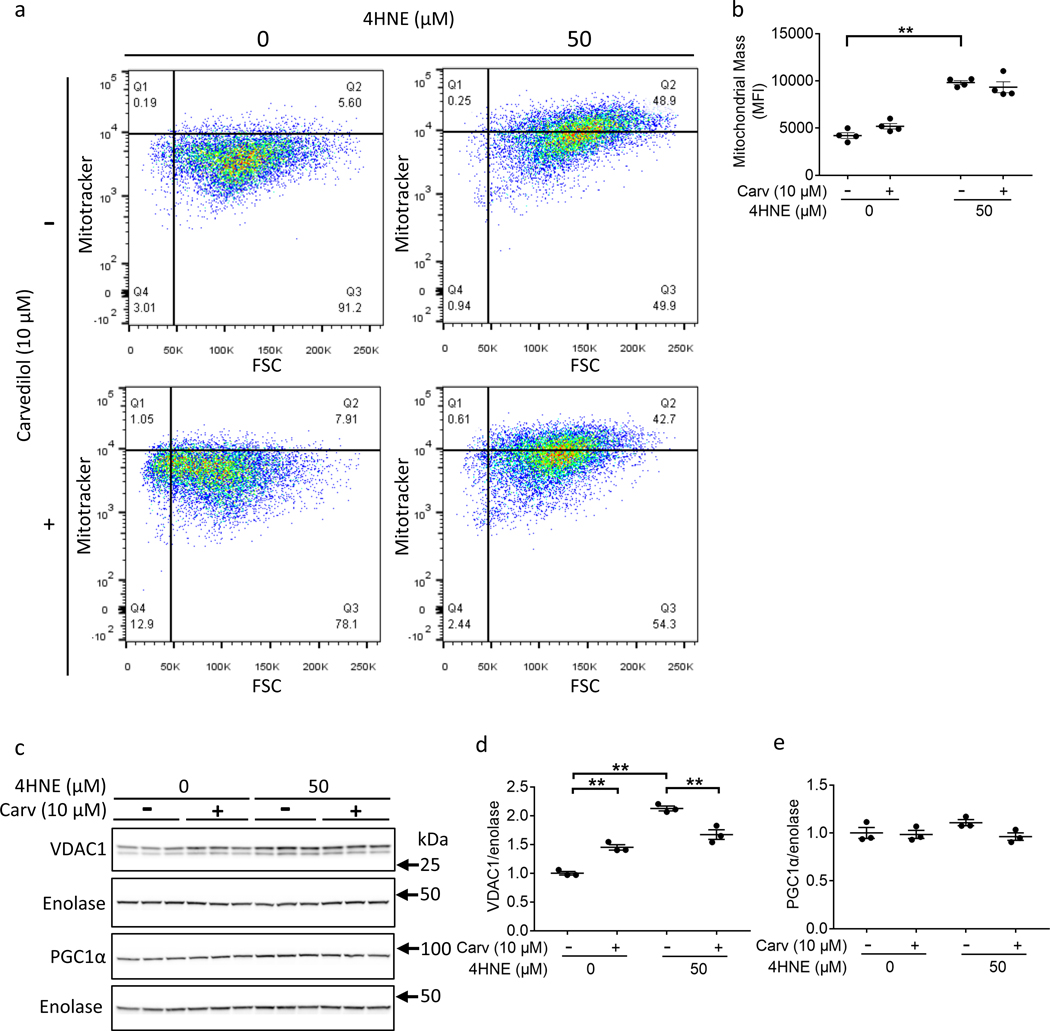
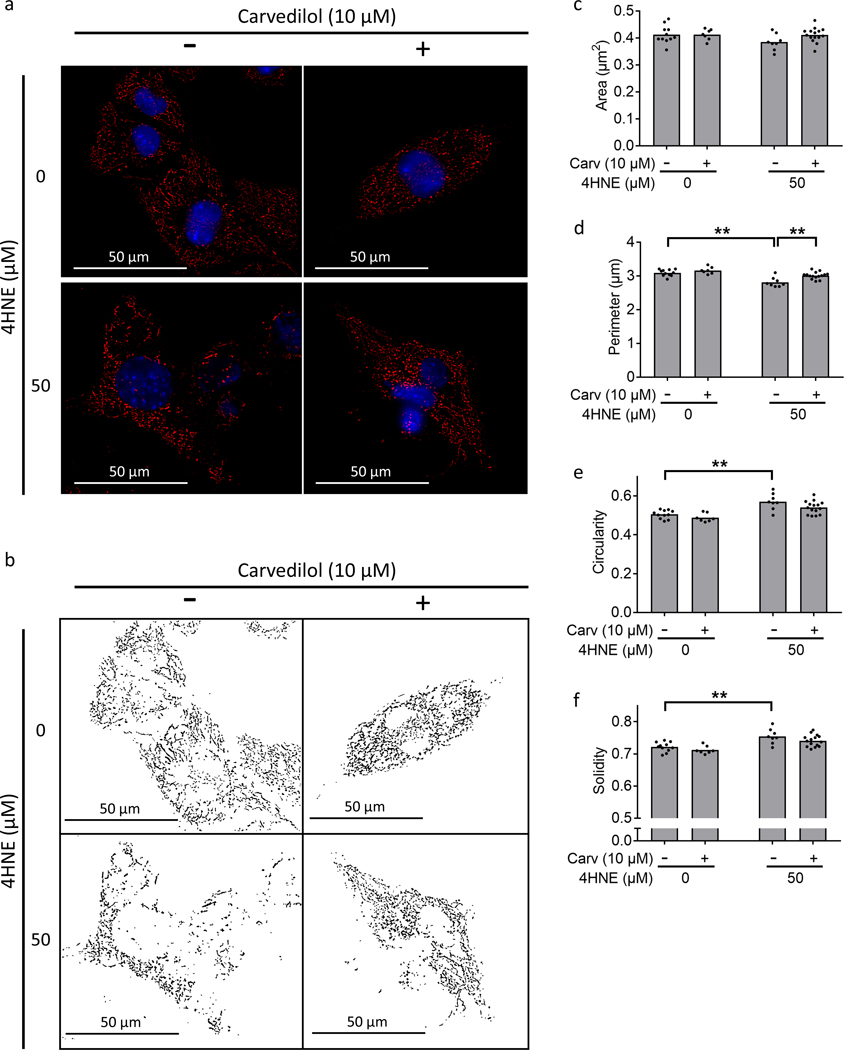
Results: RV failure was characterized by an increase in 4HNE adduction of metabolic and mitochondrial proteins (16 of 27 identified proteins), in particular electron transport chain proteins. Sarcomeric (myosin) and cytoskeletal proteins (desmin, tubulin) also underwent 4HNE adduction. RV failure showed lower oxidative phosphorylation (moderate RV hypertrophy, 287.6±19.75 versus RV failure, 137.8±11.57 pmol/[sec×mL]; P=0.0004), and mitochondrial structural damage. Using a cell model, we show that 4HNE decreases cell number and oxidative phosphorylation (control, 388.1±23.54 versus 4HNE, 143.7±11.64 pmol/[sec×mL]; P<0.0001). Carvedilol, a known antioxidant did not decrease 4HNE adduction of metabolic and mitochondrial proteins and did not improve oxidative phosphorylation.
Conclusions: Metabolic, mitochondrial, sarcomeric, and cytoskeletal proteins are susceptible to 4HNE-adduction in patients with RV failure. 4HNE decreases mitochondrial oxygen consumption by inhibiting electron transport chain complexes. Carvedilol did not improve the 4HNE-mediated decrease in oxygen consumption. Strategies to decrease lipid peroxidation could improve mitochondrial energy generation and cardiomyocyte survival and improve RV failure in patients with congenital heart disease.
Keywords: heart failure; heart ventricles; hypertrophy; lipid peroxidation; mitochondria.
Conflict of interest statement
Figures
References
-
- Altmann K, Printz BF, Solowiejczyk DE, Gersony WM, Quaegebeur J and Apfel HD. Two-dimensional echocardiographic assessment of right ventricular function as a predictor of outcome in hypoplastic left heart syndrome. Am J Cardiol. 86:964–968. - PubMed
-
- Bogaard HJ, Abe K, Vonk Noordegraaf A and Voelkel NF. The right ventricle under pressure: cellular and molecular mechanisms of right-heart failure in pulmonary hypertension. Chest. 2009;135:794–804. - PubMed
-
- Fine NM, Chen L, Bastiansen PM, Frantz RP, Pellikka PA, Oh JK and Kane GC. Outcome prediction by quantitative right ventricular function assessment in 575 subjects evaluated for pulmonary hypertension. Circ Cardiovasc Imaging. 2013;6:711–721. - PubMed
-
- Haddad F, Hunt SA, Rosenthal DN and Murphy DJ. Right ventricular function in cardiovascular disease, part I: Anatomy, Physiology, Aging, and Functional Assessment of the Right Ventricle. Circulation. 2008;117:1436–1448. - PubMed
Publication types
MeSH terms
Grants and funding
LinkOut - more resources
Full Text Sources
Medical
