The association between renal stones and fasting: A systematic review
- PMID: 32807286
- PMCID: PMC7943240
- DOI: 10.5489/cuaj.6664
The association between renal stones and fasting: A systematic review
Abstract
Introduction: Fasting is a common cultural practice worldwide for both religious and dietary reasons. However, there is concern that fasting may be a risk factor for the development of renal stones. To date, there has not been a systematic assessment of the literature regarding the association between renal stones and fasting.
Methods: We conducted a systematic review following PRISMA guidelines of three databases: Medline-OVID, EMBASE, and CINAHL. All screening and extraction was completed in parallel with two independent reviewers.
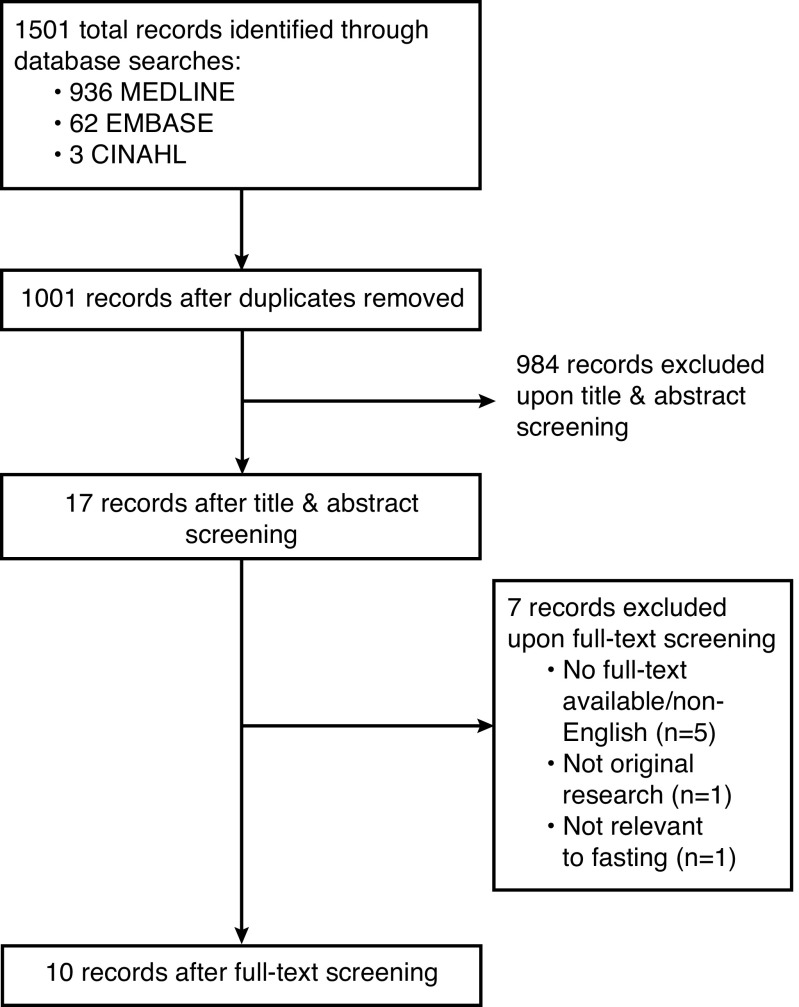
Results: Of the 1501 database citations, a total of 10 observational studies with a total of 9906 participants were included. Nine of the studies were conducted in the context of Islamic fasting during Ramadan, with the majority (7/9) finding that renal colic incidence was unaffected by the month of fasting. In contrast, two studies noted an increased incidence among fasting populations. Two other studies noted that urine metabolites and density were altered with fasting but did not translate into clinical outcomes.
Conclusions: Based on the available evidence, it is unlikely that fasting significantly increases the risk of renal stones. Physicians should counsel higher-risk patients on safe fasting practices.
Conflict of interest statement
Figures
References
-
- McKnight S. Bahai.org. Fasting. USA: Phyllis tickle; 2010. [Accessed Aug. 7, 2020]. Fasting: The ancient practices. The ancient practices. Available at: https://www.bahai.org/beliefs/life-spirit/devotion/fasting.
Publication types
LinkOut - more resources
Full Text Sources