


Sleep disturbances as risk factors for suicidal thoughts and behaviours: a meta-analysis of longitudinal studies
- PMID: 32807889
- PMCID: PMC7431543
- DOI: 10.1038/s41598-020-70866-6
Sleep disturbances as risk factors for suicidal thoughts and behaviours: a meta-analysis of longitudinal studies
Abstract
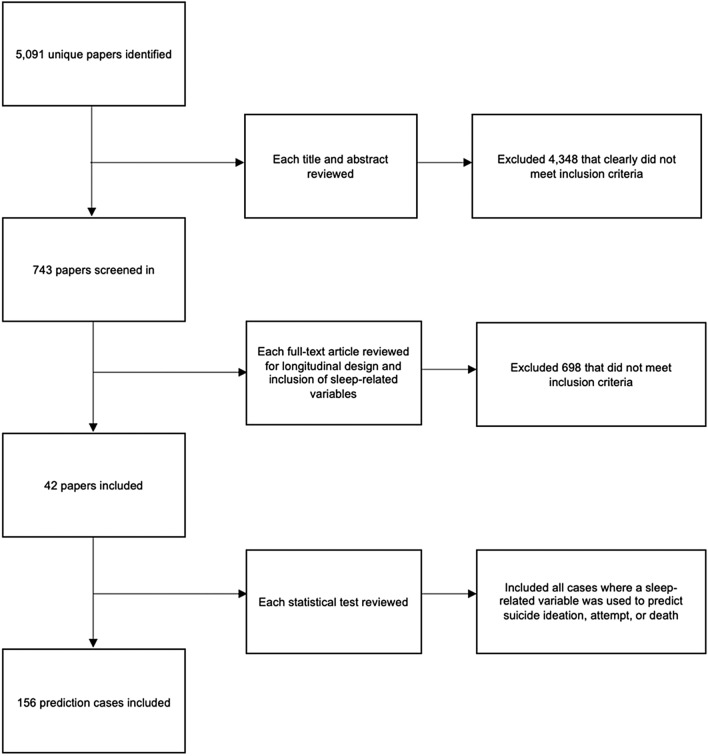
In recent years, there has been a growing interest in understanding the relationship between sleep and suicide. Although sleep disturbances are commonly cited as critical risk factors for suicidal thoughts and behaviours, it is unclear to what degree sleep disturbances confer risk for suicide. The aim of this meta-analysis was to clarify the extent to which sleep disturbances serve as risk factors (i.e., longitudinal correlates) for suicidal thoughts and behaviours. Our analyses included 156 total effects drawn from 42 studies published between 1982 and 2019. We used a random effects model to analyse the overall effects of sleep disturbances on suicidal ideation, attempts, and death. We additionally explored potential moderators of these associations. Our results indicated that sleep disturbances are statistically significant, yet weak, risk factors for suicidal thoughts and behaviours. The strongest associations were found for insomnia, which significantly predicted suicide ideation (OR 2.10 [95% CI 1.83-2.41]), and nightmares, which significantly predicted suicide attempt (OR 1.81 [95% CI 1.12-2.92]). Given the low base rate of suicidal behaviours, our findings raise questions about the practicality of relying on sleep disturbances as warning signs for imminent suicide risk. Future research is necessary to uncover the causal mechanisms underlying the relationship between sleep disturbances and suicide.
Conflict of interest statement
The authors declare no competing interests.
Figures


References
-
- Czeisler CA, Klerman EB. Circadian and sleep-dependent regulation of hormone release in humans. Recent Prog. Hormdiscussion 130–2. Res. 1999;54:97–130. - PubMed
-
- Dattilo M, et al. Sleep and muscle recovery: Endocrinological and molecular basis for a new and promising hypothesis. Med. Hypotheses. 2011;77:220–222. - PubMed
-
- Stickgold R. Sleep-dependent memory consolidation. Nature. 2005;437:1272–1278. - PubMed
-
- Gerner RH, Post RM, Gillin C, Bunney WE. Biological and behavioral effects of one night’s sleep deprivation in depressed patients and normals. J. Psychiatry Res. 1979;15:21–40. - PubMed
-
- Nilsson JP, et al. Less effective executive functioning after one night’s sleep deprivation. J. Sleep Res. 2005;14:1–6. - PubMed
Publication types
MeSH terms
LinkOut - more resources
Full Text Sources
Medical
