Review
. 2020 Nov;16(11):641-656.
doi: 10.1038/s41581-020-0325-2. Epub 2020 Aug 17.

Rare genetic causes of complex kidney and urological diseases

Affiliations
Review

Rare genetic causes of complex kidney and urological diseases

Emily E Groopman et al. Nat Rev Nephrol. 2020 Nov.

Abstract

Although often considered a single-entity, chronic kidney disease (CKD) comprises many pathophysiologically distinct disorders that result in persistently abnormal kidney structure and/or function, and encompass both monogenic and polygenic aetiologies. Rare inherited forms of CKD frequently span diverse phenotypes, reflecting genetic phenomena including pleiotropy, incomplete penetrance and variable expressivity. Use of chromosomal microarray and massively parallel sequencing technologies has revealed that genomic disorders and monogenic aetiologies contribute meaningfully to seemingly complex forms of CKD across different clinically defined subgroups and are characterized by high genetic and phenotypic heterogeneity. Investigations of prevalent genomic disorders in CKD have integrated genetic, bioinformatic and functional studies to pinpoint the genetic drivers underlying their renal and extra-renal manifestations, revealing both monogenic and polygenic mechanisms. Similarly, massively parallel sequencing-based analyses have identified gene- and allele-level variation that contribute to the clinically diverse phenotypes observed for many monogenic forms of nephropathy. Genome-wide sequencing studies suggest that dual genetic diagnoses are found in at least 5% of patients in whom a genetic cause of disease is identified, highlighting the fact that complex phenotypes can also arise from multilocus variation. A multifaceted approach that incorporates genetic and phenotypic data from large, diverse cohorts will help to elucidate the complex relationships between genotype and phenotype for different forms of CKD, supporting personalized medicine for individuals with kidney disease.


Figures
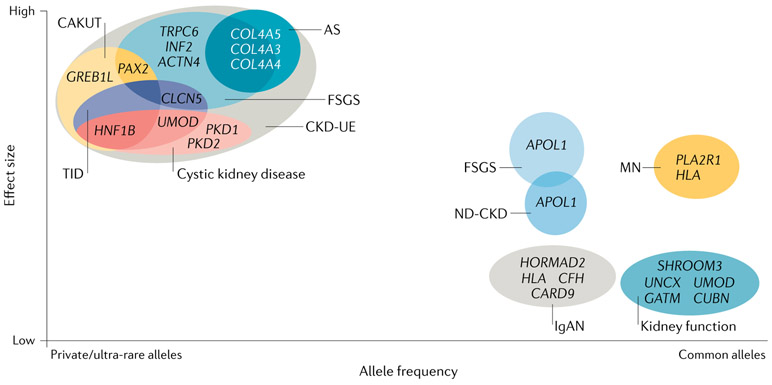
Fig. 1 ∣
Fig. 1 ∣. Chronic kidney disease as a complex disease.
Chronic kidney disease (CKD) is frequently considered to be a single disease entity, defined by persistent abnormalities of kidney structure and/or function. However, these phenomena can result from many genetically distinct aetiologies, with disease risk shaped by the contributions of variants of varying frequencies and effect sizes. Causal variants for CKD include rare or even private variants with large effect sizes, which are generally associated with monogenic CKD subtypes, and more common alleles, which have been associated both with clinically distinct CKD subtypes, such as focal segmental glomerulosclerosis (FSGS), IgA nephropathy (IgAN), and membranous nephropathy (MN), and with kidney function traits, such as estimated glomerular filtration rate, serum creatinine level and albuminuria. Although common alleles typically have small individual effect sizes, certain common alleles have a greater impact on disease risk, including APOL1 variants in FSGS and non-diabetic CKD (ND-CKD), and HLA and PLA2R1 variants in MN. Moreover, variants within a single gene can have a role in both monogenic and polygenic forms of nephropathy. For example, rare variants in UMOD result in the monogenic nephropathy of autosomal-dominant tubulointerstitial kidney disease, whereas more common non-coding UMOD variants are associated with kidney function traits, such as estimated glomerular filtration rate and serum creatinine level. In addition, the high genetic heterogeneity of CKD means that different single-gene mutations can yield the same clinical disease subtype as defined by clinical symptomatology and investigations of kidney function, imaging and/or histopathology. Conversely, the high phenotypic heterogeneity of CKD can also lead to mutations in the same gene, producing clinically distinct CKD subtypes. For example, the clinical disease entity of FSGS can result from mutations in any one of multiple different genes, including TRPC6, INF2, PAX2 and CLCN5. In many cases, mutations in these genes can also yield other clinical subtypes of CKD; for example, PAX2 mutations can cause congenital anomalies of the kidney and urinary tract (CAKUT) and CLCN5 mutations can cause tubulointerstitial disease (TID). Conversely, mutations in a single gene can produce a variety of CKD phenotypes. For instance, individuals with variants in HNF1B can present with CAKUT, TID or cystic kidney disease. As a result of such high phenotypic heterogeneity, many monogenic nephropathies can present as CKD of unknown aetiology (CKD-UE). Together, this genetic and phenotypic variability supports the notion that, as posited for other common diseases, CKD might instead represent a wide array of rarer disorders, each of which has its own distinct genetic architecture.
Fig. 2 ∣
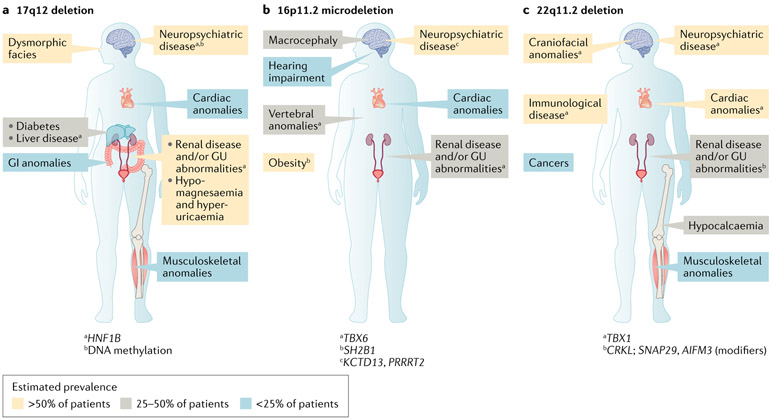
Fig. 2 ∣. Genetic drivers of the complex phenotypes of common genomic disorders in chronic kidney disease.
Copy number variants (CNVs) at the 17q12, 16p11.2 and 22q11.2 loci are common genomic disorders detected among individuals with chronic kidney disease, altogether occurring in approximately 2.9% of individuals with congenital anomalies of the kidney and urinary tract. These disorders are characterized by highly heterogeneous neurodevelopmental, cardiac and renal involvement, reflecting genetic pleiotropy and variable penetrance and expressivity. Multidisciplinary investigations integrating genetic, bioinformatic and functional studies have pinpointed key genetic mechanisms underlying the renal and extra-renal manifestations of these disorders. a ∣ In patients with deletions in 17q12, HNF1B haploinsufficiency mediates renal and endocrine anomalies and DNA methylation contributes to variable neuropsychiatric dysfunction. b ∣ In patients with 16p11.2 microdeletion, the degree of TBX6 gene inactivation mediates congenital anomalies of the kidney and urinary tract phenotypes. c ∣ In patients with deletion at the 22q11.2 locus, epistatic interactions between CRKL and other genes in the 22q11.2 locus (SNAP2 and AIFM3) are thought to drive the renal anomalies. GI, gastrointestinal; GU, genitourinary.
Fig. 3 ∣
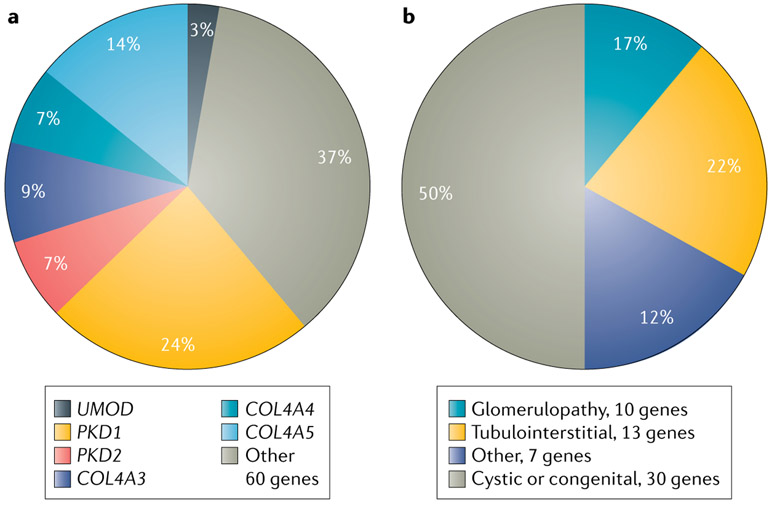
Fig. 3 ∣. Genetic and phenotypic heterogeneity observed on exome sequence analysis of patients with all-cause chronic kidney disease.
a ∣ Genetic spectrum of positive cases from exome sequence analysis of 3,315 patients with all-cause chronic kidney disease. Of the 66 distinct monogenic disorders detected, findings in six genes accounted for 63% of all genetic diagnoses, with autosomal-dominant polycystic kidney disease resulting from mutations in PKD1 (75 cases; 24%) or PKD2 (22 cases; 7%); type IV collagen-associated nephropathy secondary to mutations in COL4A3 (27 cases; 9%), COL4A4 (21 cases; 7%) or COL4A5 (44 cases; 14%); and autosomal-dominant tubulointerstitial kidney disease caused by mutations in UMOD (9 cases; 3%). The remaining 37% of genetic diagnoses encompassed 60 different monogenic disorders. b ∣ The 60 other monogenic disorders spanned a diverse range of clinical chronic kidney disease subtypes, each of which included many distinct single-gene aetiologies, including cystic or congenital renal disease (30 genes; 50%); glomerulopathy (10 genes; 17%); tubulointerstitial disease (13 genes; 22%); and other causes of nephropathy (7 genes; 12%). Percentages do not total 100 because of rounding.

References

    1. Webster AC, Nagler EV, Morton RL & Masson P Chronic kidney disease. Lancet 389, 1238–1252 (2017). - PubMed
    1. Devuyst O et al. Rare inherited kidney diseases: challenges, opportunities, and perspectives. Lancet 383, 1844–1859 (2014). - PMC - PubMed
    1. Skrunes R, Svarstad E, Reisaeter AV & Vikse BE Familial clustering of ESRD in the Norwegian population. Clin. J. Am. Soc. Nephrol 9, 1692–1700 (2014). - PMC - PubMed
    1. Connaughton DM et al. The Irish kidney gene project-prevalence of family history in patients with kidney disease in ireland. Nephron 130, 293–301 (2015). - PubMed
    1. McClellan WM et al. Individuals with a family history of ESRD are a high-risk population for CKD: implications for targeted surveillance and intervention activities. Am. J. Kidney Dis 53, S100–S106 (2009). - PubMed

Publication types