


Combining Frontal Transcranial Direct Current Stimulation With Walking Rehabilitation to Enhance Mobility and Executive Function: A Pilot Clinical Trial
- PMID: 32808403
- PMCID: PMC7889743
- DOI: 10.1111/ner.13250
Combining Frontal Transcranial Direct Current Stimulation With Walking Rehabilitation to Enhance Mobility and Executive Function: A Pilot Clinical Trial
Abstract
Objectives: This pilot study assessed whether frontal lobe transcranial direct current stimulation (tDCS) combined with complex walking rehabilitation is feasible, safe, and shows preliminary efficacy for improving walking and executive function.
Materials and methods: Participants were randomized to one of the following 18-session interventions: active tDCS and rehabilitation with complex walking tasks (Active/Complex); sham tDCS and rehabilitation with complex walking tasks (Sham/Complex); or sham tDCS and rehabilitation with typical walking (Sham/Typical). Active tDCS was delivered over F3 (cathode) and F4 (anode) scalp locations for 20 min at 2 mA intensity. Outcome measures included tests of walking function, executive function, and prefrontal activity measured by functional near infrared spectroscopy.
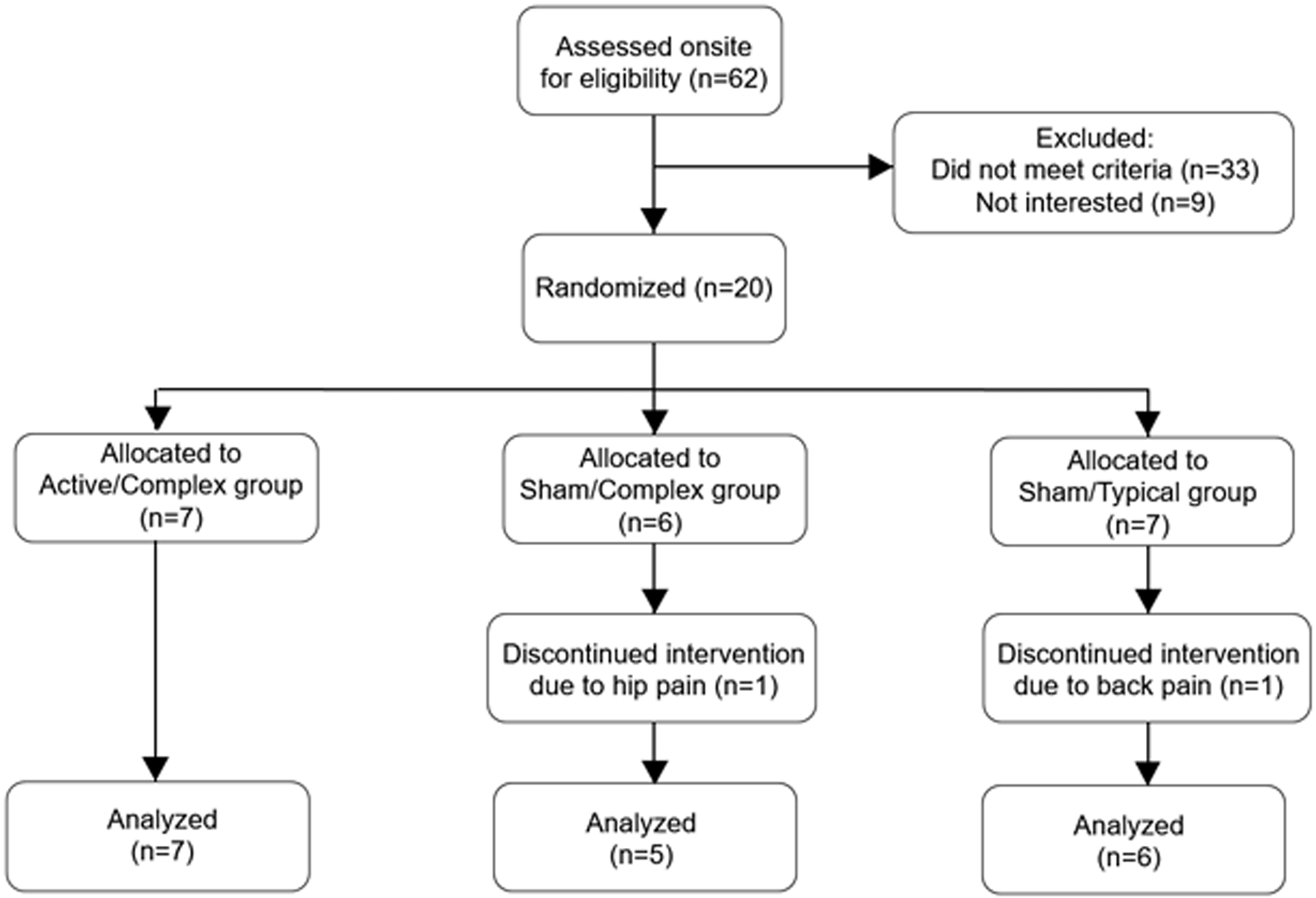
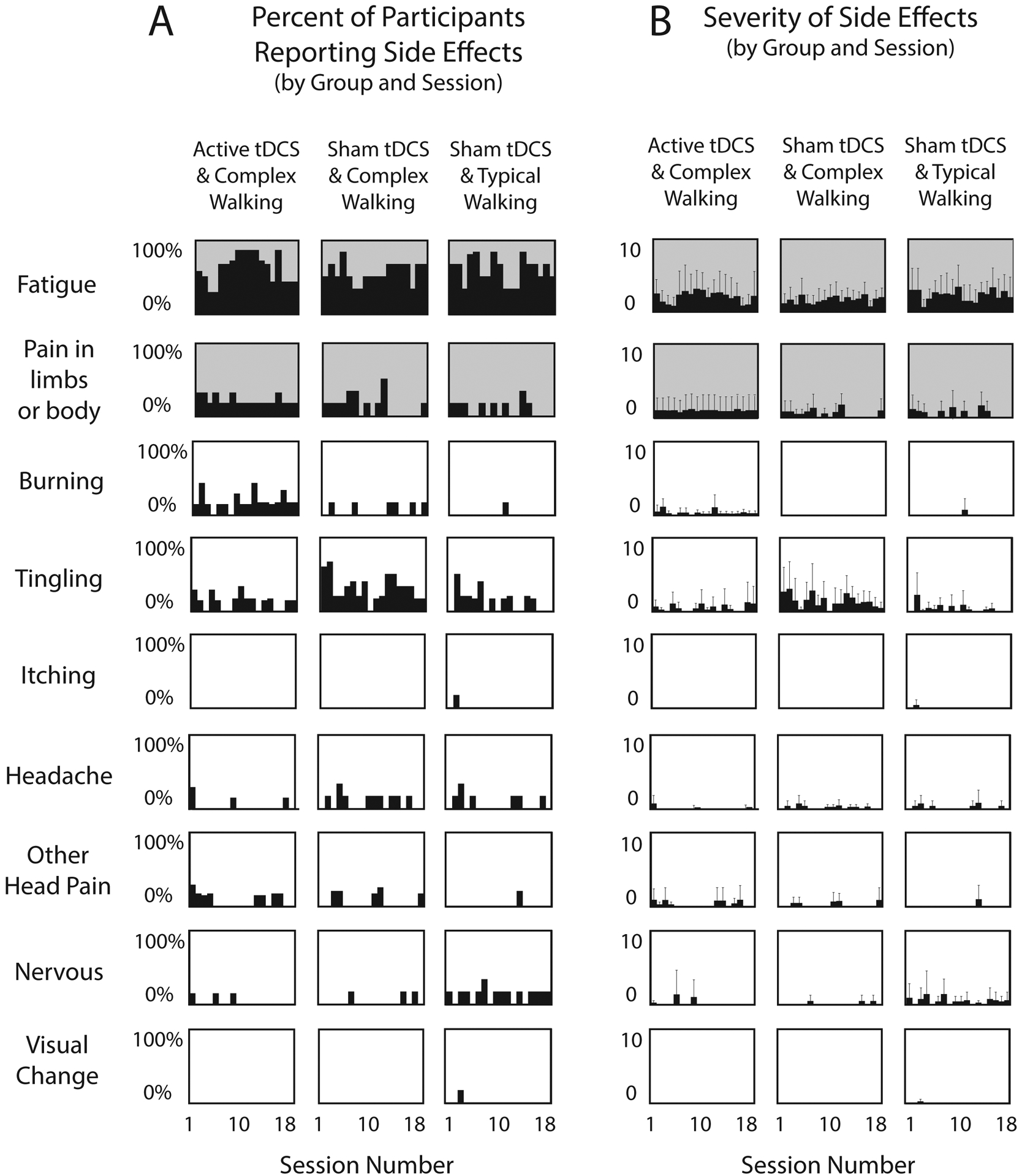
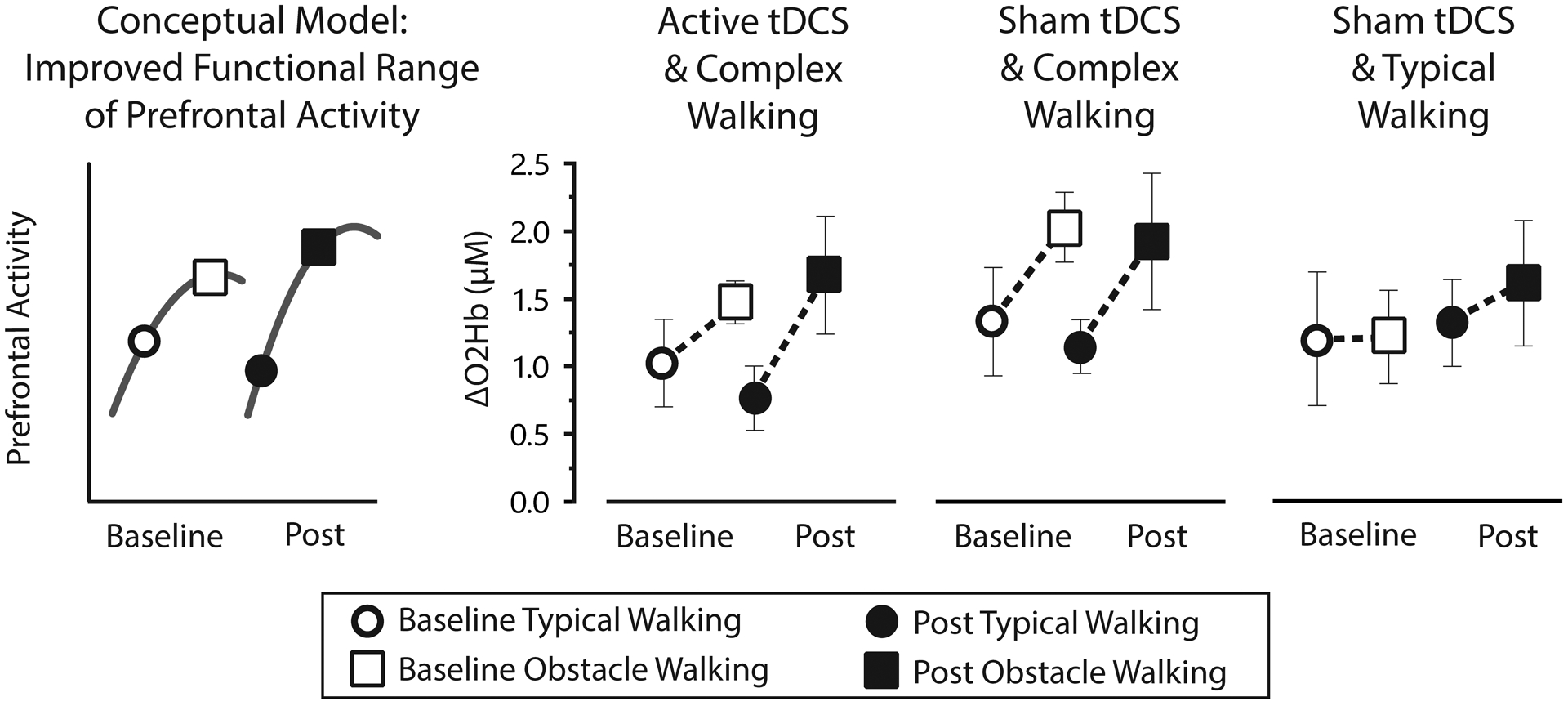
Results: Ninety percent of participants completed the intervention protocol successfully. tDCS side effects of tingling or burning sensations were low (average rating less than two out of 10). All groups demonstrated gains in walking performance based on within-group effect sizes (d ≥ 0.50) for one or more assessments. The Sham/Typical group showed the greatest gains for walking based on between-group effect sizes. For executive function, the Active/Complex group showed the greatest gains based on moderate to large between-group effect sizes (d = 0.52-1.11). Functional near-infrared spectroscopy (fNIRS) findings suggest improved prefrontal cortical activity during walking.
Conclusions: Eighteen sessions of walking rehabilitation combined with tDCS is a feasible and safe intervention for older adults. Preliminary effects size data indicate a potential improvement in executive function by adding frontal tDCS to walking rehabilitation. This study justifies future larger clinical trials to better understand the benefits of combining tDCS with walking rehabilitation.
Keywords: Aging; cognition; rehabilitation; transcranial direct current stimulation; walking.
© 2020 International Neuromodulation Society.
Conflict of interest statement
Conflict of interest statement: The authors disclose no conflicts of interest.
Figures
References
-
- Maidan I, Nieuwhof F, Bernad-Elazari H, Reelick MF, Bloem BR, Giladi N, Deutsch JE, Hausdorff JM, Claassen JA, Mirelman A. The Role of the Frontal Lobe in Complex Walking Among Patients With Parkinson’s Disease and Healthy Older Adults: An fNIRS Study. Neurorehabilitation and Neural Repair. 2016. - PubMed
Publication types
MeSH terms
Grants and funding
LinkOut - more resources
Full Text Sources
Medical
Miscellaneous
