


Situating the Continuum of Overdose Risk in the Social Determinants of Health: A New Conceptual Framework
- PMID: 32808709
- PMCID: PMC7482387
- DOI: 10.1111/1468-0009.12470
Situating the Continuum of Overdose Risk in the Social Determinants of Health: A New Conceptual Framework
Abstract
Policy Points This article reconceptualizes our understanding of the opioid epidemic and proposes six strategies that address the epidemic's social roots. In order to successfully reduce drug-related mortality over the long term, policymakers and public health leaders should develop partnerships with people who use drugs, incorporate harm reduction interventions, and reverse decades of drug criminalization policies.
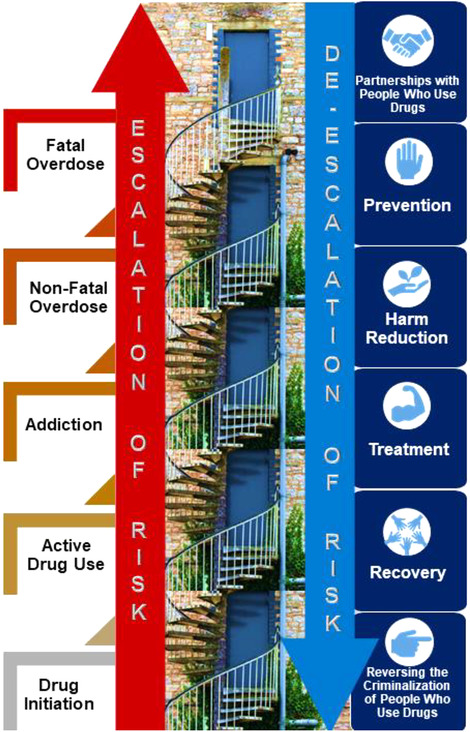
Context: Drug overdose is the leading cause of injury-related death in the United States. Synthetic opioids, predominantly illicit fentanyl and its analogs, surpassed prescription opioids and heroin in associated mortality rates in 2016. Unfortunately, interventions fail to fully address the current wave of the opioid epidemic and often omit the voices of people with lived experiences regarding drug use. Every overdose death is a culmination of a long series of policy failures and lost opportunities for harm reduction.
Methods: In this article, we conducted a scoping review of the opioid literature to propose a novel framework designed to foreground social determinants more directly into our understanding of this national emergency. The "continuum of overdose risk" framework is our synthesis of the global evidence base and is grounded in contemporary theories, models, and policies that have been successfully applied both domestically and internationally.
Findings: De-escalating overdose risk in the long term will require scaling up innovative and comprehensive solutions that have been designed through partnerships with people who use drugs and are rooted in harm reduction.
Conclusions: Without recognizing the full drug-use continuum and the role of social determinants, the current responses to drug overdose will continue to aggravate the problem they are trying to solve.
Keywords: addictive behavior; drug use; opioids; substance use.
© 2020 Milbank Memorial Fund.
Figures
References
-
- CDC WONDER . Overdose death rates. 2018. https://www.drugabuse.gov/related-topics/trends-statistics/overdose-deat.... Accessed September 30, 2018.
-
- Centers for Disease Control and Prevention . The three waves of opioid overdose deaths. 2019. https://www.cdc.gov/drugoverdose/epidemic/index.html. Accessed December 19, 2019.
Publication types
MeSH terms
Substances
Grants and funding
LinkOut - more resources
Full Text Sources
