


Conservative management of abnormally invasive placenta complicated by local hyperfibrinolysis and beginning disseminated intravascular coagulation
- PMID: 32809062
- PMCID: PMC7854425
- DOI: 10.1007/s00404-020-05721-0
Conservative management of abnormally invasive placenta complicated by local hyperfibrinolysis and beginning disseminated intravascular coagulation
Abstract
Introduction: Abnormally invasive placenta (AIP) is often associated with high maternal morbidity. In surgical treatment, caesarean hysterectomy or partial uterine resection may lead to high perioperative maternal blood loss. A conservative treatment by leaving the placenta in utero after caesarean delivery of the baby is an option to preserve fertility and to reduce peripartum hysterectomy-related morbidity. Nevertheless, due to increased placental coagulation activity as well as consumption of clotting factors, a disseminated intravascular coagulation (DIC)-like state with secondary late postpartum bleeding can occur.
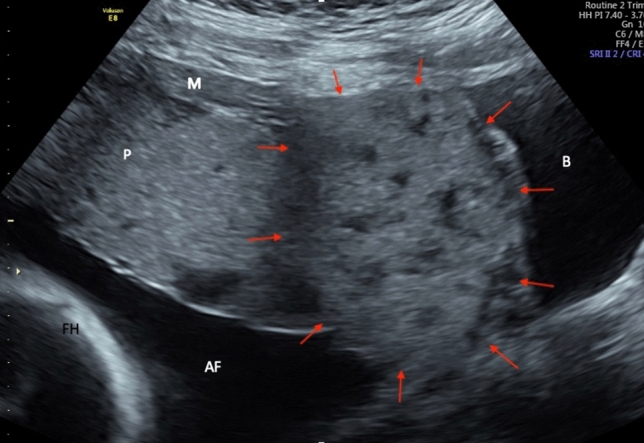
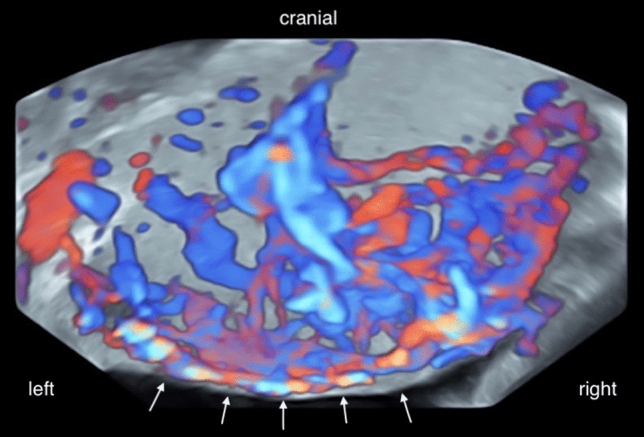
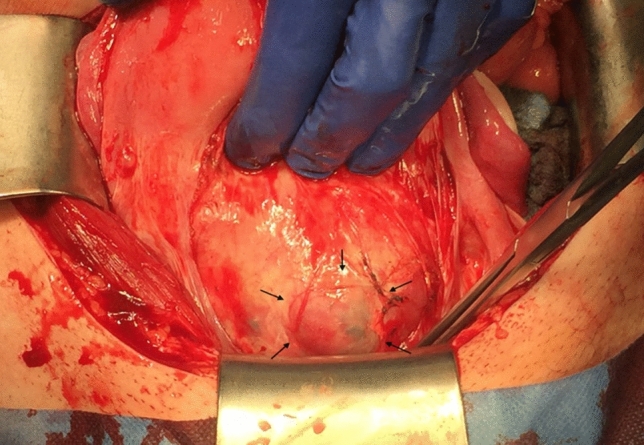
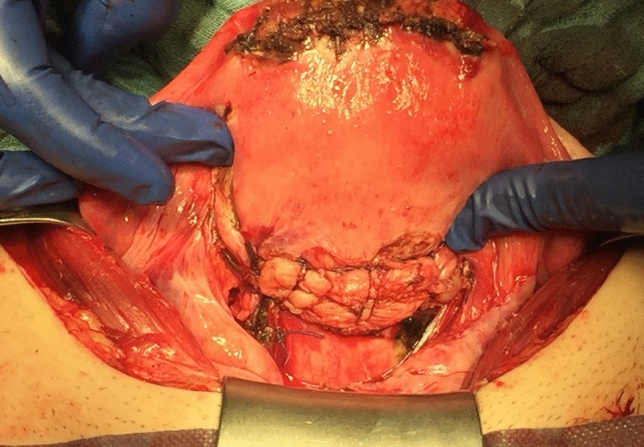
Purpose: Systematic review after the presentation of a case of conservative management of placenta percreta with secondary partial uterine wall resection due to vaginal bleeding, complicated by local hyperfibrinolysis and consecutive systemic decrease in fibrinogen levels.
Methods: Systematic PubMed database search was done until August 2019 without any restriction of publication date or journal RESULTS: Among 58 publications, a total of 11 reported on DIC-like symptoms in the conservative management of AIP, in the median on day 59 postpartum. In most cases, emergency hysterectomy was performed, which led to an almost immediate normalization of coagulation status but was accompanied with high maternal blood loss. In two cases, fertility-preserving conservative management could be continued after successful medical therapy.
Conclusion: Based on these results, we suggest routinely monitoring of the coagulation parameters next to signs of infection in the postpartum check-ups during conservative management of AIP. Postpartum tranexamic acid oral dosage should be discussed when fibrinogen levels are decreasing and D-Dimers are increasing.
Keywords: Abnormal invasive placenta; Conservative management; Disseminated intravascular coagulation; Fibrinogen levels; Placenta in situ; Placenta percreta.
Conflict of interest statement
No potential conflict of interest (attached as separate signed documents).
Figures
Comment in
-
Hysterectomy versus continuing conservative management: which is better for disseminated intravascular coagulation?Arch Gynecol Obstet. 2022 Feb;305(2):537-538. doi: 10.1007/s00404-021-05961-8. Epub 2021 Jan 20. Arch Gynecol Obstet. 2022. PMID: 33471215 No abstract available.
-
Reply to: "Hysterectomy versus continuing conservative management: which is better for disseminated intravascular coagulation?"; Shinya Matsuzaki, MD, PhD, Yoshikazu Nagase, MD, Masayuki Endo, MD, PhD, Tadashi Kimura, MD, PhD.Arch Gynecol Obstet. 2022 Feb;305(2):539-541. doi: 10.1007/s00404-021-05964-5. Epub 2021 Feb 5. Arch Gynecol Obstet. 2022. PMID: 33544204 Free PMC article. No abstract available.
References
Publication types
MeSH terms
Substances
LinkOut - more resources
Full Text Sources
Medical
Miscellaneous
