


Maternal stress or sleep during pregnancy are not reflected on telomere length of newborns
- PMID: 32814800
- PMCID: PMC7438332
- DOI: 10.1038/s41598-020-71000-2
Maternal stress or sleep during pregnancy are not reflected on telomere length of newborns
Abstract
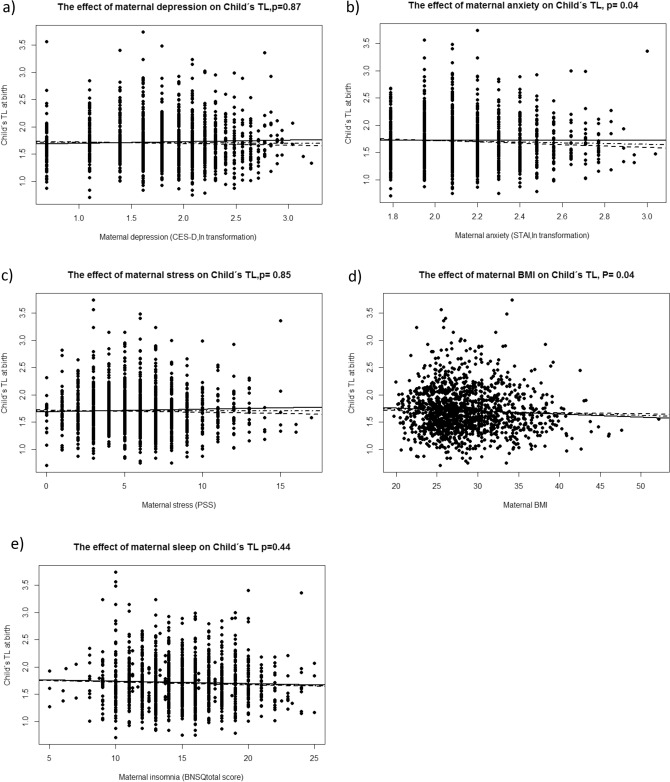
Telomeres play an important role in maintaining chromosomal integrity. With each cell division, telomeres are shortened and leukocyte telomere length (LTL) has therefore been considered a marker for biological age. LTL is associated with various lifetime stressors and health-related outcomes. Transgenerational effects have been implicated in newborns, with maternal stress, depression, and anxiety predicting shorter telomere length at birth, possibly reflecting the intrauterine growth environment. Previous studies, with relatively small sample sizes, have reported an effect of maternal stress, BMI, and depression during pregnancy on the LTL of newborns. Here, we attempted to replicate previous findings on prenatal stress and newborn LTL in a sample of 1405 infants using a qPCR-based method. In addition, previous research has been expanded by studying the relationship between maternal sleep quality and LTL. Maternal prenatal stress, anxiety, depression, BMI, and self-reported sleep quality were evaluated with self-reported questionnaires. Despite sufficient power to detect similar or even considerably smaller effects than those previously reported in the literature, we were unable to replicate the previous correlation between maternal stress, anxiety, depression, or sleep with LTL. We discuss several possible reasons for the discrepancies between our findings and those previously described.
Conflict of interest statement
The authors declare no competing interests.
Figures
References
Publication types
MeSH terms
LinkOut - more resources
Full Text Sources
Medical
