


A review of the barriers to using Patient-Reported Outcomes (PROs) and Patient-Reported Outcome Measures (PROMs) in routine cancer care
- PMID: 32815314
- PMCID: PMC8168064
- DOI: 10.1002/jmrs.421
A review of the barriers to using Patient-Reported Outcomes (PROs) and Patient-Reported Outcome Measures (PROMs) in routine cancer care
Abstract
Introduction: Patient-reported outcomes (PROs) are direct reports from patients about the status of their health condition without amendment or interpretation by others. Patient-reported outcome measures (PROMs) are the tools used to measure PROs; they are usually validated questionnaires patients complete by self-assessing their health status. Whilst the benefits of using PROs and PROMs to guide real-time patient care are well established, they have not been adopted by many oncology institutions worldwide. This literature review aimed to examine the barriers associated with using PROs and PROMs in routine oncology care.
Methods: A literature search was conducted across EMBASE, Medline and CINAHL databases. Studies detailing barriers to routine PRO use for real-time patient care were included; those focusing on PRO collection in the research setting were excluded.
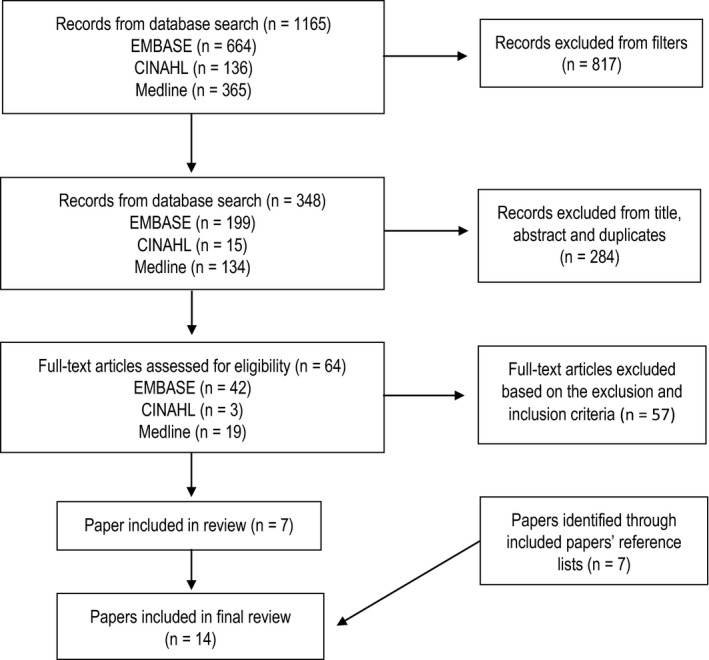
Results: Of 1165 records captured, 14 studies informed this review. At the patient level, patient time, incapacity and difficulty using electronic devices to complete PROMs were prominent barriers. At the health professional level, major barriers included health professionals' lack of time and knowledge to meaningfully interpret and integrate PRO data into their clinical practice and the inability for PRO data to be acted upon. Prominent barriers at the service level included difficulties integrating PROs and PROMs into clinical workflows and inadequate information technology (IT) infrastructures for easy PRO collection.
Conclusion: This review has outlined potential barriers to routine PRO use in the oncology setting. Such barriers should be considered when implementing PROs into routine clinical practice.
Keywords: barriers; cancer; oncology; patient-reported outcome measures; patient-reported outcomes.
© 2020 The Authors. Journal of Medical Radiation Sciences published by John Wiley & Sons Australia, Ltd on behalf of Australian Society of Medical Imaging and Radiation Therapy and New Zealand Institute of Medical Radiation Technology.
Conflict of interest statement
The authors declare no conflict of interest.
Figures
References
-
- Dirven L, Armstrong TS, Blakeley JO, et al. Working plan for the use of patient‐reported outcome measures in adults with brain tumours: A response assessment in neuro‐oncology (RANO) initiative. Lancet Oncol 2018; 19(3): e173–e80. - PubMed
-
- Institute of Medicine Committee on Quality of Health Care in America . Crossing the Quality Chasm: A New Health System for the 21st Century. National Academies Press (US), Washington (DC), 2001.
-
- Di Maio M, Gallo C, Leighl NB, et al. Symptomatic toxicities experienced during anticancer treatment: agreement between patient and physician reporting in three randomized trials. J Clin Oncol 2015; 33(8): 910–5. - PubMed
Publication types
MeSH terms
LinkOut - more resources
Full Text Sources
Medical
Miscellaneous
