


Translation, cross-cultural adaptation, and validation of the sino-nasal outcome test (snot)-22 for Finnish patients
- PMID: 32816065
- PMCID: PMC7826295
- DOI: 10.1007/s00405-020-06297-w
Translation, cross-cultural adaptation, and validation of the sino-nasal outcome test (snot)-22 for Finnish patients
Abstract
Purpose: The Sino-Nasal Outcome Test-22 (SNOT-22) is the most commonly used disease-specific quality of life questionnaire in rhinology. The purpose of this prospective study was to translate and validate SNOT-22 into Finnish.
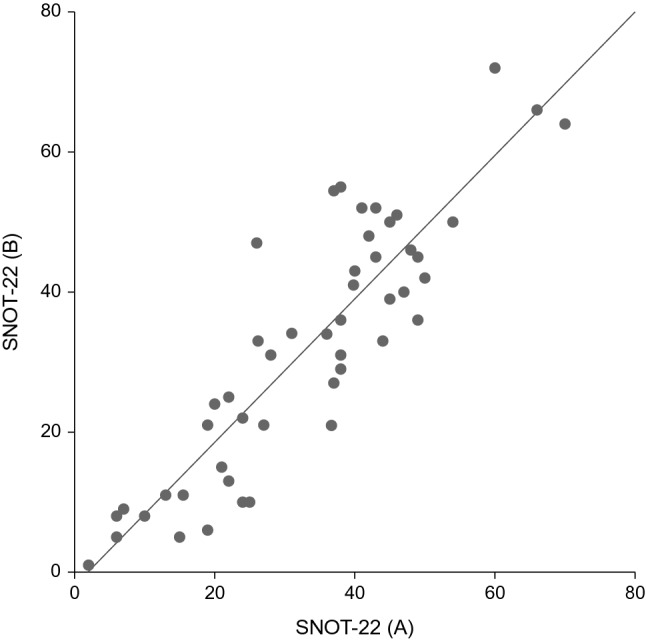
Methods: The validation process followed the guidelines proposed for cross-cultural adaptation of health-related measures of quality of life. The study consisted of three groups: rhinologic out-patients (N = 96), FESS patients (N = 49) and healthy controls (N = 79). Out-patient and FESS groups completed the questionnaire twice (answers A and B), out-patients after two weeks and FESS patients after 3 months. Validity, reliability and responsiveness were evaluated.
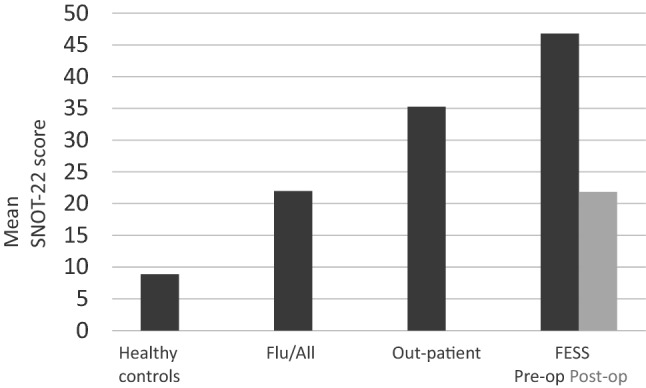
Results: The mean SNOT-22 sum score of the out-patient questionnaires were 35.3 points (answer A) and 32.4 points (answer B). ICC in out-patient group was 0.879. For the FESS patients, the mean pre- and postoperative (answer A and B) SNOT-22 sum scores were 46.8 and 21.9 points, respectively (p < 0.0001). The mean SNOT-22 of healthy controls was 8.9 points. The out-patients (answer A) and healthy controls had statistically significant difference in SNOT-22 scores (p < 0.0001).
Conclusions: The results of our study show that the validated Finnish version of the SNOT-22 questionnaire demonstrates good validity, reliability and responsiveness.
Keywords: HRQoL; SNOT-22; Sino-nasal outcome test; Translation; Validation.
Conflict of interest statement
Authors declare no conflicts of interest.
Figures
References
-
- Pleis JR, Lethbridge-Cejku M. Summary health statistics for U.S. adults: National health interview survey, 2006. Vital Health Stat 10. 2007;235:1–153. - PubMed
MeSH terms
LinkOut - more resources
Full Text Sources
Medical
