


Psychological foundations of human status allocation
- PMID: 32817486
- PMCID: PMC7474695
- DOI: 10.1073/pnas.2006148117
Psychological foundations of human status allocation
Abstract
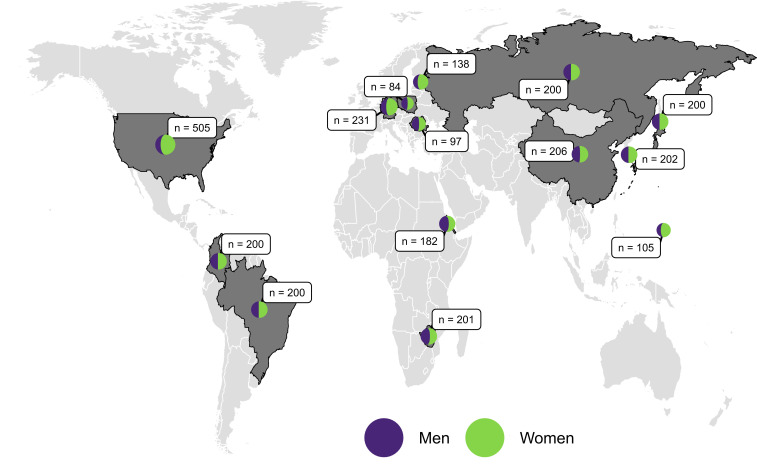
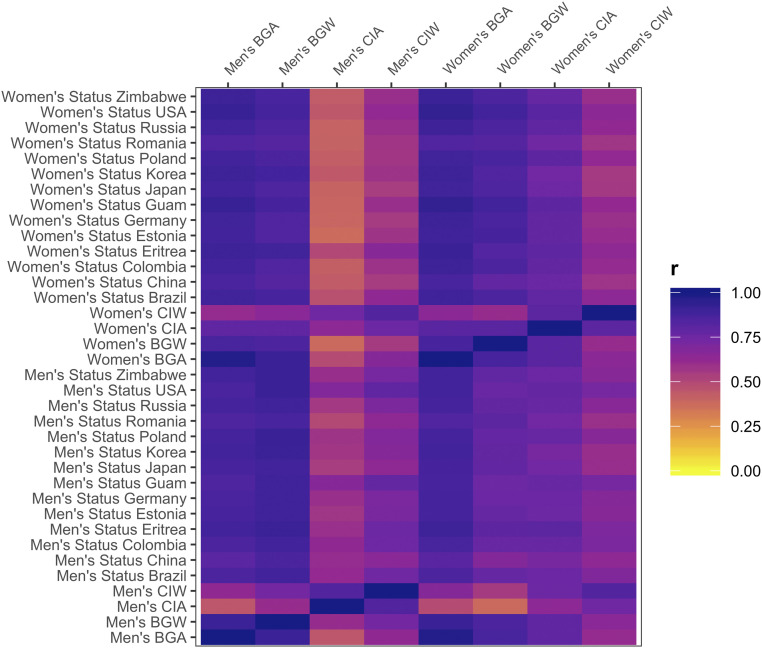
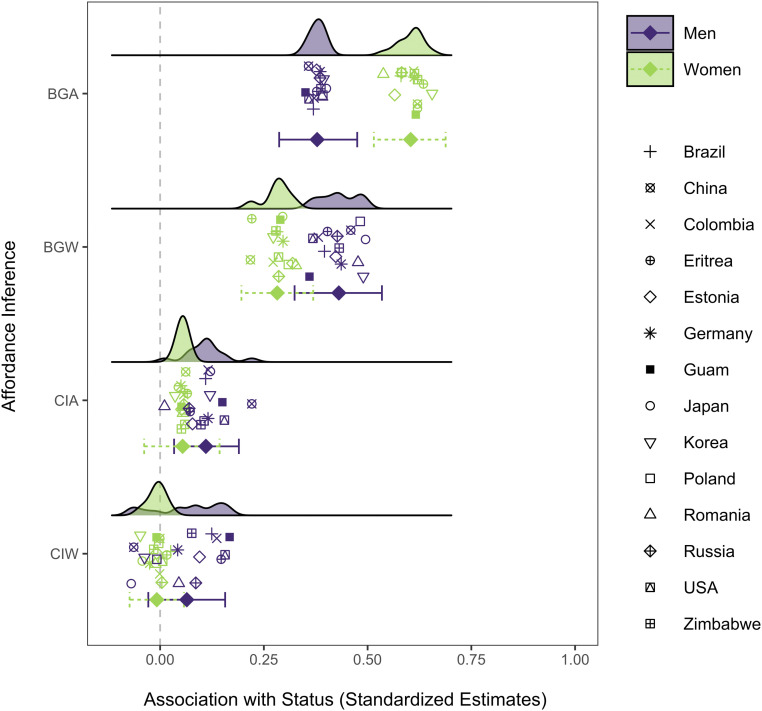
Competing theories of status allocation posit divergent conceptual foundations upon which human status hierarchies are built. We argue that the three prominent theories of status allocation-competence-based models, conflict-based models, and dual-pathway models-can be distinguished by the importance that they place on four key affordance dimensions: benefit-generation ability, benefit-generation willingness, cost-infliction ability, and cost-infliction willingness. In the current study, we test competing theoretical predictions about the relative centrality of each affordance dimension to clarify the foundations of human status allocation. We examined the extent to which American raters' (n = 515) perceptions of the benefit-generation and cost-infliction affordances of 240 personal characteristics predict the status impacts of those same personal characteristics as determined by separate groups of raters (n = 2,751) across 14 nations. Benefit-generation and cost-infliction affordances were both positively associated with status allocation at the zero-order level. However, the unique effects of benefit-generation affordances explained most of the variance in status allocation when competing with cost-infliction affordances, whereas cost-infliction affordances were weak or null predictors. This finding suggests that inflicting costs without generating benefits does not reliably increase status in the minds of others among established human groups around the world. Overall, the findings bolster competence-based theories of status allocation but offer little support for conflict-based and dual-pathway models.
Keywords: affordances; dominance; hierarchy; prestige; status.
Conflict of interest statement
The authors declare no competing interest.
Figures
Comment in
-
Dominance is necessary to explain human status hierarchies.Proc Natl Acad Sci U S A. 2021 Jun 1;118(22):e2103870118. doi: 10.1073/pnas.2103870118. Proc Natl Acad Sci U S A. 2021. PMID: 34031255 Free PMC article. No abstract available.
-
Reply to Cheng et al.: Benefit generation dominates cost infliction in explaining cross-national status allocations.Proc Natl Acad Sci U S A. 2021 Jun 1;118(22):e2105037118. doi: 10.1073/pnas.2105037118. Proc Natl Acad Sci U S A. 2021. PMID: 34031257 Free PMC article. No abstract available.
References
-
- Barkow J. H., Darwin, Sex, and Status: Biological Approaches to Mind and Culture, (University of Toronto Press, 1989).
-
- Brown D. E., Human Universals, (McGraw-Hill, New York, 1991).
-
- Frank R. H., Choosing the Right Pond: Human Behavior and the Quest for Status, (Oxford University Press, 1985).
-
- Cheng J. T., Tracy J. L., Foulsham T., Kingstone A., Henrich J., Two ways to the top: Evidence that dominance and prestige are distinct yet viable avenues to social rank and influence. J. Pers. Soc. Psychol. 104, 103–125 (2013). - PubMed
MeSH terms
LinkOut - more resources
Full Text Sources
