


A review investigating the relationship between cannabis use and adolescent cognitive functioning
- PMID: 32818908
- PMCID: PMC7365113
- DOI: 10.1016/j.copsyc.2020.07.006
A review investigating the relationship between cannabis use and adolescent cognitive functioning
Abstract
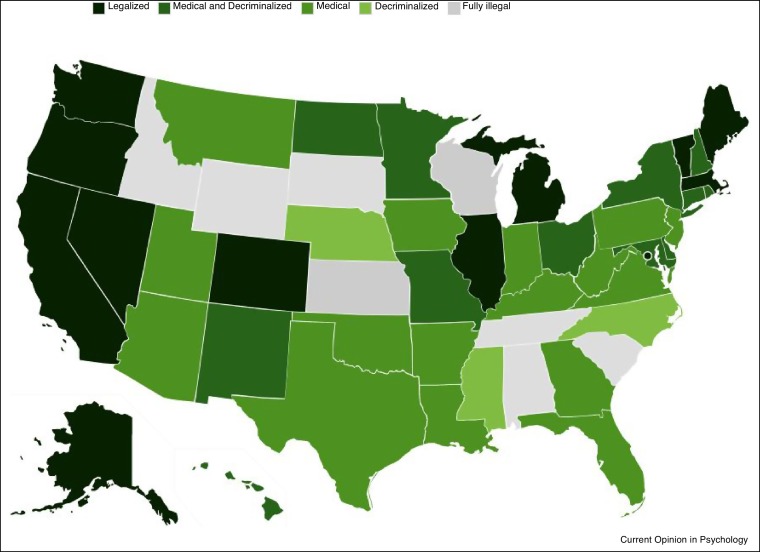
Given varying state-level laws regarding cannabis use, the objective of the review was to summarize contemporary literature on the relationship between adolescent cognitive function and academic performance with cannabis use. Frequency and quantity of cannabis use were associated with decreased functional connectivity of the brain. Earlier age at cannabis initiation and more frequent use was associated with poorer executive control and academic performance. Social determinants such as minimal parental monitoring, peer use and low social cohesion were associated with more frequent adolescent use. Race/ethnicity and residence were other factors influencing cannabis use. To prevent cannabis use disorders among adolescents, interventions should aim to prevent early initiation that can lead to chronic use in youth who may be more at risk.
Copyright © 2020 The Authors. Published by Elsevier Ltd.. All rights reserved.
Figures
References
-
- Office of Adolescent Health: Marijuana Use in Adolescence. U.S. Department of Health & Human services.
-
- Hammond C.J., Chaney A., Hendrickson B., Sharma P. Cannabis use among U.S. adolescents in the era of marijuana legalization: a review of changing use patterns, comorbidity, and health correlates. Int Rev Psychiatry. 2020:4194. doi: 10.1080/09540261.2020.1713056. - DOI - PMC - PubMed
-
This review concluded that marijuana policy changes have mixed effects on U.S. adolescent health. Evidence suggests that there are increased motor vehicle accidents and emergency room visits due to increased cannabis use. There are also potential bene®ts from decriminalization.
Publication types
MeSH terms
Grants and funding
LinkOut - more resources
Full Text Sources
Other Literature Sources
