


Long-Term Outcomes of Coronary Stenting With and Without Use of Intravascular Ultrasound
- PMID: 32819477
- PMCID: PMC7444477
- DOI: 10.1016/j.jcin.2020.04.052
Long-Term Outcomes of Coronary Stenting With and Without Use of Intravascular Ultrasound
Abstract
Objectives: This study sought to explore if intravascular ultrasound (IVUS) use in real-world patients is associated with improved long-term outcomes of percutaneous coronary intervention (PCI).
Background: The benefit of IVUS use with PCI in real world is uncertain.
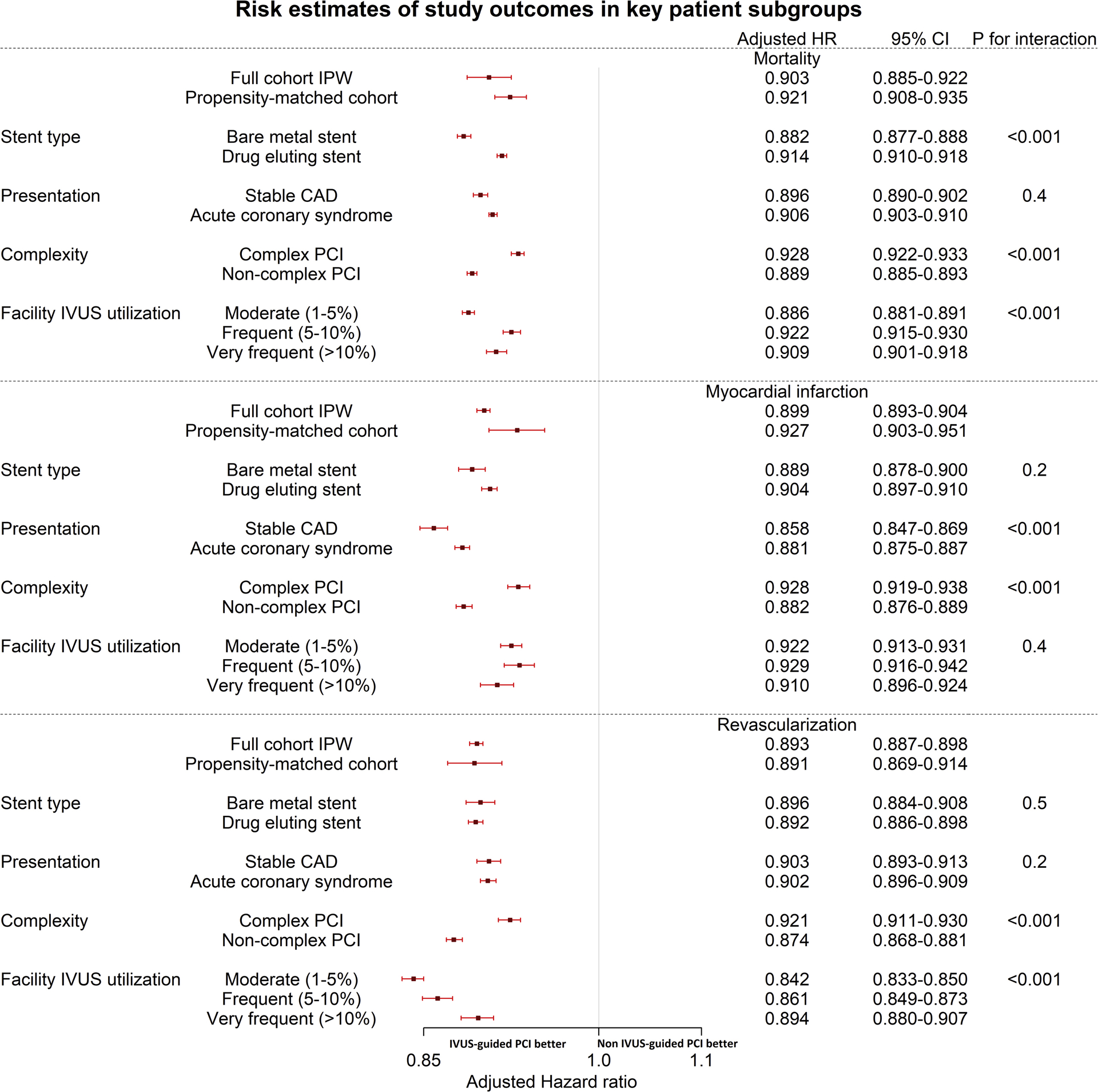
Methods: We identified Medicare patients who underwent PCI from 2009 to 2017 and evaluated the association of IVUS use with long-term risk of mortality, myocardial infarction (MI), and repeat revascularization. We used propensity score matching and inverse probability weighting to adjust for baseline characteristics. To account for hospital effects, patients undergoing IVUS-guided PCI were matched to non-IVUS patients in the same hospital and year. Sensitivity analyses comparing outcomes with and without IVUS in stable coronary artery disease and acute coronary syndrome, PCI with bare-metal stents and drug-eluting stents, complex and noncomplex PCI, and facilities with 1% to 5%, 5% to 10%, and >10% IVUS use were performed.
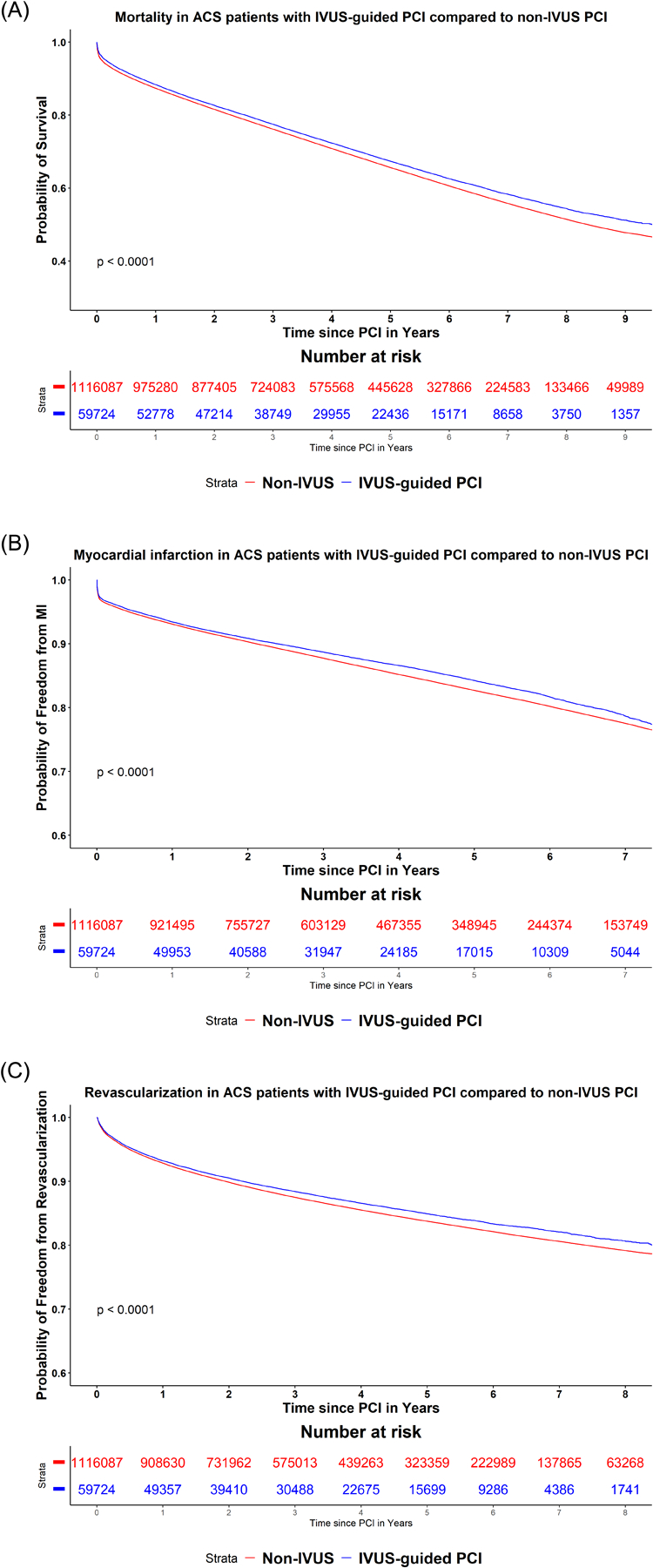
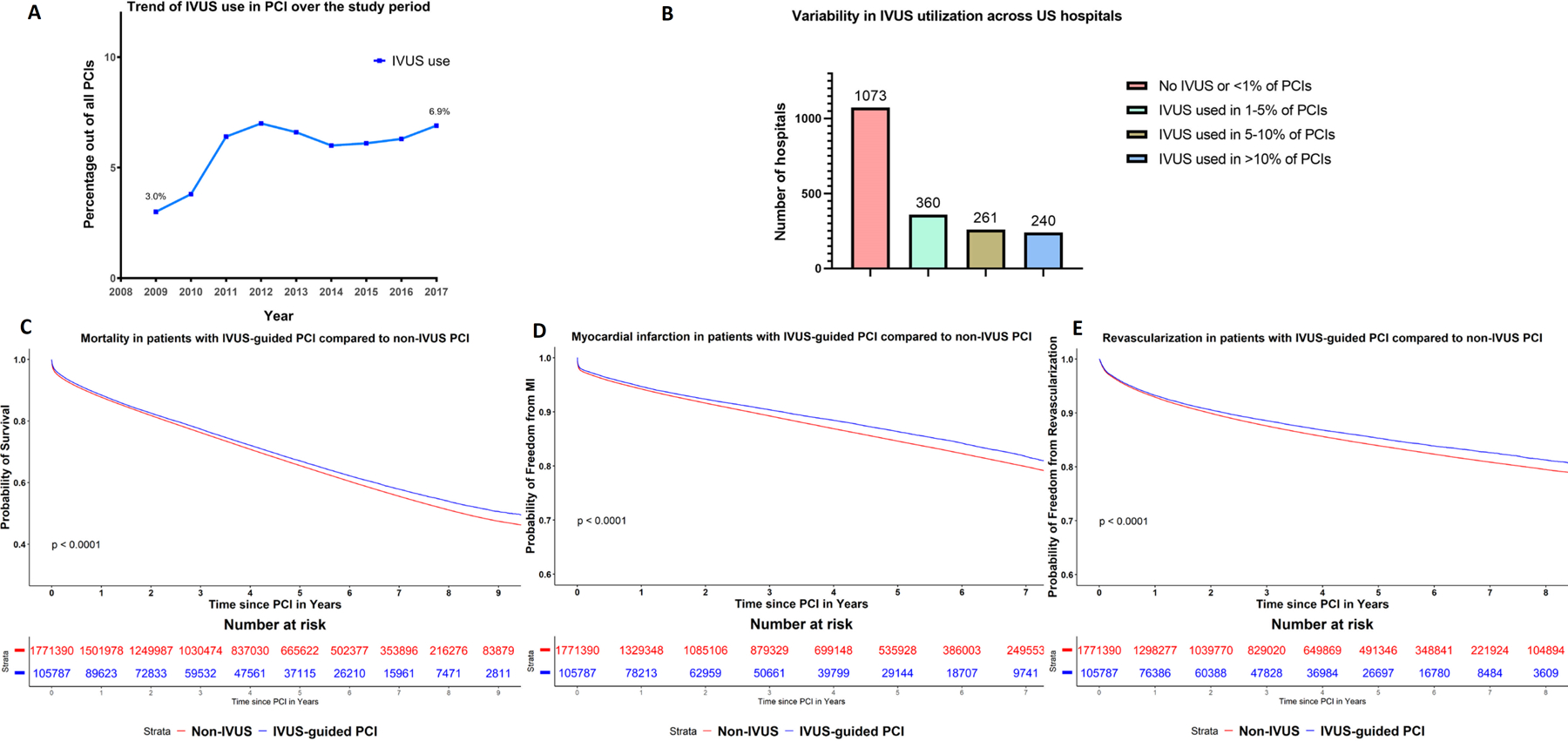
Results: Overall, IVUS was used in 5.6% of all PCI patients (105,787 out of 1,877,177 patients). Patients with IVUS-guided PCI had a higher prevalence of most comorbidities. In the propensity matched analysis, IVUS-guided PCI was associated with lower 1-year mortality (11.5% vs. 12.3%), MI (4.9% vs. 5.2%), and repeat revascularization (6.1% vs. 6.7%) (p < 0.001 for all). In inverse probability weighting analysis with a median follow-up of 3.7 years (interquartile range: 1.7 to 6.4 years), IVUS-guided PCI was associated with a lower risk of mortality (adjusted hazard ratio [aHR]: 0.903; 95% confidence interval [CI]: 0.885 to 0.922), MI (aHR: 0.899; 95% CI: 0.893 to 0.904), and repeat revascularization (aHR: 0.893; 95% CI: 0.887 to 0.898) (p < 0.001 for all). These findings were consistent in all subgroups in sensitivity analyses.
Conclusions: In this contemporary U.S. Medicare cohort, the use of IVUS guidance in PCI remains low. Use of IVUS is associated with lower long-term mortality, MI, and repeat revascularization.
Keywords: intravascular ultrasound; mortality; myocardial infarction; percutaneous coronary intervention.
Copyright © 2020 American College of Cardiology Foundation. Published by Elsevier Inc. All rights reserved.
Figures
Comment in
-
Outcomes of Intravascular Ultrasound-Guided Percutaneous Coronary Intervention in the United States.JACC Cardiovasc Interv. 2020 Aug 24;13(16):1891-1893. doi: 10.1016/j.jcin.2020.06.031. JACC Cardiovasc Interv. 2020. PMID: 32819478 No abstract available.
-
Outcomes With IVUS-Guided PCI.JACC Cardiovasc Interv. 2020 Nov 9;13(21):2579-2580. doi: 10.1016/j.jcin.2020.09.012. JACC Cardiovasc Interv. 2020. PMID: 33153571 No abstract available.
-
Reply: Outcomes With IVUS-Guided PCI.JACC Cardiovasc Interv. 2020 Nov 9;13(21):2580. doi: 10.1016/j.jcin.2020.09.040. JACC Cardiovasc Interv. 2020. PMID: 33153573 No abstract available.
References
-
- Landes U, Bental T, Levi A et al. Temporal trends in percutaneous coronary interventions thru the drug eluting stent era: Insights from 18,641 procedures performed over 12-year period. Catheter Cardiovasc Interv 2018;92:E262–E270. - PubMed
-
- Witzenbichler B, Maehara A, Weisz G et al. Relationship between intravascular ultrasound guidance and clinical outcomes after drug-eluting stents: the assessment of dual antiplatelet therapy with drug-eluting stents (ADAPT-DES) study. Circulation 2014;129:463–70. - PubMed
-
- Levine GN, Bates ER, Blankenship JC et al. 2011 ACCF/AHA/SCAI Guideline for Percutaneous Coronary Intervention. A report of the American College of Cardiology Foundation/American Heart Association Task Force on Practice Guidelines and the Society for Cardiovascular Angiography and Interventions. J Am Coll Cardiol 2011;58:e44–122. - PubMed
-
- Zhang J, Gao X, Kan J et al. Intravascular Ultrasound Versus Angiography-Guided Drug-Eluting Stent Implantation: The ULTIMATE Trial. J Am Coll Cardiol 2018;72:3126–3137. - PubMed
-
- di Mario C, Koskinas KC, Raber L. Clinical Benefit of IVUS Guidance for Coronary Stenting: The ULTIMATE Step Toward Definitive Evidence? J Am Coll Cardiol 2018;72:3138–3141. - PubMed
Publication types
MeSH terms
Grants and funding
LinkOut - more resources
Full Text Sources
Medical
Miscellaneous
