


Psychological distress among refugees in Germany: a cross-sectional analysis of individual and contextual risk factors and potential consequences for integration using a nationally representative survey
- PMID: 32819926
- PMCID: PMC7440818
- DOI: 10.1136/bmjopen-2019-033658
Psychological distress among refugees in Germany: a cross-sectional analysis of individual and contextual risk factors and potential consequences for integration using a nationally representative survey
Abstract
Objectives: Responding to the mental health needs of refugees remains a pressing challenge worldwide. We estimated the prevalence of psychological distress in a large refugee population in Germany and assessed its association with host country factors amenable to policy intervention and integration indicators.
Design: A cross-sectional and population-based secondary analysis of the 2017 wave of the IAB-BAMF-SOEP refugee survey.
Setting: Germany.
Participants: 2639 adult refugees who arrived in Germany between 2013 and 2016.
Main outcome measures: Psychological distress involving symptoms of depression, anxiety and post-traumatic stress disorder was measured using the Refugee Health Screener-13.
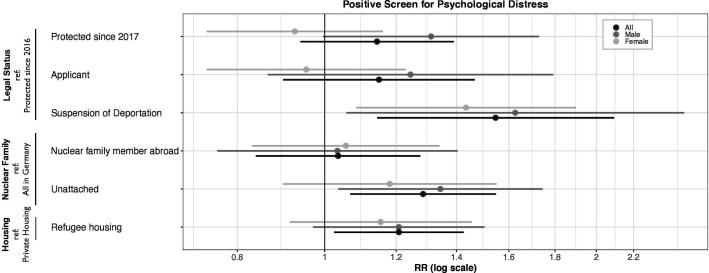
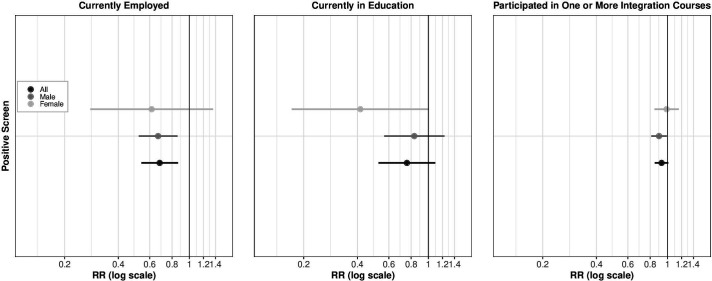
Results: Almost half of the population surveyed (41.2% (95% CI: 37.9% to 44.6%)) was affected by mild, moderate or severe levels of psychological distress. 10.9% (8.4% to 13.5%) of the population screened positive for severe distress indicative of an urgent need for care. Prevalence of distress was particularly high for females (53.0% (47.2% to 58.8%)), older refugees (aged ≥55, 70.4% (58.5% to 82.2%)) and Afghans (61.5% (53.5% to 69.5%)). Individuals under threat of deportation were at a greater risk of distress than protection status holder (risk ratio: 1.55 (95% CI: 1.14 to 2.10)), single males at a greater risk than males with nuclear families living in Germany (1.34 (1.04 to 1.74)) and those in refugee housing facilities at a greater risk than those in private housing (1.21 (1.02 to 1.43)). Distressed males had a lower likelihood of employment (0.67 (0.52 to 0.86)) and reduced participation in integration courses (0.90 (0.81 to 0.99)). A trend of reduced participation in educational programmes was observed in affected females (0.42 (0.17 to 1.01)).
Conclusion: The finding that a substantial minority of refugees in Germany exhibits symptoms of distress calls for an expansion of mental health services for this population. Service providers and policy-makers should consider the increased prevalence among female, older and Afghan refugees, as well as among single males, residents in housing facilities and those under threat of deportation. The associations between mental health and integration processes such as labour market, educational programme and integration course participation also warrant consideration.
Keywords: epidemiology; mental health; public health.
© Author(s) (or their employer(s)) 2020. Re-use permitted under CC BY-NC. No commercial re-use. See rights and permissions. Published by BMJ.
Conflict of interest statement
Competing interests: None declared.
Figures
References
-
- Hatton TJ. Refugees and asylum seekers, the crisis in Europe and the future of policy. Econ Policy 2017;32:447–96. 10.1093/epolic/eix009 - DOI
-
- Bundesministerium des Inneren (BMI) 890.000 Asylsuchende Im Jahr 2015. Pressemitteilungvom 30.9. BMI, 2016.
Publication types
MeSH terms
LinkOut - more resources
Full Text Sources
Medical
