


Conservation of Cell Communication Systems in Invertebrate Host-Defence Mechanisms: Possible Role in Immunity and Disease
- PMID: 32824821
- PMCID: PMC7464772
- DOI: 10.3390/biology9080234
Conservation of Cell Communication Systems in Invertebrate Host-Defence Mechanisms: Possible Role in Immunity and Disease
Abstract
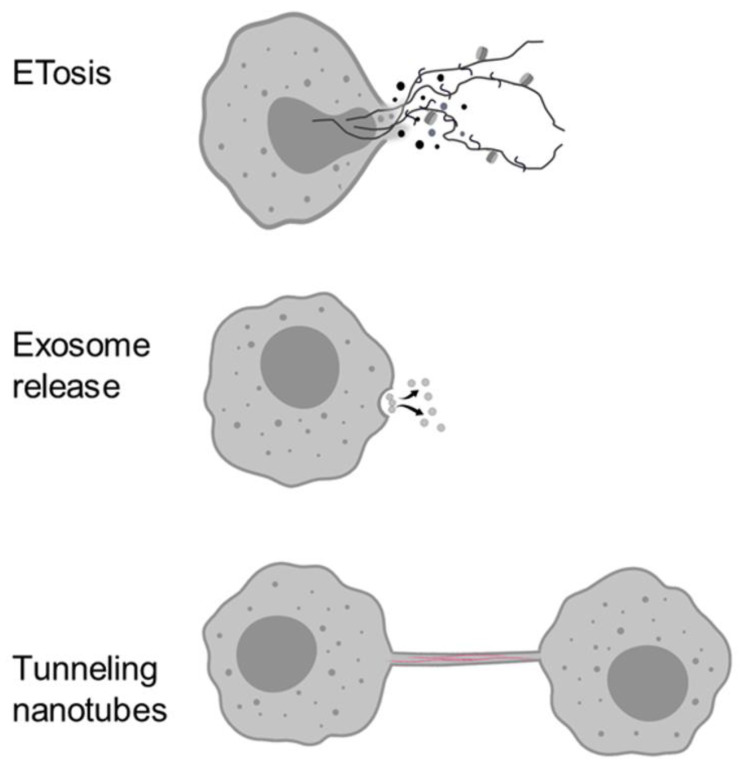
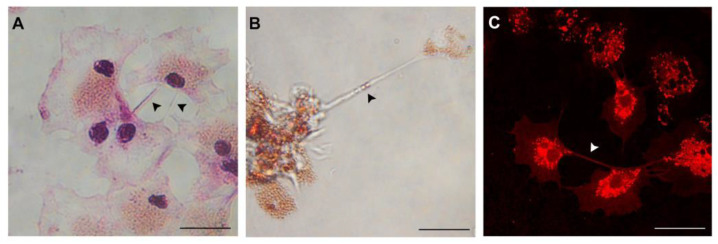
Innate immunity is continuously revealing multiple and highly conserved host-defence mechanisms. Studies on mammalian immunocytes are showing different communication systems that may play a role in coordinating innate immune responses also in invertebrates. Extracellular traps (ETs) are an immune response by which cells release net-like material, including DNA, histones and proteins. ETs are thought to immobilise and kill microorganisms, but are also involved in inflammation and autoimmune disease. Immune cells are also known to communicate through extracellular vesicles secreted in the extracellular environment or exosomes, which can carry a variety of different signalling molecules. Tunnelling nanotubes (TNTs) represent a direct cell-to-cell communication over a long distance, that allow for bi- or uni-directional transfer of cellular components between cells. Their functional role in a number of physio-pathological processes, including immune responses and pathogen transfer, has been underlined. Although ETs, exosomes, and TNTs have been described in invertebrate species, their possible role in immune responses is not fully understood. In this work, available data on these communication systems are summarised, in an attempt to provide basic information for further studies on their relevance in invertebrate immunity and disease.
Keywords: cell communication; exosomes; extracellular traps; innate immunity; invertebrates; tunnelling nanotubes.
Conflict of interest statement
The authors declare no conflict of interest.
Figures
References
Publication types
LinkOut - more resources
Full Text Sources
