


Global analysis of adenylate-forming enzymes reveals β-lactone biosynthesis pathway in pathogenic Nocardia
- PMID: 32826316
- PMCID: PMC7606675
- DOI: 10.1074/jbc.RA120.013528
Global analysis of adenylate-forming enzymes reveals β-lactone biosynthesis pathway in pathogenic Nocardia
Abstract
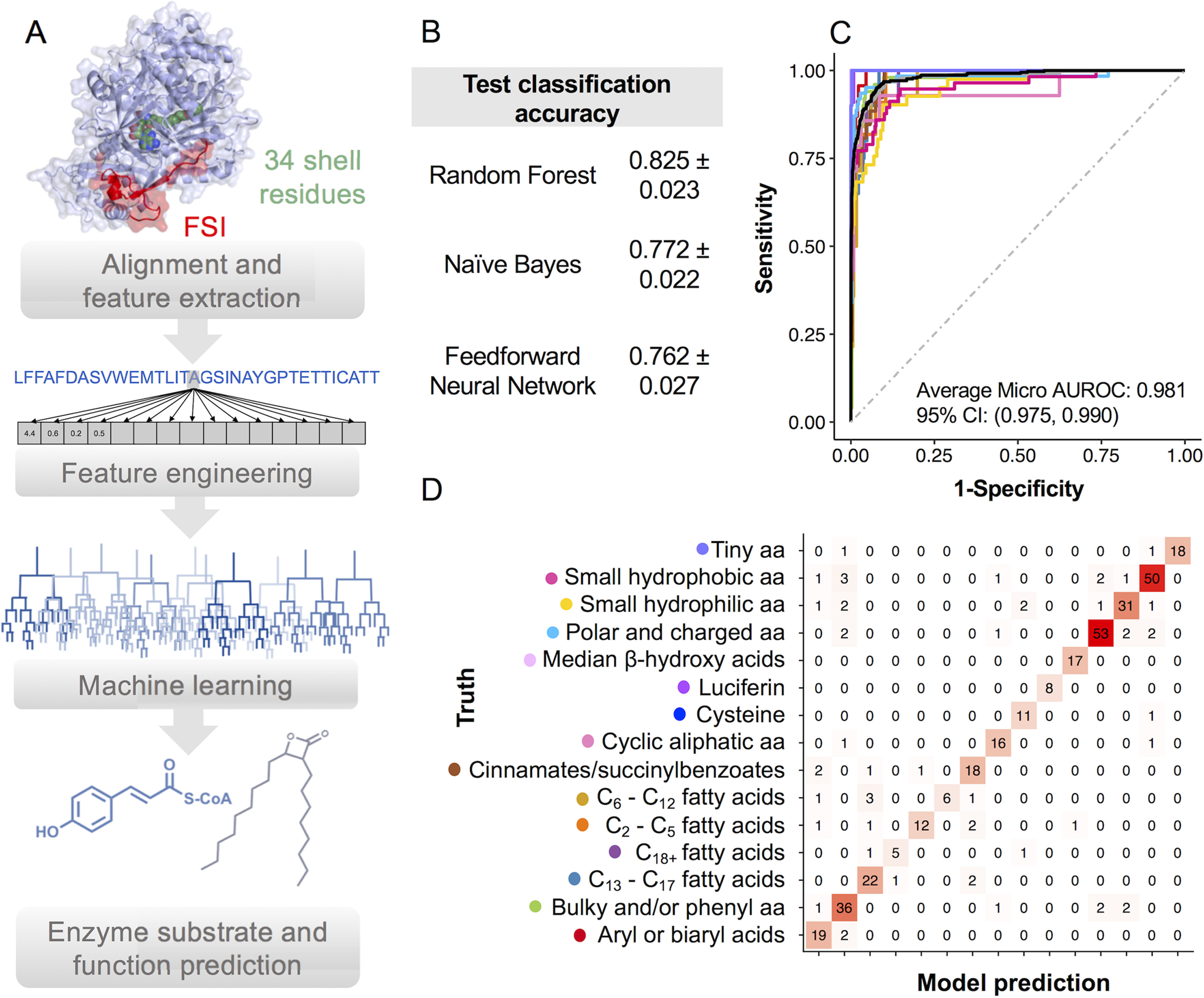
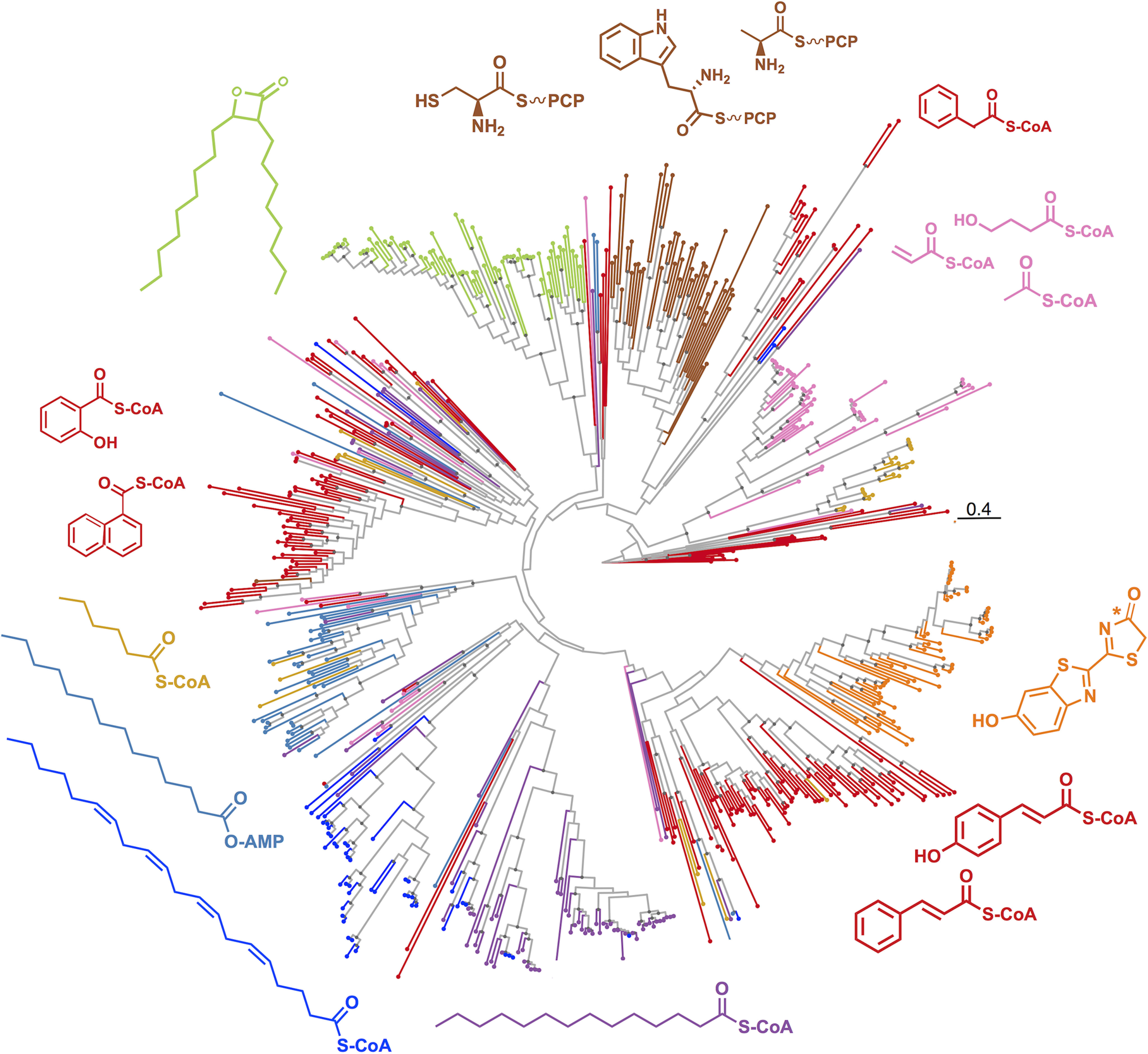
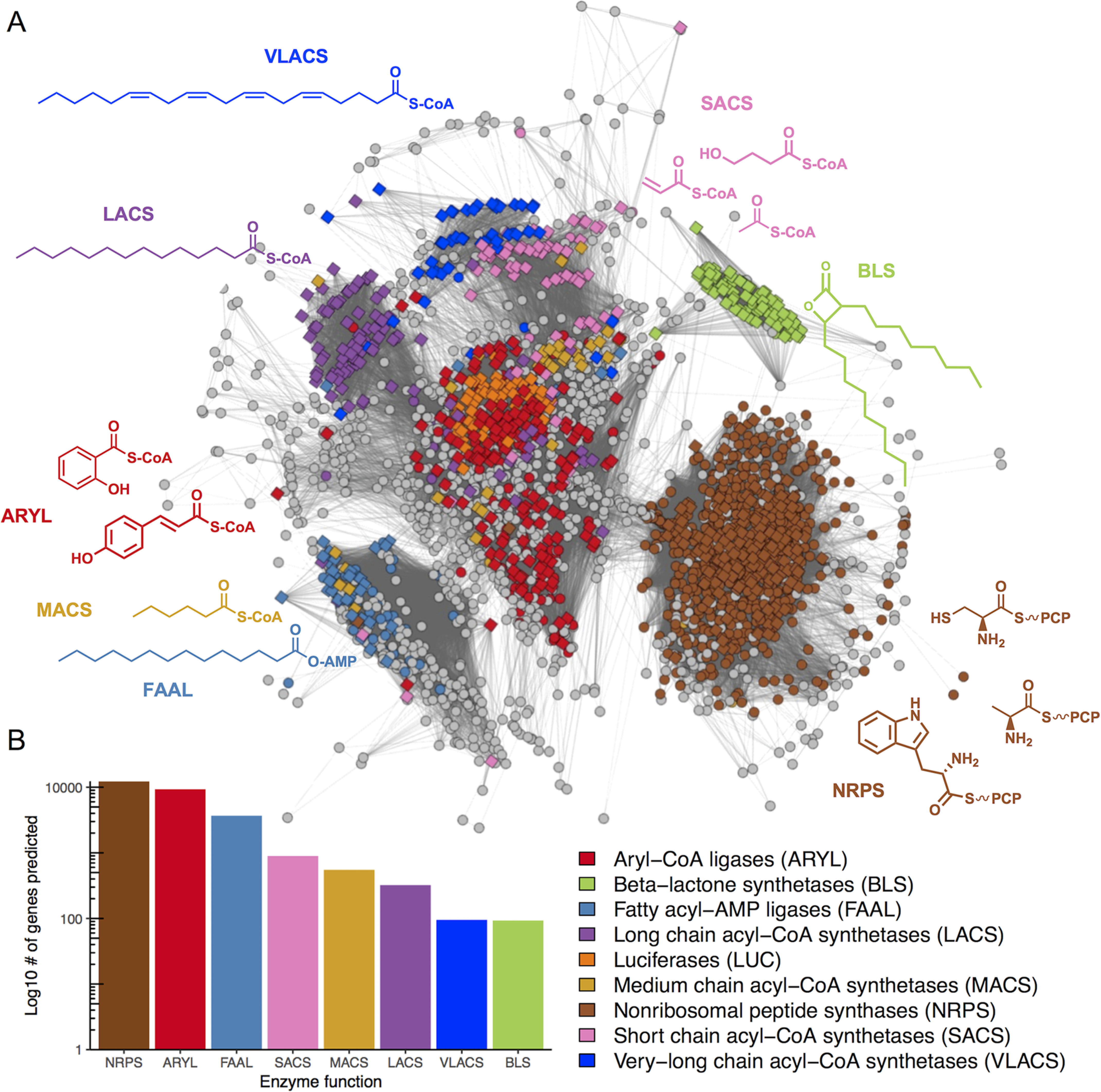
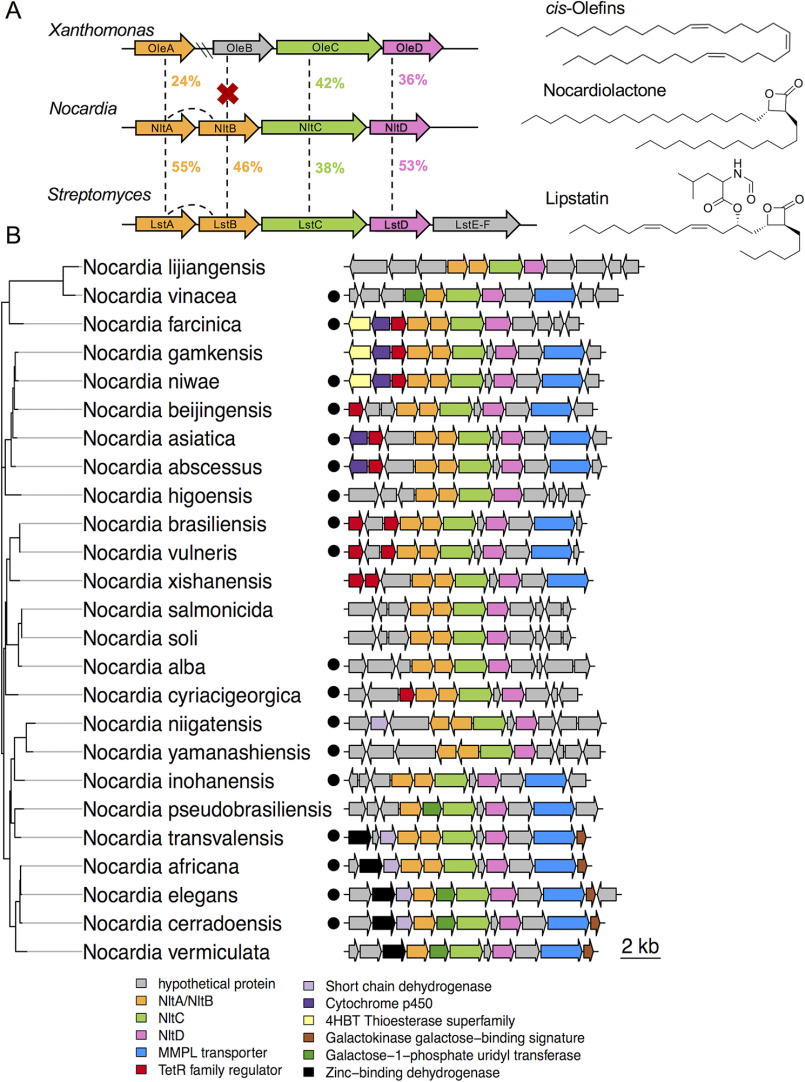
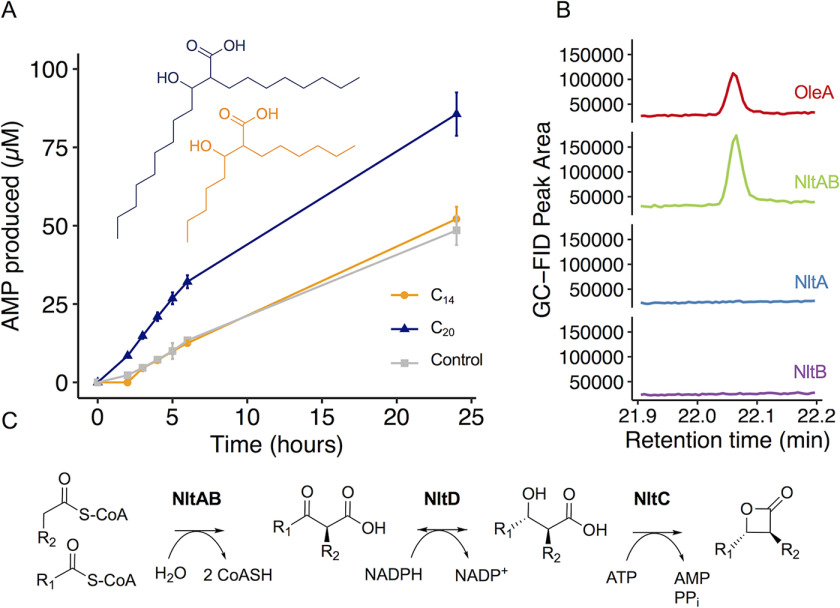
Enzymes that cleave ATP to activate carboxylic acids play essential roles in primary and secondary metabolism in all domains of life. Class I adenylate-forming enzymes share a conserved structural fold but act on a wide range of substrates to catalyze reactions involved in bioluminescence, nonribosomal peptide biosynthesis, fatty acid activation, and β-lactone formation. Despite their metabolic importance, the substrates and functions of the vast majority of adenylate-forming enzymes are unknown without tools available to accurately predict them. Given the crucial roles of adenylate-forming enzymes in biosynthesis, this also severely limits our ability to predict natural product structures from biosynthetic gene clusters. Here we used machine learning to predict adenylate-forming enzyme function and substrate specificity from protein sequences. We built a web-based predictive tool and used it to comprehensively map the biochemical diversity of adenylate-forming enzymes across >50,000 candidate biosynthetic gene clusters in bacterial, fungal, and plant genomes. Ancestral phylogenetic reconstruction and sequence similarity networking of enzymes from these clusters suggested divergent evolution of the adenylate-forming superfamily from a core enzyme scaffold most related to contemporary CoA ligases toward more specialized functions including β-lactone synthetases. Our classifier predicted β-lactone synthetases in uncharacterized biosynthetic gene clusters conserved in >90 different strains of Nocardia. To test our prediction, we purified a candidate β-lactone synthetase from Nocardia brasiliensis and reconstituted the biosynthetic pathway in vitro to link the gene cluster to the β-lactone natural product, nocardiolactone. We anticipate that our machine learning approach will aid in functional classification of enzymes and advance natural product discovery.
Keywords: Nocardia; acetyl-CoA synthetase; adenylate-forming enzymes; bioinformatics; coenzyme A (CoA); enzyme catalysis; machine learning; natural product biosynthesis; substrate specificity; β-lactone synthetases.
© 2020 Robinson et al.
Conflict of interest statement
Conflict of interest—M. H. M. is a co-founder of Design Pharmaceuticals and on the scientific advisory board of Hexagon Bio.
Figures
References
-
- Lipmann F. (1944) Enzymatic synthesis of acetyl phosphate. J. Biol. Chem. 155, 55–70
-
- Wang N., Rudolf J. D., Dong L. B., Osipiuk J., Hatzos-Skintges C., Endres M., Chang C. Y., Babnigg G., Joachimiak A., Phillips G. N., and Shen B. (2018) Natural separation of the acyl-CoA ligase reaction results in a non-adenylating enzyme. Nat. Chem. Biol. 14, 730–737 10.1038/s41589-018-0061-0 - DOI - PMC - PubMed
-
- Bera A. K., Atanasova V., Gamage S., Robinson H., and Parsons J. F. (2010) Structure of the d-alanylgriseoluteic acid biosynthetic protein EhpF, an atypical member of the ANL superfamily of adenylating enzymes. Acta Crystallogr. D Biol. Crystallogr. 66, 664–672 10.1107/S0907444910008425 - DOI - PMC - PubMed
Publication types
MeSH terms
Substances
Supplementary concepts
LinkOut - more resources
Full Text Sources
