


Oxygen administration in patients recovering from cardiac arrest: a narrative review
- PMID: 32832091
- PMCID: PMC7419438
- DOI: 10.1186/s40560-020-00477-w
Oxygen administration in patients recovering from cardiac arrest: a narrative review
Abstract
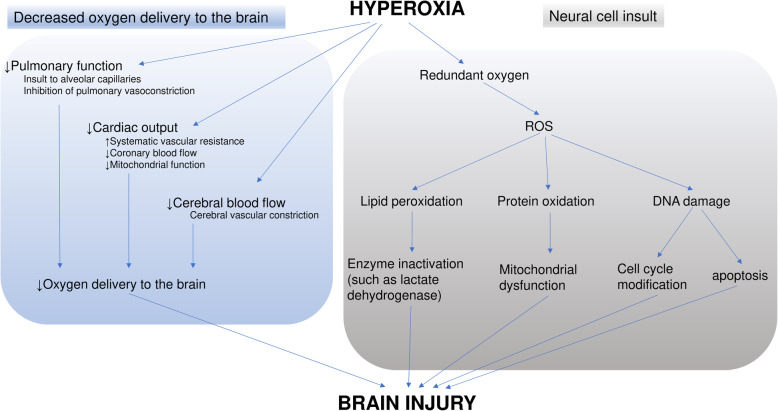
High oxygen tension in blood and/or tissue affects clinical outcomes in several diseases. Thus, the optimal target PaO2 for patients recovering from cardiac arrest (CA) has been extensively examined. Many patients develop hypoxic brain injury after the return of spontaneous circulation (ROSC); this supports the need for oxygen administration in patients after CA. Insufficient oxygen delivery due to decreased blood flow to cerebral tissue during CA results in hypoxic brain injury. By contrast, hyperoxia may increase dissolved oxygen in the blood and, subsequently, generate reactive oxygen species that are harmful to neuronal cells. This secondary brain injury is particularly concerning. Although several clinical studies demonstrated that hyperoxia during post-CA care was associated with poor neurological outcomes, considerable debate is ongoing because of inconsistent results. Potential reasons for the conflicting results include differences in the definition of hyperoxia, the timing of exposure to hyperoxia, and PaO2 values used in analyses. Despite the conflicts, exposure to PaO2 > 300 mmHg through administration of unnecessary oxygen should be avoided because no obvious benefit has been demonstrated. The feasibility of titrating oxygen administration by targeting SpO2 at approximately 94% in patients recovering from CA has been demonstrated in pilot randomized controlled trials (RCTs). Such protocols should be further examined.
Keywords: Cardiac arrest; Hyperoxia; Hypoxic brain injury; Oxygen; Post cardia arrest syndrome.
© The Author(s) 2020.
Conflict of interest statement
Competing interestsThe authors declare that they have no competing interests.
Figures
References
-
- Laver S, Farrow C, Turner D, Nolan J. Mode of death after admission to an intensive care unit following cardiac arrest. Intensive Care Med. 2004;30:2126–2128. - PubMed
-
- Nolan JP, Neumar RW, Adrie C, Aibiki M, Berg RA, Böttiger BW, et al. Post-cardiac arrest syndrome: epidemiology, pathophysiology, treatment, and prognostication. A Scientific Statement from the International Liaison Committee on Resuscitation; the American Heart Association Emergency Cardiovascular Care Committee; the Council on Cardiovascular Surgery and Anesthesia; the Council on Cardiopulmonary, Perioperative, and Critical Care; the Council on Stroke. Resuscitation. 2008;79:350–379. - PubMed
-
- Negovsky VA. The second step in resuscitation--the treatment of the ‘post-resuscitation disease’. Resuscitation. 1972;1:1–7. - PubMed
-
- Sjöberg F, Singer M. The medical use of oxygen: a time for critical reappraisal. J Intern Med. 2013;274:505–528. - PubMed
Publication types
LinkOut - more resources
Full Text Sources
Medical
