Review of Hereditary and Acquired Rare Choreas
- PMID: 32832197
- PMCID: PMC7413136
- DOI: 10.5334/tohm.548
Review of Hereditary and Acquired Rare Choreas
Abstract
Background: Movement disorders are often a prominent part of the phenotype of many neurologic rare diseases. In order to promote awareness and diagnosis of these rare diseases, the International Parkinson's and Movement Disorders Society Rare Movement Disorders Study Group provides updates on rare movement disorders.
Methods: In this narrative review, we discuss the differential diagnosis of the rare disorders that can cause chorea.
Results: Although the most common causes of chorea are hereditary, it is critical to identify acquired or symptomatic choreas since these are potentially treatable conditions. Disorders of metabolism and mitochondrial cytopathies can also be associated with chorea.
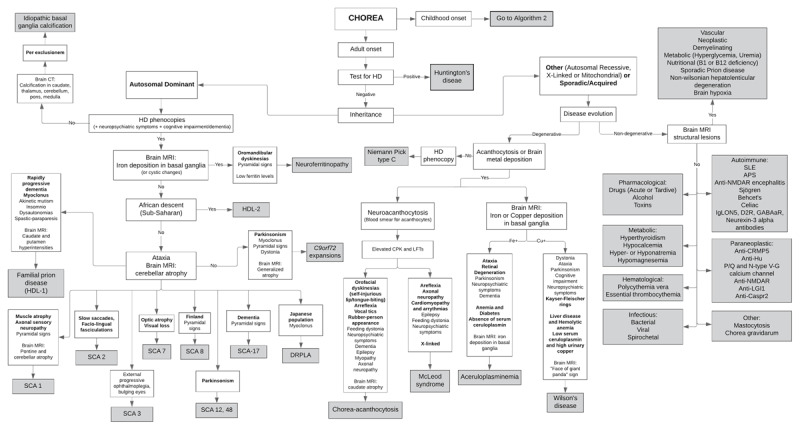
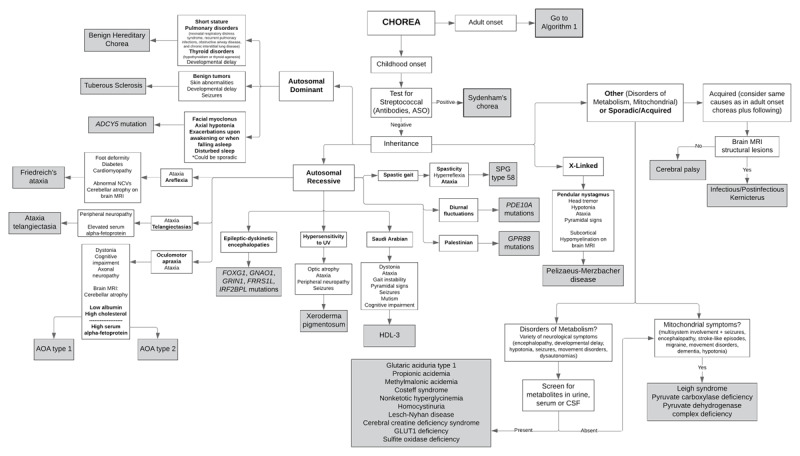
Discussion: The present review discusses clues to the diagnosis of chorea of various etiologies. Authors propose algorithms to help the clinician in the diagnosis of these rare disorders.
Keywords: Rare disease; inherited disease; orphan disease; treatment.
Copyright: © 2020 The Author(s).
Conflict of interest statement
The authors have no competing interests to declare.
Figures
References
-
- Burnett L, Jankovic J. Chorea and ballism. Curr Opin Neurol Neurosurg. 1992; 5: 308–13. - PubMed
Publication types
MeSH terms
LinkOut - more resources
Full Text Sources
Medical