Microbial Cross-contamination in Multidose Eyedrops: The Impact of Instillation Angle and Bottle Geometry
- PMID: 32832214
- PMCID: PMC7414607
- DOI: 10.1167/tvst.9.7.7
Microbial Cross-contamination in Multidose Eyedrops: The Impact of Instillation Angle and Bottle Geometry
Abstract
Purpose: To evaluate the impact of instillation angle and nozzle tip geometry on cross-contamination risk of multidose ocular solution bottles.
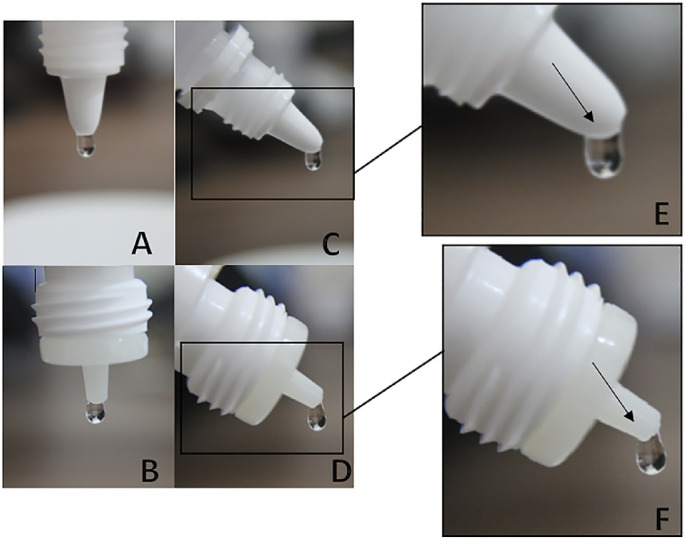
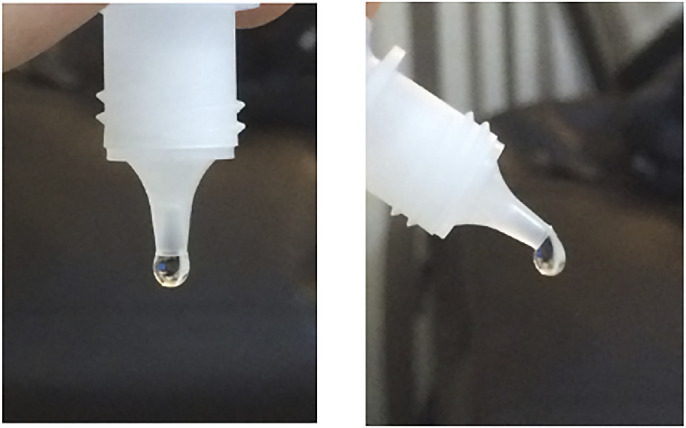
Methods: Pseudomonas aeruginosa solution was passed exclusively on the outside of the nozzle to simulate contamination on the exterior of topical agents. Three drops were administered from angles of 90° and 45° from bottles with either a round or sharp tip geometry, and the cultures were examined for growth. Two-hundred sixteen cultures from nine lubricant eyedrop brands currently existing in the Brazilian market were assessed for bacterial growth.
Results: After seven days, bacterial contamination was detected in 53.7% of cultures when drops were administered at 90° and in 70.4% of cultures at 45°. Eyedrops collected from a rounded nozzle tip and an instillation angle of 90° transmitted bacteria in 69.4% of cases, whereas those administered from a sharp tip transmitted bacteria in only 22.2% of cases (P = 0.001). At an instillation angle of 45°, contamination was identified in 83.3% of bottles with a rounded tip geometry and in only eight of 18 bottles (44.4%) from those with a sharp nozzle geometry (P = 0.005).
Conclusions: Adjusting the instillation angle of eyedrop solutions to 90°, as well as using a nozzle geometry that prevents flow of the solution to the side of the bottle, significantly reduced contamination rates.
Translational relevance: Standardizing drop bottles and adjusting delivery angle shows promise in reducing contamination rates and may critically impact the quality of care for patients requiring topical therapeutic agents.
Keywords: cross-contamination; drop instillation; eye drop standardization; eyedrops; ophthalmic solutions.
Copyright 2020 The Authors.
Conflict of interest statement
Disclosure: A.X. da Costa, None; M.C.Z. Yu, None; D. de Freitas, None; P.C. Cristovam, None; L.C. LaMonica, None; V.R. dos Santos, None; J.A.P. Gomes, Allergan (C, E), MSD (C), Bausch & Lomb/Valeant (C, E), Mundipharma (C, E), EMS/Legrand (C), Shire (C), Alcon (E), Genom (E), Pfizer (E), Grin (E), Ofta Vision Health (E), FAPESP (R), Capes (R), Cnpq (R)
Figures
References
Publication types
MeSH terms
Substances
LinkOut - more resources
Full Text Sources