


Alpha-crystallin mutations alter lens metabolites in mouse models of human cataracts
- PMID: 32833997
- PMCID: PMC7446835
- DOI: 10.1371/journal.pone.0238081
Alpha-crystallin mutations alter lens metabolites in mouse models of human cataracts
Erratum in
-
Correction: Alpha-crystallin mutations alter lens metabolites in mouse models of human cataracts.PLoS One. 2020 Nov 20;15(11):e0242951. doi: 10.1371/journal.pone.0242951. eCollection 2020. PLoS One. 2020. PMID: 33216808 Free PMC article.
Abstract
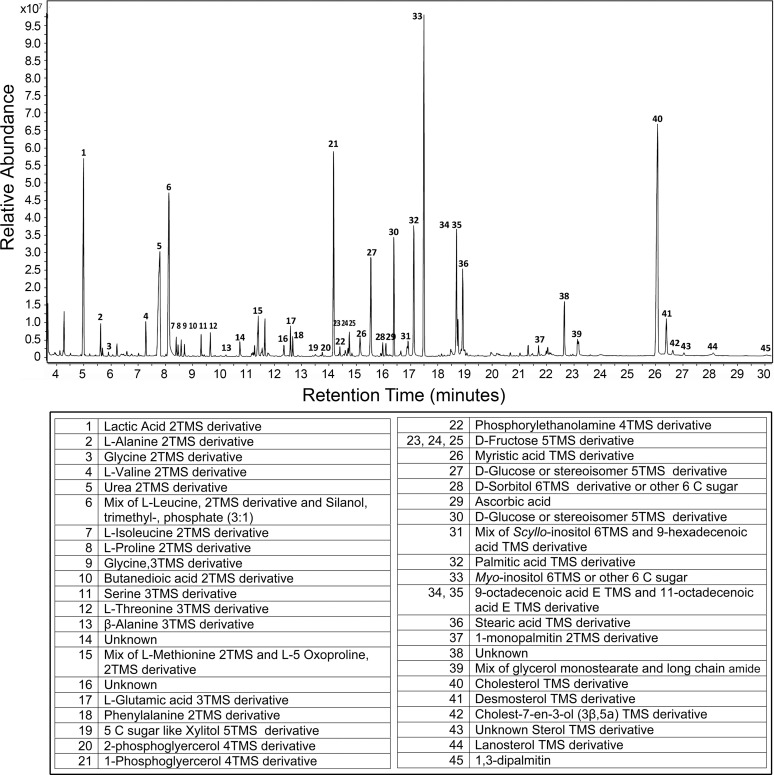
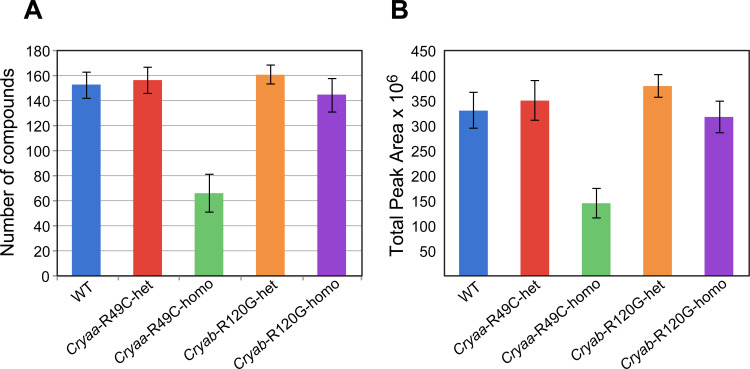
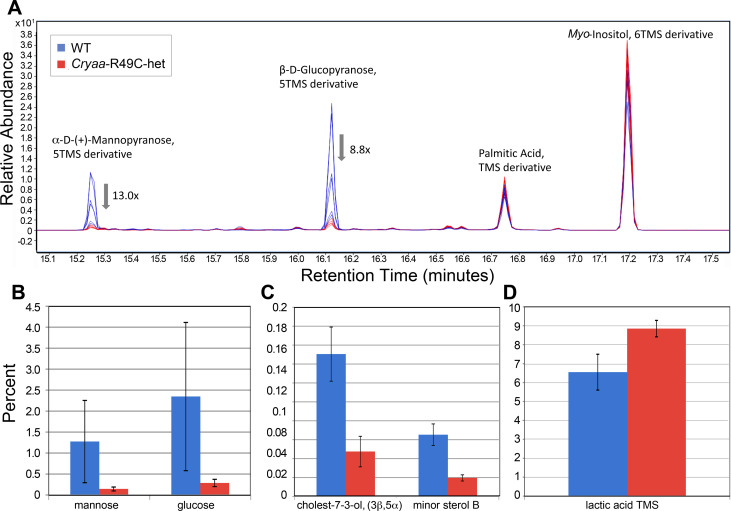
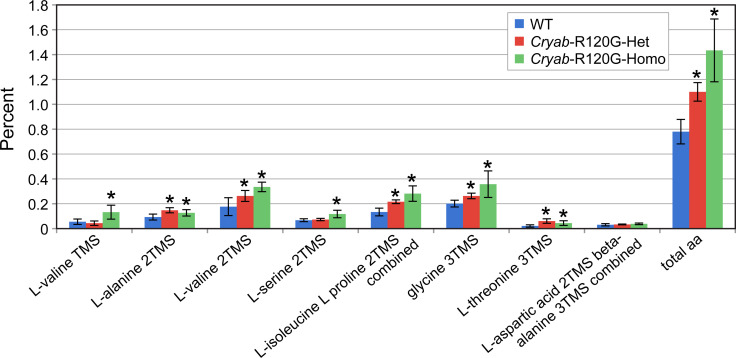
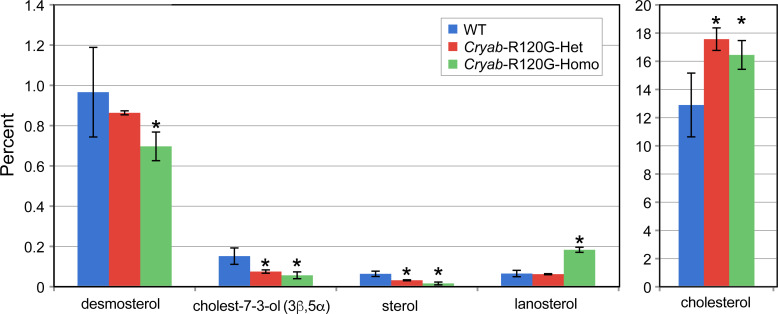
Cataracts are a major cause of blindness worldwide and commonly occur in individuals over 70 years old. Cataracts can also appear earlier in life due to genetic mutations. The lens proteins, αA- and αB-crystallins, are chaperone proteins that have important roles maintaining protein solubility to prevent cataract formation. Mutations in the CRYAA and CRYAB crystallin genes are associated with autosomal dominant early onset human cataracts. Although studies about the proteomic and genomic changes that occur in cataracts have been reported, metabolomics studies are very limited. Here, we directly investigated cataract metabolism using gas-chromatography-mass spectrometry (GC-MS) to analyze the metabolites in adult Cryaa-R49C and Cryab-R120G knock-in mouse lenses. The most abundant metabolites were myo-inositol, L-(+)-lactic acid, cholesterol, phosphate, glycerol phosphate, palmitic and 9-octadecenoic acids, α-D-mannopyranose, and β-D-glucopyranose. Cryaa-R49C knock-in mouse lenses had a significant decrease in the number of sugars and minor sterols, which occurred in concert with an increase in lactic acid. Cholesterol composition was unchanged. In contrast, Cryab-R120G knock-in lenses exhibited increased total amino acid content including valine, alanine, serine, leucine, isoleucine, glycine, and aspartic acid. Minor sterols, including cholest-7-en-3-ol and glycerol phosphate were decreased. These studies indicate that lenses from Cryaa-R49C and Cryab-R120G knock-in mice, which are models for human cataracts, have unique amino acid and metabolite profiles.
Conflict of interest statement
The authors have declared that no competing interests exist.
Figures
References
-
- Harrington V, McCall S, Huynh S, Srivastava K, Srivastava OP. Crystallins in water soluble-high molecular weight protein fractions and water insoluble protein fractions in aging and cataractous human lenses. Mol Vis. 2004;10:476–89. . - PubMed
Publication types
MeSH terms
Substances
Grants and funding
LinkOut - more resources
Full Text Sources
Medical
Molecular Biology Databases
Research Materials
Miscellaneous
