


Lifespan of companion dogs seen in three independent primary care veterinary clinics in the United States
- PMID: 32835231
- PMCID: PMC7386164
- DOI: 10.1186/s40575-020-00086-8
Lifespan of companion dogs seen in three independent primary care veterinary clinics in the United States
Abstract
Background: The privately owned companion dog is an emerging model in comparative medicine, notably because it shares the human environment including its risk factors, is affected by many analogous age-related diseases, receives comparable medical care, and has excellent veterinary medical data available.Past studies of dog lifespan have used academic, corporate or insurance data. While independent primary care data exist for the UK, none have as of yet been published for the US. This study analyzed data from three independent primary care US veterinary hospitals and identified factors that influence lifespan and mortality in a cohort of n = 20,970 privately owned dogs using Kaplan-Meier survival estimators and Cox Proportional Hazards modelling, including body size as a covariate.
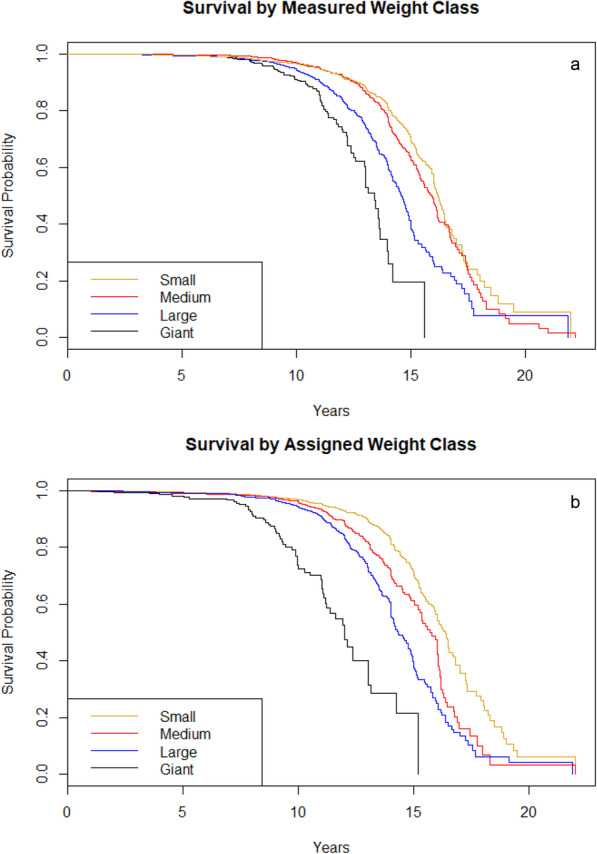
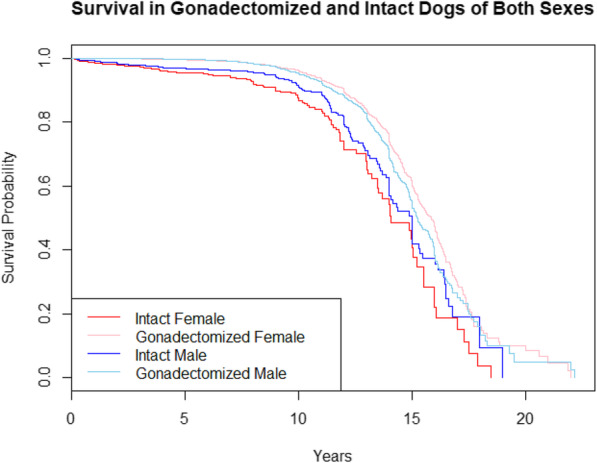
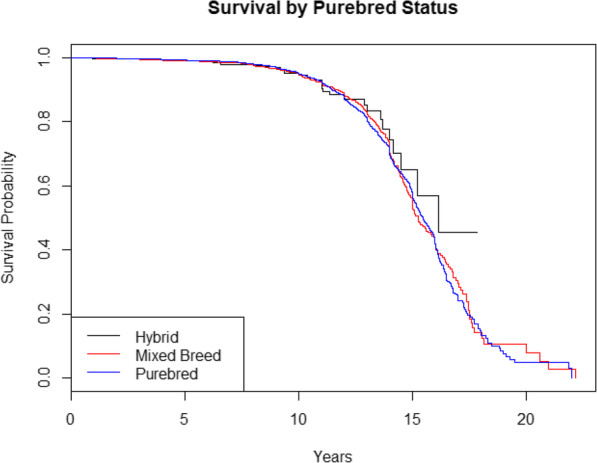
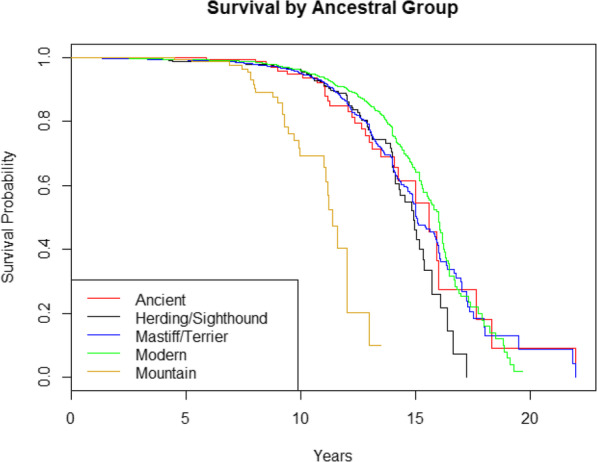
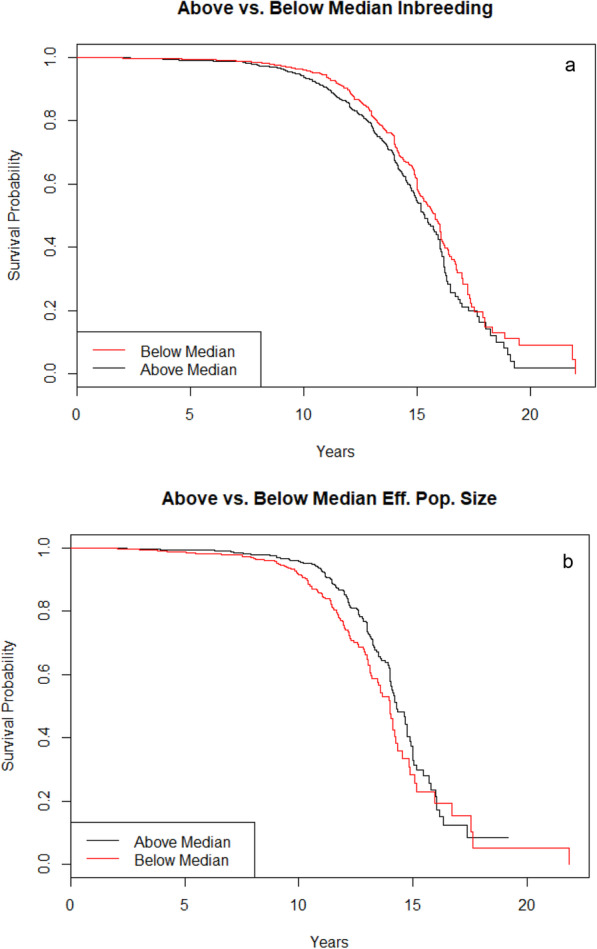
Results: As previously reported, body size was negatively correlated with lifespan. Gonadectomy was associated with a longer lifespan, with the effect being stronger in females than in males. This lifespan advantage was conserved in gonadectomized female dogs that lived to at least ages 5 and 8 years. We did not find significant differences in lifespan between purebred and mixed breed dogs; however, breeds with larger effective population sizes and/or lower inbreeding coefficients had median survival times 3-6 months longer than breeds with smaller effective population sizes or higher inbreeding coefficients, indicating that these measures of genetic diversity may be affecting breed lifespans. We also found that dog breeds belonging to the "Mountain" ancestral group had median survival times that were 3.5-4.6 years shorter than other purebred dog groups, which remained significant even when correcting for body size.
Conclusions: Our findings show that it is possible to obtain and analyze data from independent veterinary clinics in the US, an approach that could be useful for studies of comparative epidemiology under the One Health and One Welfare paradigms. We also show that the lifespan effects of gonadectomy are not identical between the sexes and should be investigated separately by sex in future analyses. More research is needed to further clarify the influence of age at gonadectomy, as well as the factors leading to the observed differences in lifespan in the "Mountain" ancestral group and in dog breeds of varying inbreeding coefficients and effective population sizes.
Keywords: Dogs; Epidemiology; Epizootiology; Healthspan; Inbreeding; Lifespan; Life span; One health; One welfare; Survival analysis; Veterinary medicine.
© The Author(s) 2020.
Conflict of interest statement
Competing interestsThe authors declare no competing interests.
Figures
References
-
- Gilmore KM, Greer KA. Why is the dog an ideal model for aging research? Exp Gerontol. 2015;71:14–20. - PubMed
Grants and funding
LinkOut - more resources
Full Text Sources
Research Materials
Miscellaneous