


Mental health toll from the coronavirus: Social media usage reveals Wuhan residents' depression and secondary trauma in the COVID-19 outbreak
- PMID: 32836728
- PMCID: PMC7428783
- DOI: 10.1016/j.chb.2020.106524
Mental health toll from the coronavirus: Social media usage reveals Wuhan residents' depression and secondary trauma in the COVID-19 outbreak
Abstract
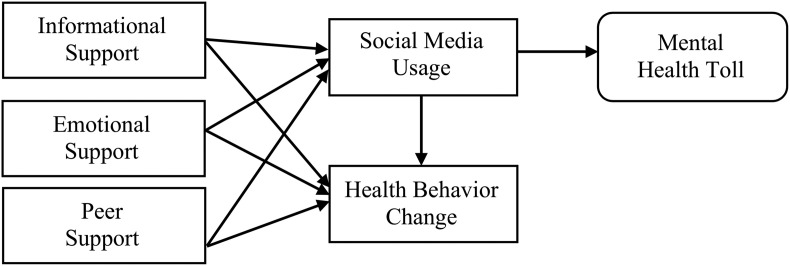
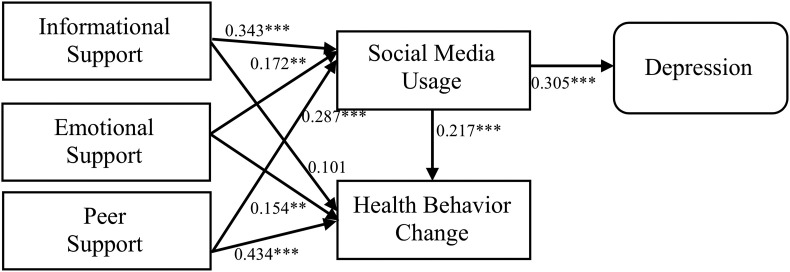
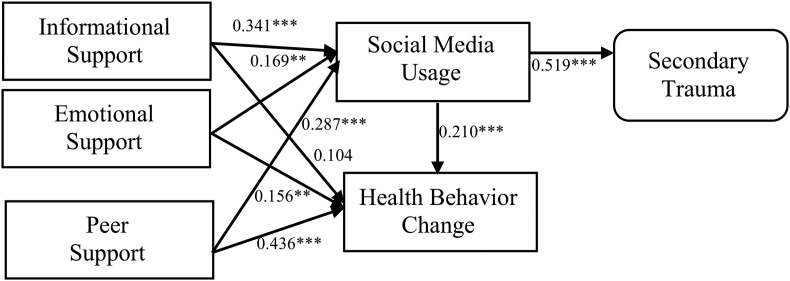
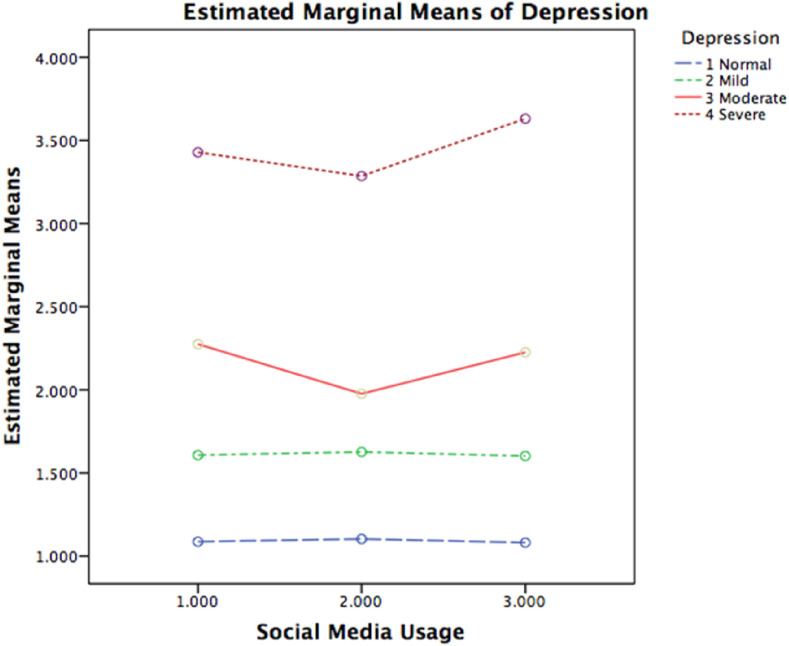
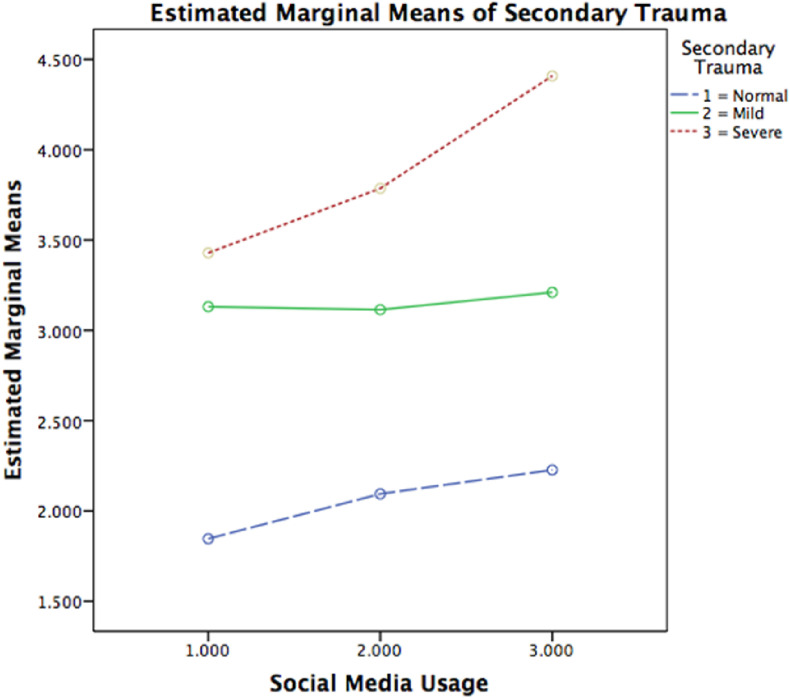
This study investigates the possible association between social media usage and the mental health toll from the coronavirus at the peak of Wuhan's COVID-19 outbreak. Informed by the Crisis and Emergency Risk Communication Model and Health Belief Model, it proposes a conceptual model to study how people in Wuhan - the first epicenter of the global COVID-19 pandemic - used social media and its effects on users' mental health conditions and health behavior change. The results show that social media usage was related to both depression and secondary trauma, which also predicted health behavior change. But no relation was detected between health behavior change and mental health conditions. As the virus struck, social media usage was rewarding to Wuhan people who gained informational, emotional, and peer support from the health information shared on social media. An excessive use of social media, however, led to mental health issues. The results imply that taking a social media break may promote well-being during the pandemic, which is crucial to mitigating mental health harm inflicted by the pandemic.
Keywords: COVID-19; Coronavirus; Health behavior change; Mental health; Social media; Wuhan.
© 2020 Elsevier Ltd. All rights reserved.
Figures
References
-
- Antonucci T.C. Psychology of social support. In: Wright J.D., editor. International encyclopedia of the social and behavioral sciences. Elsevier; 2001. pp. 14465–14469.
-
- Avery E. Contextual and audience moderators of channel selection and message reception of public health information in routine and crisis situations. Journal of Public Relations Research. 2010;22(4):378–403. doi: 10.1080/10627261003801404. - DOI
-
- Avery E. Public information officers' social media monitoring during the Zika virus crisis, a global health threat surrounded by public uncertainty. Public Relations Review. 2017;43(3):468–476. doi: 10.1016/j.pubrev.2017.02.018. - DOI
-
- Barrera M., Jr., Glasgow R.E., McKay H.G., Boles S.M., Feil E.G. Do Internet-based support interventions change perceptions of social support?: An experimental trial of approaches for supporting diabetes self-management. American Journal of Community Psychology. 2002;30(3):637–654. doi: 10.1023/A:1016369114780. - DOI - PubMed
LinkOut - more resources
Full Text Sources
Other Literature Sources
Research Materials