


Associations Between Fear of COVID-19, Mental Health, and Preventive Behaviours Across Pregnant Women and Husbands: An Actor-Partner Interdependence Modelling
- PMID: 32837427
- PMCID: PMC7289236
- DOI: 10.1007/s11469-020-00340-x
Associations Between Fear of COVID-19, Mental Health, and Preventive Behaviours Across Pregnant Women and Husbands: An Actor-Partner Interdependence Modelling
Abstract
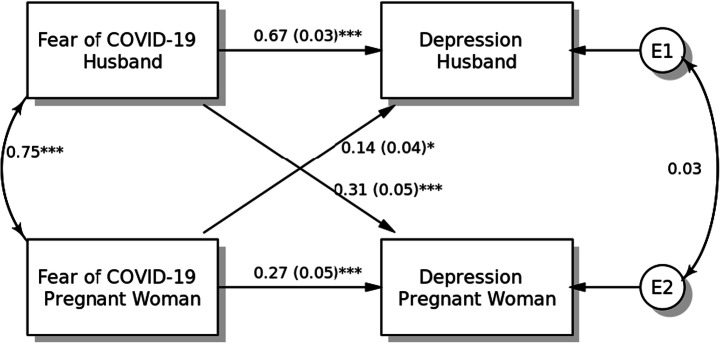
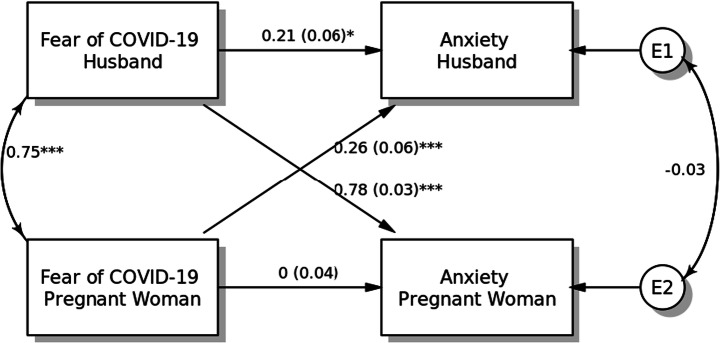
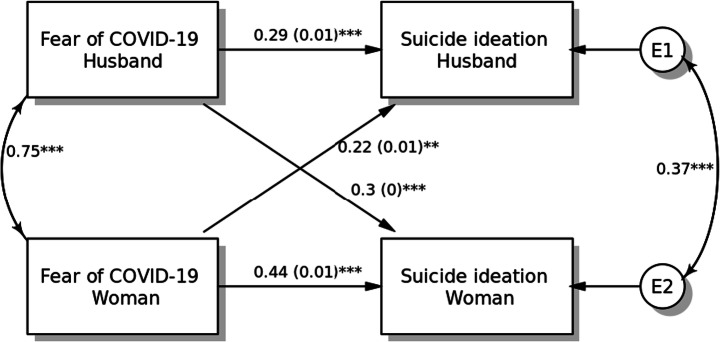
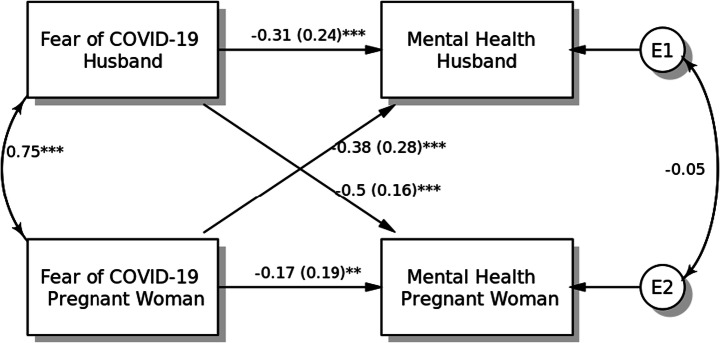
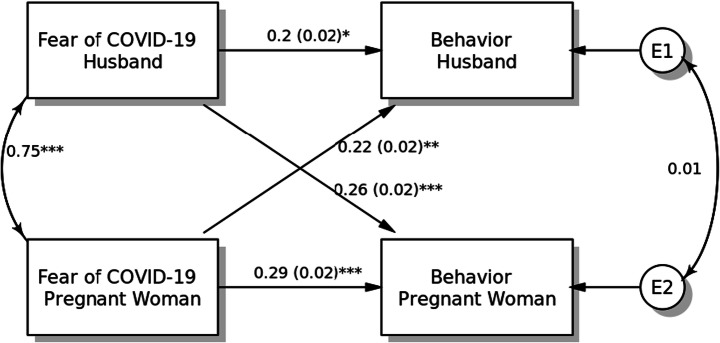
The present cross-sectional study examined the actor-partner interdependence effect of fear of COVID-19 among Iranian pregnant women and their husbands and its association with their mental health and preventive behaviours during the first wave of the COVID-19 pandemic in 2020. A total of 290 pregnant women and their husbands (N = 580) were randomly selected from a list of pregnant women in the Iranian Integrated Health System and were invited to respond to psychometric scales assessing fear of COVID-19, depression, anxiety, suicidal intention, mental quality of life, and COVID-19 preventive behaviours. The findings demonstrated significant dyadic relationships between husbands and their pregnant wives' fear of COVID-19, mental health, and preventive behaviours. Pregnant wives' actor effect of fear of COVID-19 was significantly associated with depression, suicidal intention, mental quality of life, and COVID-19 preventive behaviours but not anxiety. Moreover, a husband actor effect of fear of COVID-19 was significantly associated with depression, anxiety, suicidal intention, mental quality of life, and COVID-19 preventive behaviours. Additionally, there were significant partner effects observed for both the pregnant wives and their husbands concerning all outcomes. The present study used a cross-sectional design and so is unable to determine the mechanism or causal ordering of the effects. Also, the data are mainly based on self-reported measures which have some limitations due to its potential for social desirability and recall biases. Based on the findings, couples may benefit from psychoeducation that focuses on the effect of mental health problems on pregnant women and the foetus.
Keywords: APIM; Anxiety; COVID-19 preventive behaviour; Depression; Dyad; Pregnancy; Suicidal intention.
© The Author(s) 2020.
Conflict of interest statement
Conflict of InterestThe authors declare that they have no conflict of interest.
Figures
References
-
- Ackerman, R., & Kenny, D. (2016). APIMPowerR: an interactive tool for actor-partner interdependence model power analysis, [Computer software]. Retrieved from https://robert-ackerman.shinyapps.io/APIMPowerR/. Accessed 30 May 2020.
-
- Ahorsu, D.K., Adjaottor, E.S., Yeboah, F.A., & Opoku, Y. (2020a). Mental health challenges in academia: Comparison between students of the various educational levels in Ghana. Journal of Mental Health. Advance online publication, 1, 8. 10.1080/09638237.2020.1739253. - PubMed
-
- Cook, W. L., & Kenny, D. A. (2005). The actor–partner interdependence model: A model of bidirectional effects in developmental studies. International Journal of Behavioral Development, 29, 101–109. 10.1080/01650250444000405.
LinkOut - more resources
Full Text Sources