


Determinants of COVID-19 vaccine acceptance in the US
- PMID: 32838242
- PMCID: PMC7423333
- DOI: 10.1016/j.eclinm.2020.100495
Determinants of COVID-19 vaccine acceptance in the US
Abstract
Background: The COVID-19 pandemic continues to adversely affect the U.S., which leads globally in total cases and deaths. As COVID-19 vaccines are under development, public health officials and policymakers need to create strategic vaccine-acceptance messaging to effectively control the pandemic and prevent thousands of additional deaths.
Methods: Using an online platform, we surveyed the U.S. adult population in May 2020 to understand risk perceptions about the COVID-19 pandemic, acceptance of a COVID-19 vaccine, and trust in sources of information. These factors were compared across basic demographics.
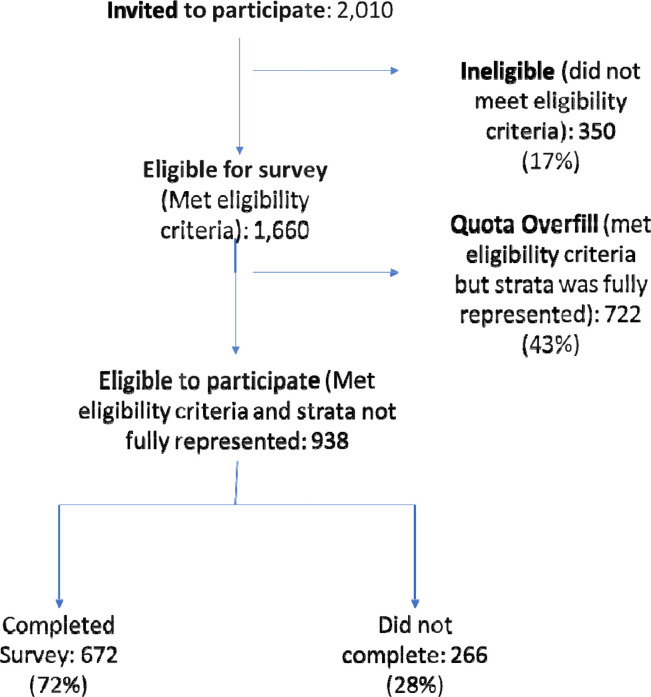
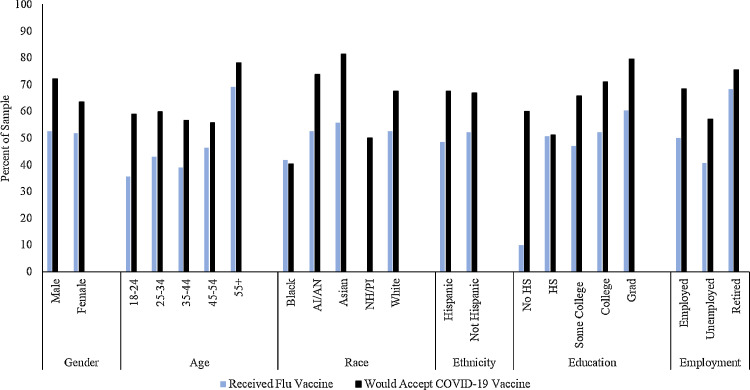
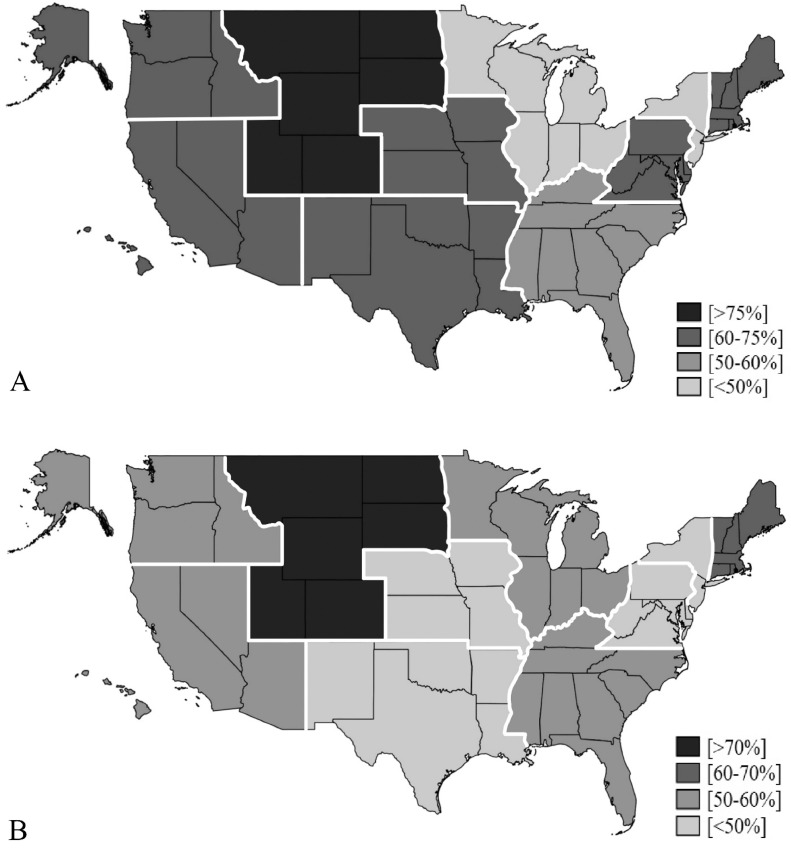
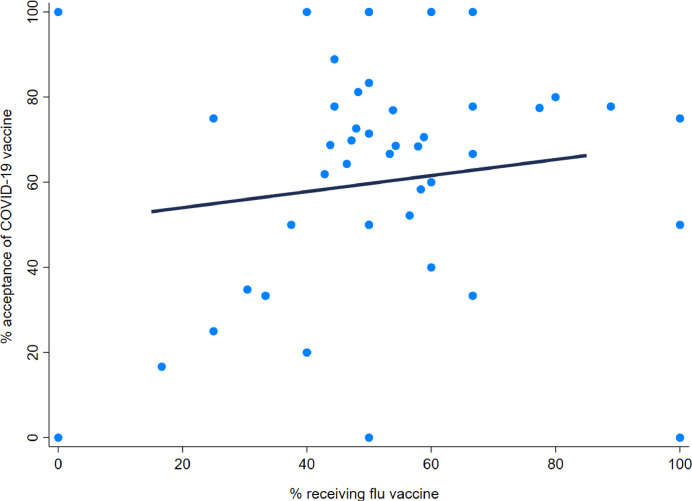
Findings: Of the 672 participants surveyed, 450 (67%) said they would accept a COVID-19 vaccine if it is recommended for them. Males (72%) compared to females, older adults (≥55 years; 78%) compared to younger adults, Asians (81%) compared to other racial and ethnic groups, and college and/or graduate degree holders (75%) compared to people with less than a college degree were more likely to accept the vaccine. When comparing reported influenza vaccine uptake to reported acceptance of the COVID-19 vaccine: 1) participants who did not complete high school had a very low influenza vaccine uptake (10%), while 60% of the same group said they would accept the COVID-19 vaccine; 2) unemployed participants reported lower influenza uptake and lower COVID-19 vaccine acceptance when compared to those employed or retired; and, 3) Black Americans reported lower influenza vaccine uptake and lower COVID-19 vaccine acceptance than all other racial groups reported in our study. Lastly, we identified geographic differences with Department of Health and Human Services (DHHS) regions 2 (New York) and 5 (Chicago) reporting less than 50 percent COVID-19 vaccine acceptance.
Interpretation: Although our study found a 67% acceptance of a COVID-19 vaccine, there were noticeable demographic and geographical disparities in vaccine acceptance. Before a COVID-19 vaccine is introduced to the U.S., public health officials and policymakers must prioritize effective COVID-19 vaccine-acceptance messaging for all Americans, especially those who are most vulnerable.
Keywords: COVID-19; Evidence-based messaging; Health disparities; Vaccine acceptance.
© 2020 The Authors.
Conflict of interest statement
All authors declare no conflict of interest.
Figures
References
-
- Johns Hopkins University & Medicine . Johns Hopkins University (JHU); 2020. Coronavirus resource center: COVID-19 dashboard by the center for systems science and engineering (CSSE)https://coronavirus.jhu.edu/map.html at. (accessed: 29th June 2020)
-
- Centers for Disease Control and Prevention. Coronavirus Disease 2019 (COVID-19): cases in the U.S. 2020. https://www.cdc.gov/coronavirus/2019-ncov/cases-updates/cases-in-us.html(accessed: 29th June 2020).
-
- Centers for Disease Control and Prevention. Coronavirus Dease 2019 (COVID-19): COVID-19 in Racial and Ethnic Minority Groups. 2020. https://www.cdc.gov/coronavirus/2019-ncov/need-extra-precautions/racial-...(accessed: 18th May 2020).
-
- Centers for Disease Control and Prevention. Estimated Influenza Illnesses, Medical Visits, Hospitalizations, and Deaths in the United States - 2018 - 2019 influenza season. 2020. https://www.cdc.gov/flu/about/burden/2018-2019.html(accessed: 18th May 2020).
Grants and funding
LinkOut - more resources
Full Text Sources
Medical
Research Materials
