


Risk factors for severe acute respiratory syndrome coronavirus 2 infection in pregnant women
- PMID: 32838274
- PMCID: PMC7430222
- DOI: 10.1016/j.ajogmf.2020.100198
Risk factors for severe acute respiratory syndrome coronavirus 2 infection in pregnant women
Abstract
Background: Risk factors for severe acute respiratory syndrome coronavirus 2 infection in pregnancy remain poorly understood. Identifying and understanding populations at a heightened risk of acquisition is essential to more effectively target outreach and prevention efforts.
Objective: This study aimed to compare sociodemographic and clinical characteristics of pregnant women with and without severe acute respiratory syndrome coronavirus 2 infection and, among those with severe acute respiratory syndrome coronavirus 2, to compare characteristics of those who reported coronavirus disease symptoms and those who were asymptomatic at diagnosis.
Study design: This retrospective cohort study includes pregnant women who delivered or intended to deliver at Northwestern Memorial Hospital after initiation of a universal testing protocol on admission (April 8, 2020-May 31, 2020). Women were dichotomized by whether they had a positive test result for severe acute respiratory syndrome coronavirus 2. Among women with a positive test result, women were further dichotomized by whether they reported symptoms of coronavirus disease 2019. Bivariable analysis and parametric tests of trend were used for analyses. Logistic regression was used to control for potential confounders and to examine effect modification between race and ethnicity and any other identified risk factors.
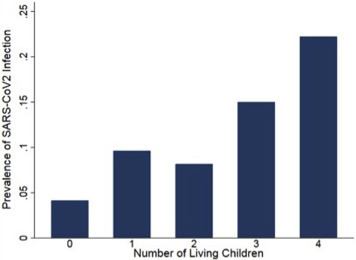
Results: During the study period, 1418 women met inclusion criteria, of whom 101 (7.1%) had a positive test result for severe acute respiratory syndrome coronavirus 2. Of the 101 women who had a positive test result, 77 (76.2%) were symptomatic at the time of diagnosis. Compared with women who had a negative test result for severe acute respiratory syndrome coronavirus 2, those with a positive test result were younger and were more likely to have public insurance, to identify as black or African American or Latina, to be unmarried, to be obese, to have preexisting pulmonary disease, and to have living children. An increasing number of living children was associated with an increasing risk of severe acute respiratory syndrome coronavirus 2 infection, and this finding persisted after controlling for potential confounders. There was no effect modification between race or ethnicity and having living children with regard to the risk of infection. There were no significant differences identified between women who were symptomatic and asymptomatic.
Conclusion: Many risk factors for severe acute respiratory syndrome coronavirus 2 infection in pregnancy are similar to the social and structural determinants of health that have been reported in the general population. The observed association between severe acute respiratory syndrome coronavirus 2 infection and having children raises the possibility of children themselves being vectors of viral spread or behavior patterns of parents being mediators of acquisition.
Keywords: COVID-19; health disparities; perinatal epidemiology; social determinants of health.
© 2020 Elsevier Inc. All rights reserved.
Figures

References
-
- World Health Organization Coronavirus disease (COVID-19) weekly epidemiological update and weekly operational update. 2020. https://www.who.int/emergencies/diseases/novel-coronavirus-2019/situatio... Available at:
-
- Centers for Disease Control and Prevention Coronavirus Disease 2019 (COVID-19): Cases in the U.S. 2020. https://www.cdc.gov/coronavirus/2019-ncov/cases-updates/cases-in-us.html Available at:
-
- New York State Office of Governor Andrew M. Cuomo. Amid ongoing COVID-19 pandemic, Governor Cuomo announces results of completed antibody testing study of 15,000 people showing 12.3 percent of population has COVID-19 antibodies [press release] https://www.governor.ny.gov/news/amid-ongoing-covid-19-pandemic-governor... Available at:
MeSH terms
Grants and funding
LinkOut - more resources
Full Text Sources
Medical
Miscellaneous
