Safety, time and cost evaluation of automated and semi-automated drug distribution systems in hospitals: a systematic review
- PMID: 32839256
- PMCID: PMC7447254
- DOI: 10.1136/ejhpharm-2018-001791
Safety, time and cost evaluation of automated and semi-automated drug distribution systems in hospitals: a systematic review
Abstract
Objectives: To systematically review automated and semi-automated drug distribution systems (DDSs) in hospitals and to evaluate their effectiveness on medication safety, time and costs of medication care.
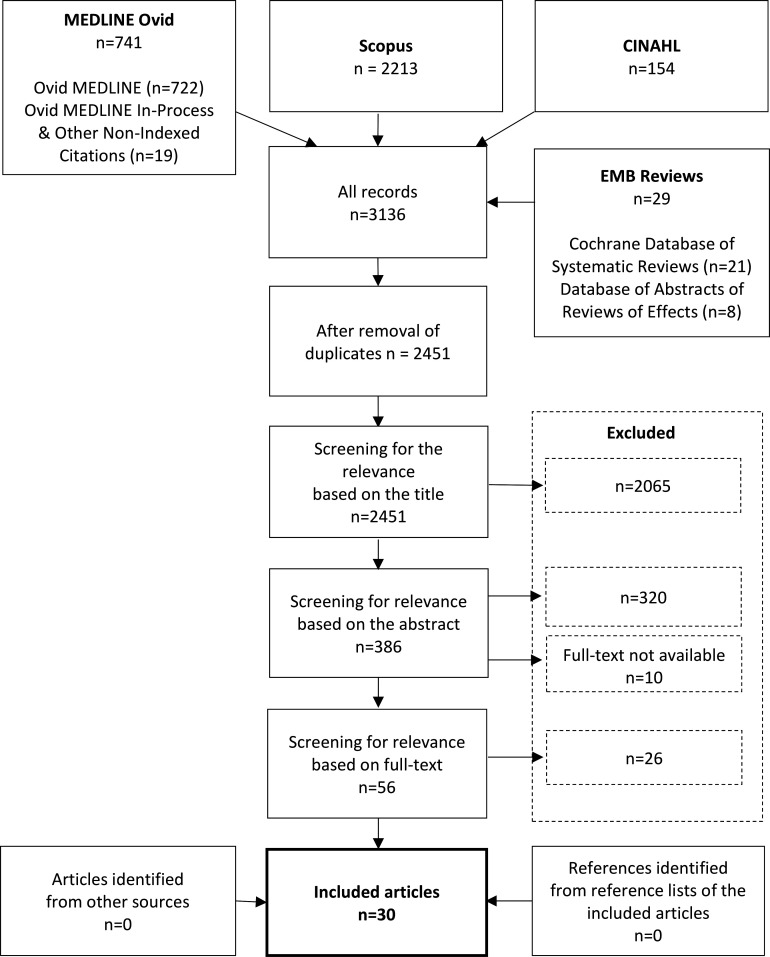
Methods: A systematic literature search was conducted in MEDLINE Ovid, Scopus, CINAHL and EMB Reviews covering the period 2005 to May 2016. Studies were included if they (1) concerned technologies used in the drug distribution and administration process in acute care hospitals and (2) reported medication safety, time and cost-related outcomes.
Results: Key outcomes, conclusions and recommendations of the included studies (n=30) were categorised according to the dispensing method: decentralised (n=19 studies), centralised (n=6) or hybrid system (n=5). Patient safety improved (n=27) with automation, and reduction in medication errors was found in all three systems. Centralised and decentralised systems were reported to support clinical pharmacy practice in hospitals. The impact of the medication distribution system on time allocation such as labour time, staffing workload or changes in work process was explored in the majority of studies (n=24). Six studies explored economic outcomes.
Conclusions: No medication distribution system was found to be better than another in terms of outcomes assessed in the studies included in the systematic review. All DDSs improved medication safety and quality of care, mainly by decreasing medication errors. However, many error types still remained-for example, prescribing errors. Centralised and hybrid systems saved more time than a decentralised system. Costs of medication care were reduced in decentralised systems mainly in high-expense units. However, no evidence was shown that implementation of decentralised systems in small units would save costs. More comparable evidence on the benefits and costs of decentralised and hybrid systems should be available. Changes in processes due to a new DDS may create new medication safety risks; to minimise these risks, training and reallocation of staff resources are needed.
Keywords: Health & safety; clinical pharmacy; dispensing robots; drug storage and distribution; hospital pharmacy automation; medical errors; systematic review; uni dose system.
© European Association of Hospital Pharmacists 2020. No commercial re-use. See rights and permissions. Published by BMJ.
Conflict of interest statement
Competing interests: None declared.
Figures
References
Publication types
MeSH terms
Substances
LinkOut - more resources
Full Text Sources
Medical