


Intensive Weight Loss Intervention and Cancer Risk in Adults with Type 2 Diabetes: Analysis of the Look AHEAD Randomized Clinical Trial
- PMID: 32841523
- PMCID: PMC8855671
- DOI: 10.1002/oby.22936
Intensive Weight Loss Intervention and Cancer Risk in Adults with Type 2 Diabetes: Analysis of the Look AHEAD Randomized Clinical Trial
Abstract
Objective: This study was designed to determine whether intensive lifestyle intervention (ILI) aimed at weight loss lowers cancer incidence and mortality.
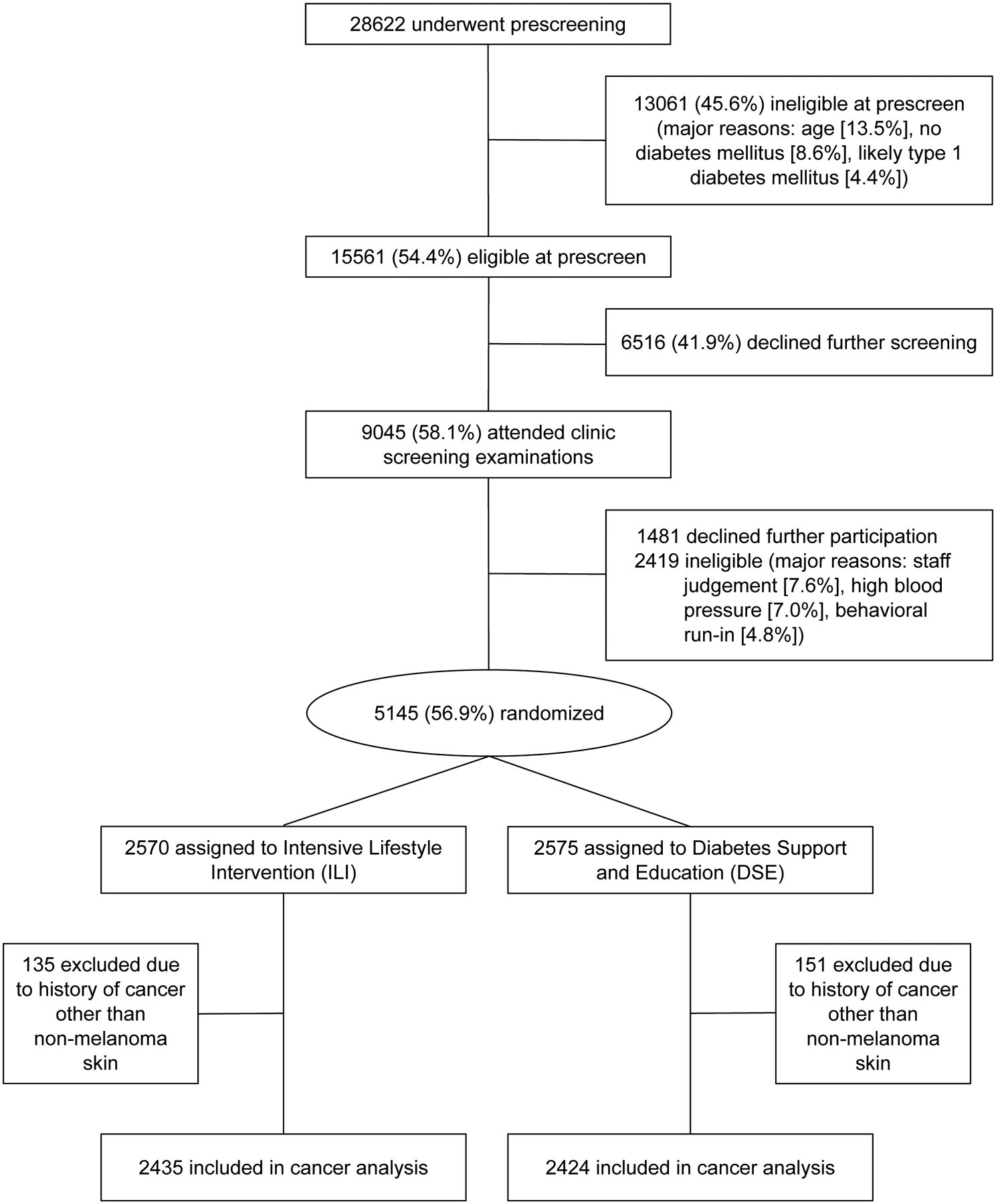
Methods: Data from the Look AHEAD trial were examined to investigate whether participants randomized to ILI designed for weight loss would have reduced overall cancer incidence, obesity-related cancer incidence, and cancer mortality, as compared with the diabetes support and education (DSE) comparison group. This analysis included 4,859 participants without a cancer diagnosis at baseline except for nonmelanoma skin cancer.
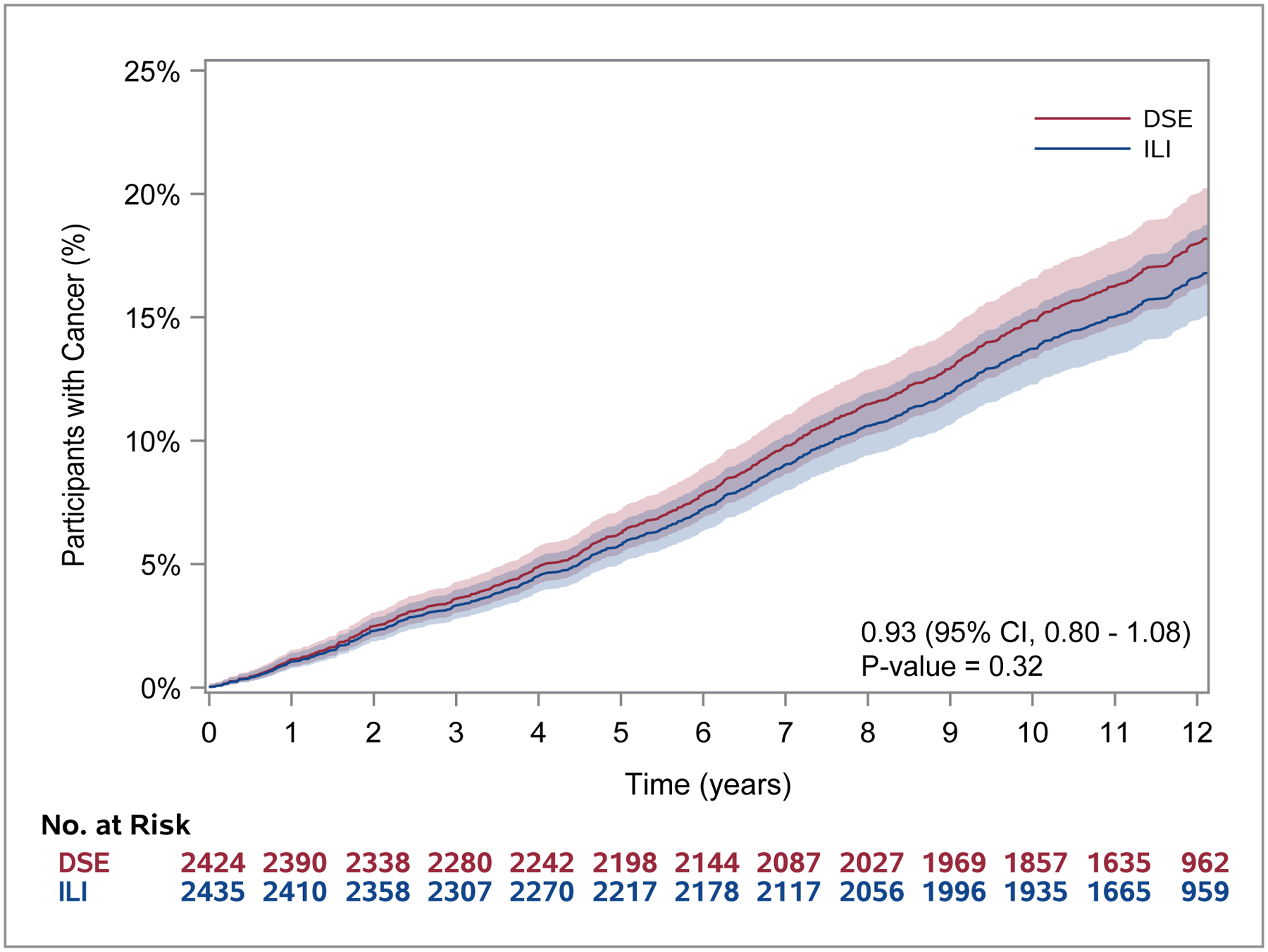
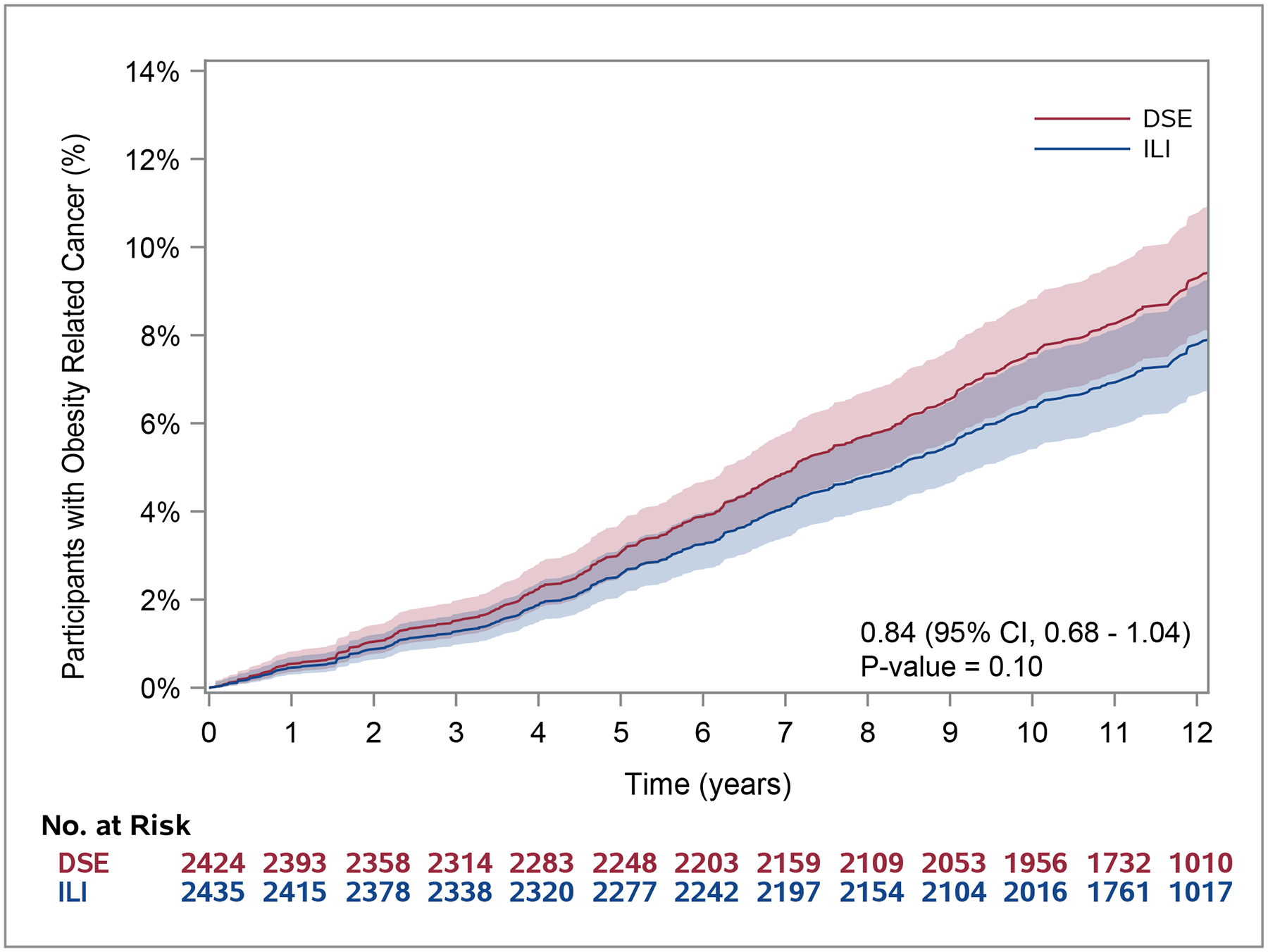
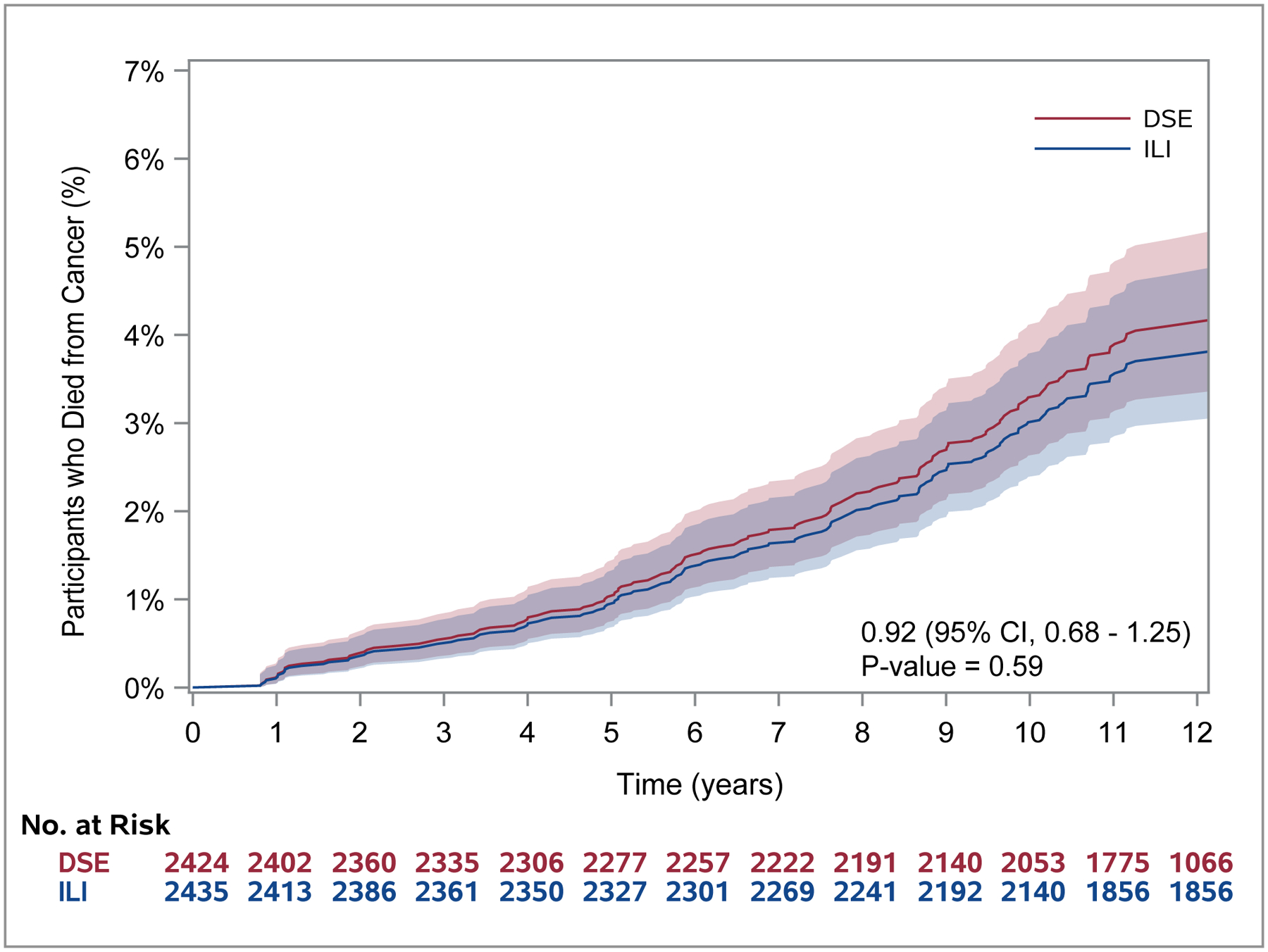
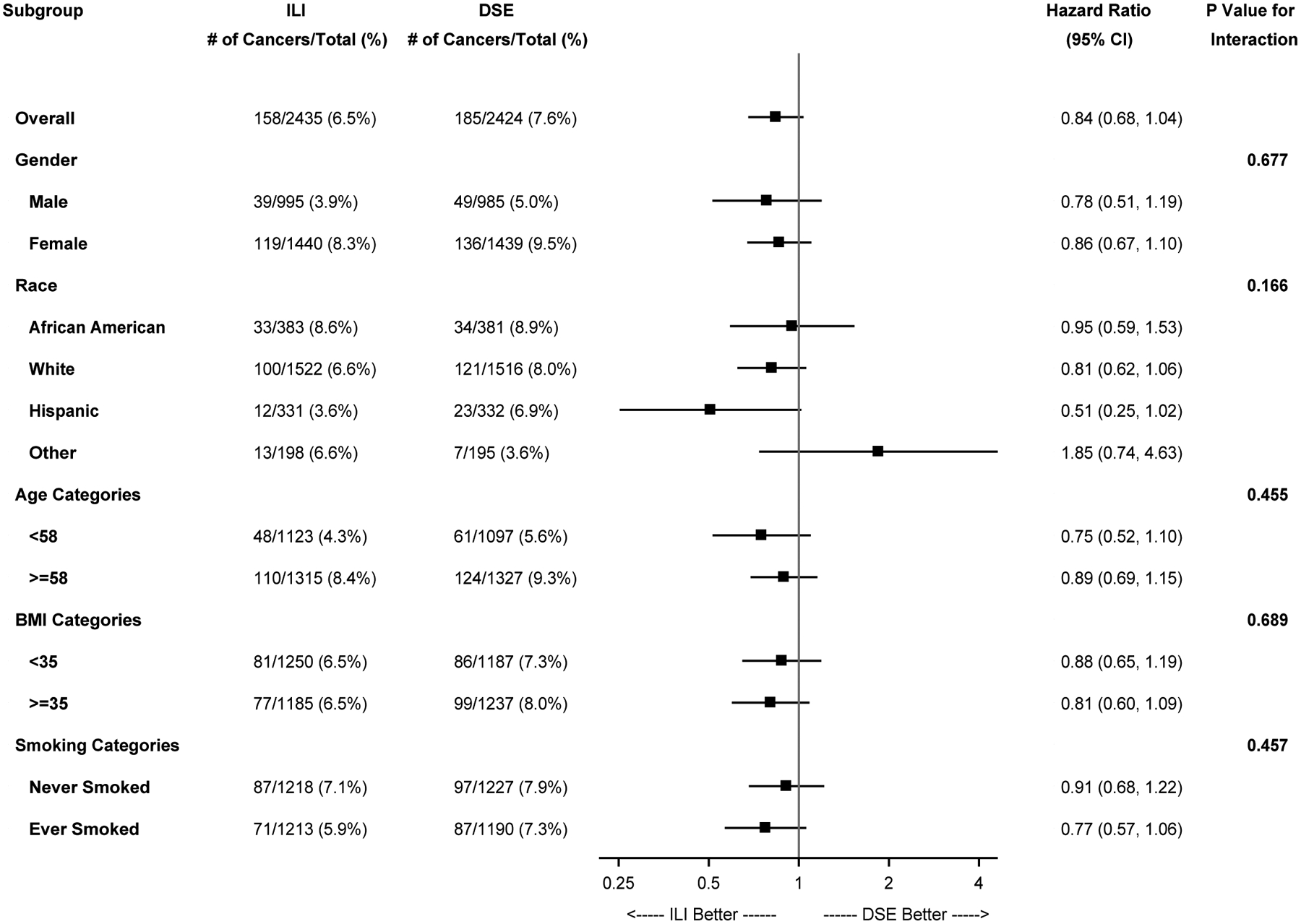
Results: After a median follow-up of 11 years, 684 participants (332 in ILI and 352 in DSE) were diagnosed with cancer. The incidence rates of obesity-related cancers were 6.1 and 7.3 per 1,000 person-years in ILI and DSE, respectively, with a hazard ratio (HR) of 0.84 (95% CI: 0.68-1.04). There was no significant difference between the two groups in total cancer incidence (HR, 0.93; 95% CI: 0.80-1.08), incidence of nonobesity-related cancers (HR, 1.02; 95% CI: 0.83-1.27), or total cancer mortality (HR, 0.92; 95% CI: 0.68-1.25).
Conclusions: An ILI aimed at weight loss lowered incidence of obesity-related cancers by 16% in adults with overweight or obesity and type 2 diabetes. The study sample size likely lacked power to determine effect sizes of this magnitude and smaller.
Trial registration: ClinicalTrials.gov NCT00017953.
© 2020 The Obesity Society.
Conflict of interest statement
Figures
Comment in
-
Obesity and Cancer: It's Causal and…Reversible?Obesity (Silver Spring). 2020 Sep;28(9):1575. doi: 10.1002/oby.22962. Obesity (Silver Spring). 2020. PMID: 32841526 Free PMC article. No abstract available.
References
-
- Chen Y, Liu L, Wang X, Wang J, Yan Z, Cheng J, Gong G, Li G. Body mass index and risk of gastric cancer: a meta-analysis of a population with more than ten million from 24 prospective studies. Cancer Epidemiol Biomarkers Prev. 2013. Aug;22(8):1395–408. doi: 10.1158/1055-9965.EPI-13-0042. - DOI - PubMed
Publication types
MeSH terms
Associated data
Grants and funding
- U01 DK057151/DK/NIDDK NIH HHS/United States
- U01 DK057154/DK/NIDDK NIH HHS/United States
- U01 DK056992/DK/NIDDK NIH HHS/United States
- U01 DK057171/DK/NIDDK NIH HHS/United States
- P30 DK079637/DK/NIDDK NIH HHS/United States
- U01 DK057136/DK/NIDDK NIH HHS/United States
- U01 DK057002/DK/NIDDK NIH HHS/United States
- U01 DK057177/DK/NIDDK NIH HHS/United States
- M01 RR001066/RR/NCRR NIH HHS/United States
- U01 DK057078/DK/NIDDK NIH HHS/United States
- U01 DK057008/DK/NIDDK NIH HHS/United States
- U01 DK057149/DK/NIDDK NIH HHS/United States
- M01 RR001346/RR/NCRR NIH HHS/United States
- P30 DK048520/DK/NIDDK NIH HHS/United States
- U01 DK057135/DK/NIDDK NIH HHS/United States
- UL1 RR024153/RR/NCRR NIH HHS/United States
- P30 DK046204/DK/NIDDK NIH HHS/United States
- M01 RR002719/RR/NCRR NIH HHS/United States
- M01 RR000056/RR/NCRR NIH HHS/United States
- U01 DK057219/DK/NIDDK NIH HHS/United States
- U01 AG073697/AG/NIA NIH HHS/United States
- U01 DK057182/DK/NIDDK NIH HHS/United States
- U01 DK057131/DK/NIDDK NIH HHS/United States
- M01 RR000051/RR/NCRR NIH HHS/United States
- U01 DK056990/DK/NIDDK NIH HHS/United States
- UL1 RR025758/RR/NCRR NIH HHS/United States
- U01 DK057178/DK/NIDDK NIH HHS/United States
