


Microwave- and heat-based decontamination of N95 filtering facepiece respirators: a systematic review
- PMID: 32841704
- PMCID: PMC7443086
- DOI: 10.1016/j.jhin.2020.08.016
Microwave- and heat-based decontamination of N95 filtering facepiece respirators: a systematic review
Abstract
Background: In pandemics such as COVID-19, shortages of personal protective equipment are common. One solution may be to decontaminate equipment such as facemasks for reuse.
Aim: To collect and synthesize existing information on decontamination of N95 filtering facepiece respirators (FFRs) using microwave and heat-based treatments, with special attention to impacts on mask function (aerosol penetration, airflow resistance), fit, and physical traits.
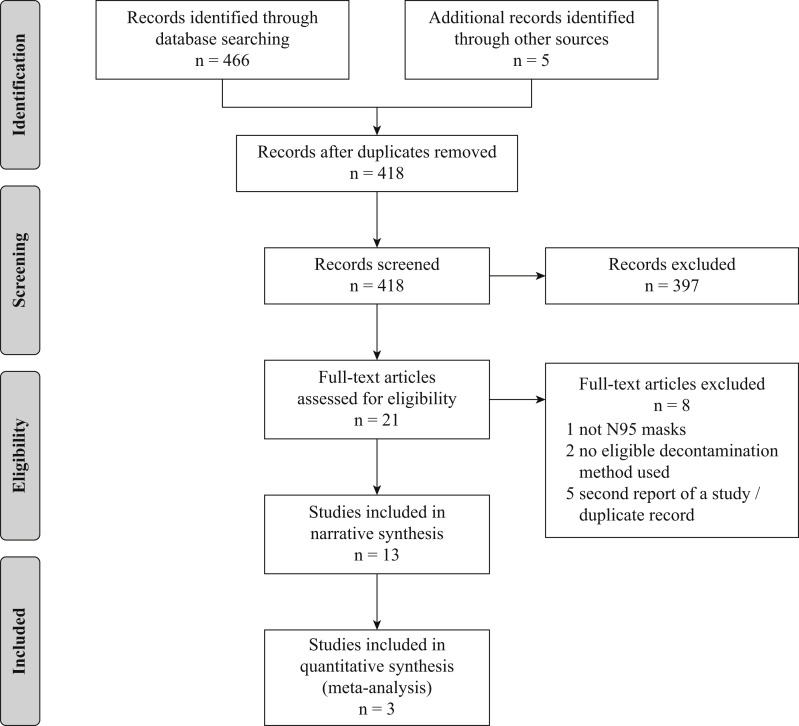
Methods: A systematic review (PROSPERO CRD42020177036) of literature available from Medline, Embase, Global Health, and other sources was conducted. Records were screened independently by two reviewers, and data was extracted from studies that reported on effects of microwave- or heat-based decontamination on N95 FFR performance, fit, physical traits, and/or reductions in microbial load.
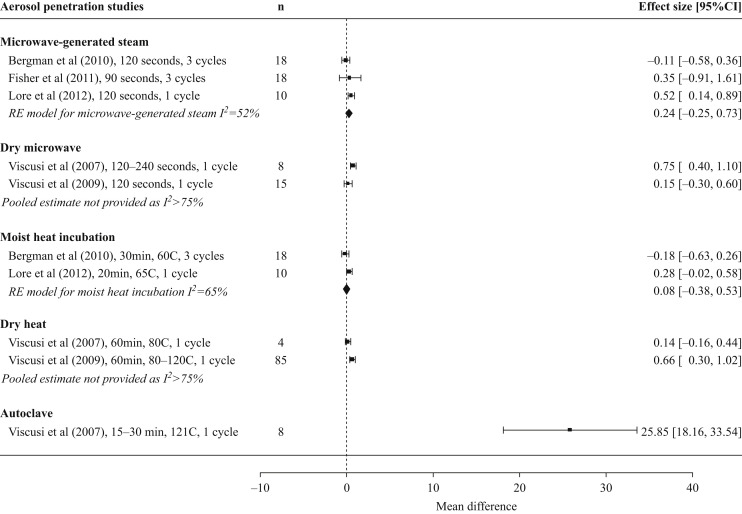
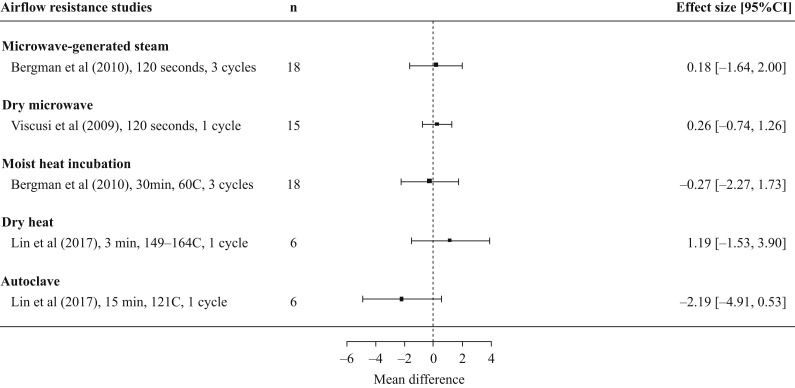
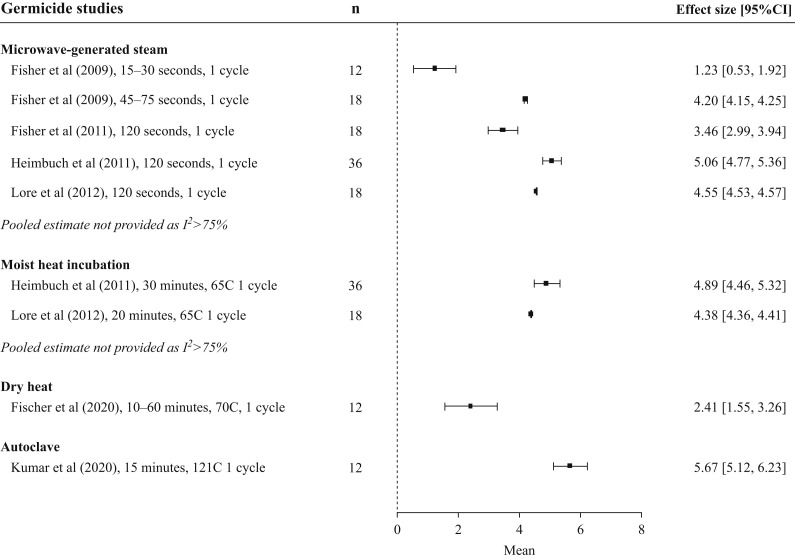
Findings: Thirteen studies were included that used dry/moist microwave irradiation, heat, or autoclaving. All treatment types reduced pathogen load by a log10 reduction factor of at least three when applied for sufficient duration (>30 s microwave, >60 min dry heat), with most studies assessing viral pathogens. Mask function (aerosol penetration <5% and airflow resistance <25 mmH2O) was preserved after all treatments except autoclaving. Fit was maintained for most N95 models, though all treatment types caused observable physical damage to at least one model.
Conclusions: Microwave irradiation and heat may be safe and effective viral decontamination options for N95 FFR reuse during critical shortages. The evidence does not support autoclaving or high-heat (>90°C) approaches. Physical degradation may be an issue for certain mask models, and more real-world evidence on fit is needed.
Keywords: COVID-19; Decontamination; Filtering facepiece respirator; N95; Pandemic; Personal protective equipment.
Copyright © 2020 The Healthcare Infection Society. Published by Elsevier Ltd. All rights reserved.
Figures
References
-
- Centers for Disease Control and Prevention . 2020. Strategies for optimizing the supply of N95 respirators: conventional capacity strategies.https://www.cdc.gov/coronavirus/2019-ncov/hcp/respirators-strategy/conve... Available at: [last accessed March 2020]
-
- Government of Canada . 2020. Infection prevention and control for novel coronavirus (2019-nCoV): interim guidance for acute healthcare settings.https://www.canada.ca/en/public-health/services/diseases/2019-novel-coro... Available at: [last accessed March 2020]
-
- U.S. Government Publishing Office . 1999. Non-powered air-purifying particulate filter efficiency level determination.https://www.ecfr.gov/cgi-bin/text-idx?SID=5b2666d4940f00b38d815af01a2e70... Available at: [last accessed April 2020]
-
- Tan N.C., Goh L.G., Lee S.S. Family physicians' experiences, behaviour, and use of personal protection equipment during the SARS outbreak in Singapore: Do they fit the Becker Health Belief Model? Asia Pac J Public Health. 2006;18:49–56. - PubMed
Publication types
MeSH terms
LinkOut - more resources
Full Text Sources
Research Materials
Miscellaneous
