. 2020 Dec:223:117293.
doi: 10.1016/j.neuroimage.2020.117293. Epub 2020 Aug 22.

Deep learning identifies morphological determinants of sex differences in the pre-adolescent brain

Affiliations

Deep learning identifies morphological determinants of sex differences in the pre-adolescent brain

Ehsan Adeli et al. Neuroimage. 2020 Dec.

Abstract

The application of data-driven deep learning to identify sex differences in developing brain structures of pre-adolescents has heretofore not been accomplished. Here, the approach identifies sex differences by analyzing the minimally processed MRIs of the first 8144 participants (age 9 and 10 years) recruited by the Adolescent Brain Cognitive Development (ABCD) study. The identified pattern accounted for confounding factors (i.e., head size, age, puberty development, socioeconomic status) and comprised cerebellar (corpus medullare, lobules III, IV/V, and VI) and subcortical (pallidum, amygdala, hippocampus, parahippocampus, insula, putamen) structures. While these have been individually linked to expressing sex differences, a novel discovery was that their grouping accurately predicted the sex in individual pre-adolescents. Another novelty was relating differences specific to the cerebellum to pubertal development. Finally, we found that reducing the pattern to a single score not only accurately predicted sex but also correlated with cognitive behavior linked to working memory. The predictive power of this score and the constellation of identified brain structures provide evidence for sex differences in pre-adolescent neurodevelopment and may augment understanding of sex-specific vulnerability or resilience to psychiatric disorders and presage sex-linked learning disabilities.

Keywords: Adolescents; Cerebellum; Deep learning; Pubertal development; Sex differences; Study confounders.


Conflict of interest statement

None of the authors has conflicts of interest with the reported data or their interpretation.

Figures
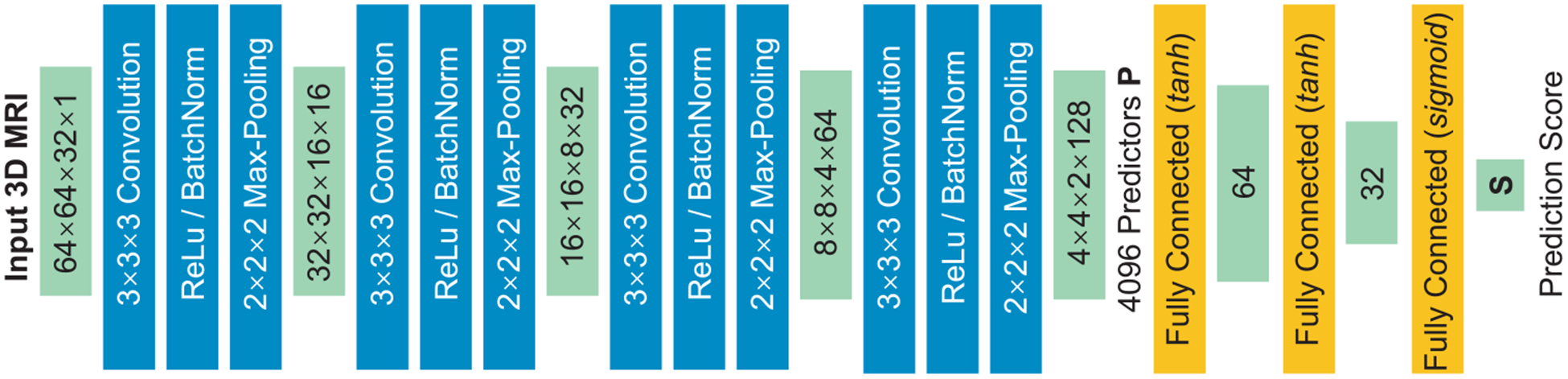
Fig. 7.
Fig. 7.
Architecture of our deep learning model.
Fig. C.1.
Fig. C.1.
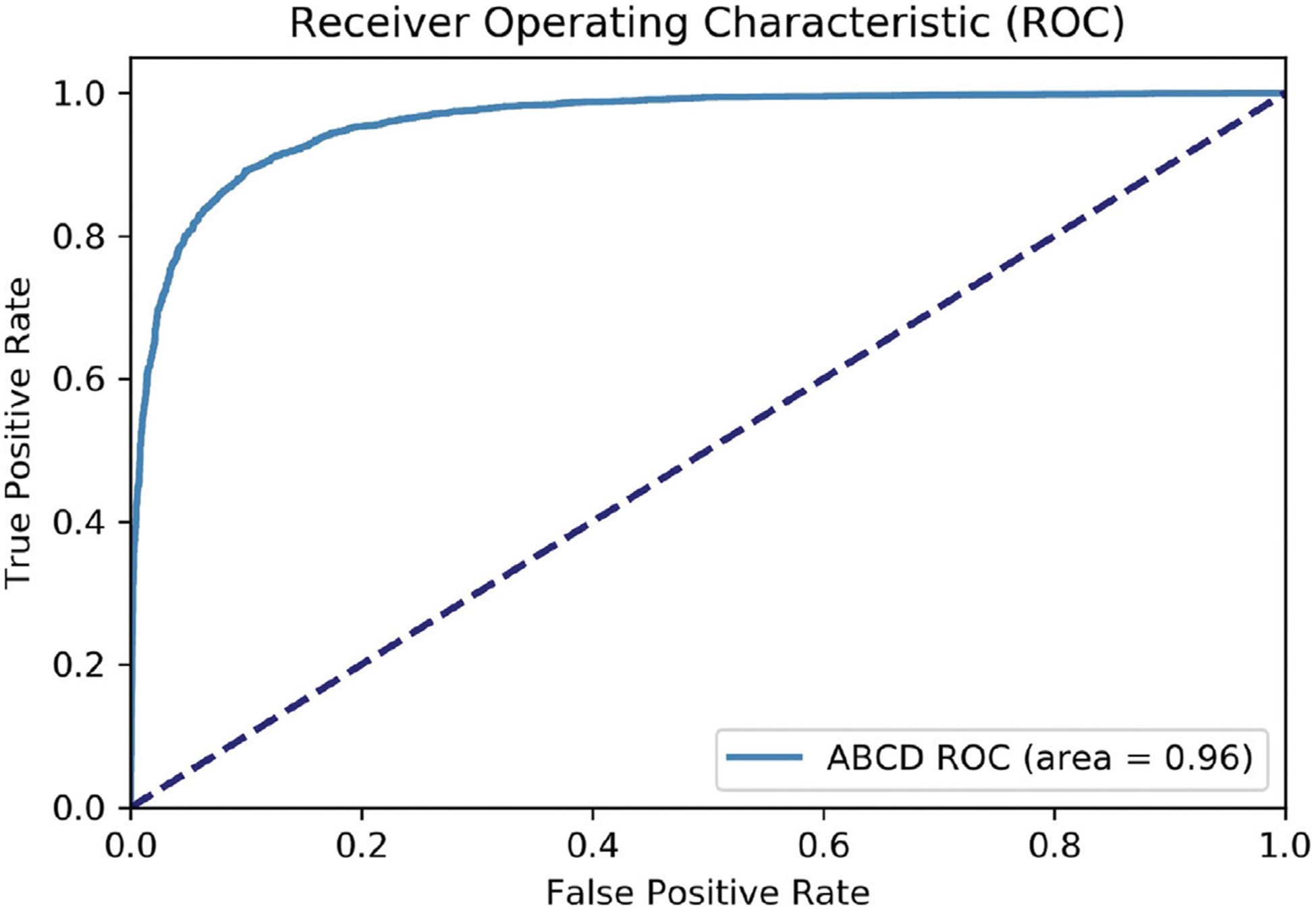
Receiver Operating Characteristics (ROC) curve of the classifier differentiating boys and girls based on MR images. The blue curve shows the results of the model based on ABCD data.
Fig. 1.
Fig. 1.
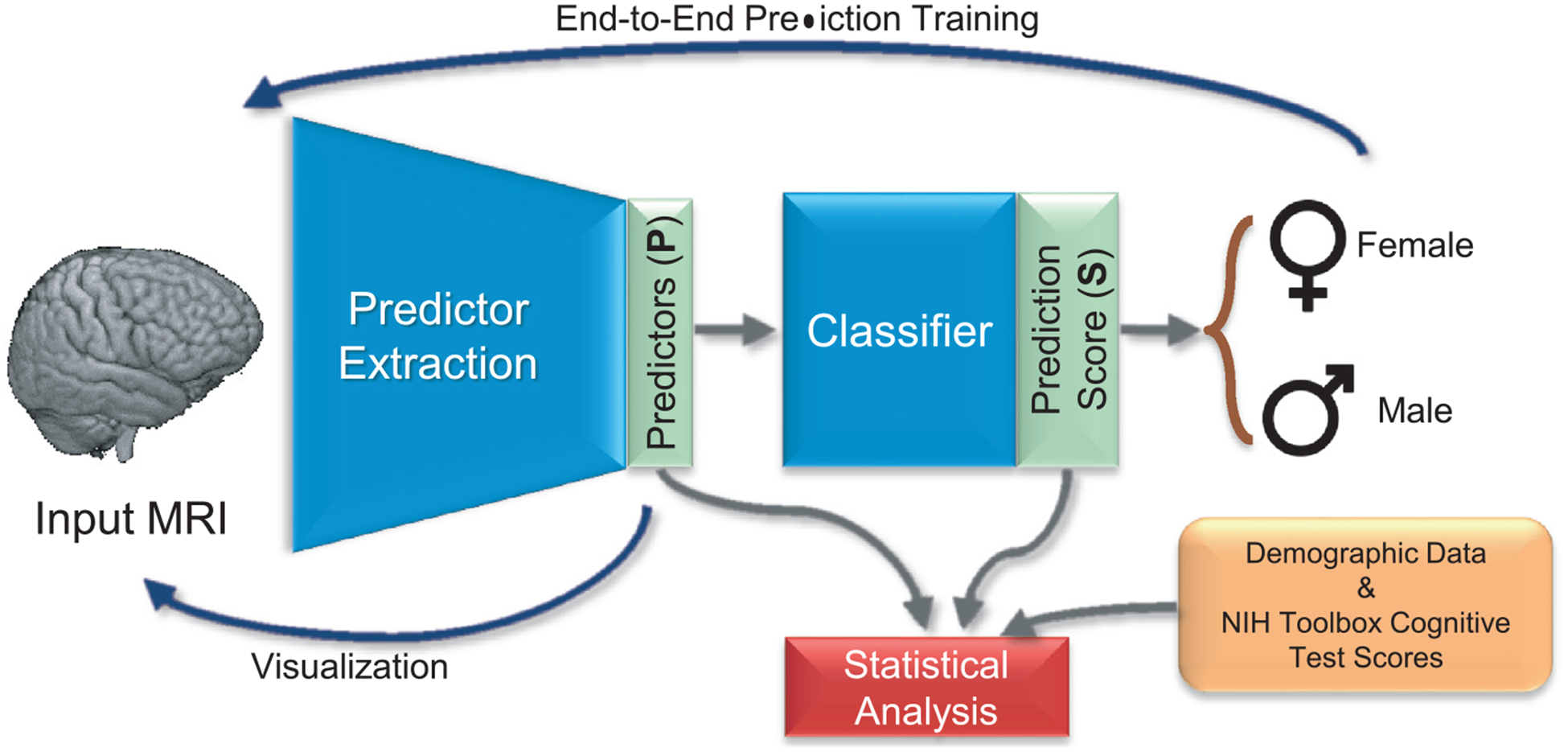
Overview of the proposed analysis. The convolutional neural network (CNN) automatically extracts predictors (P) from the minimally processed MRI. Based on P, the classifier computes a prediction score (S) that assigns the MRI to either sex. This deep learning analysis operates directly on voxel-level data omitting any hypothesis or assumption related to brain regions or tissue measurements (like regional volumes). Statistical analysis relates obtained results to NIH Toolbox cognitive test scores, creates confounder-free visualization of the patterns predicting sex (a.k.a. saliency map), and examines volume scores of those regions that contribute significantly to the prediction according to the saliency map.
Fig. 2.
Fig. 2.
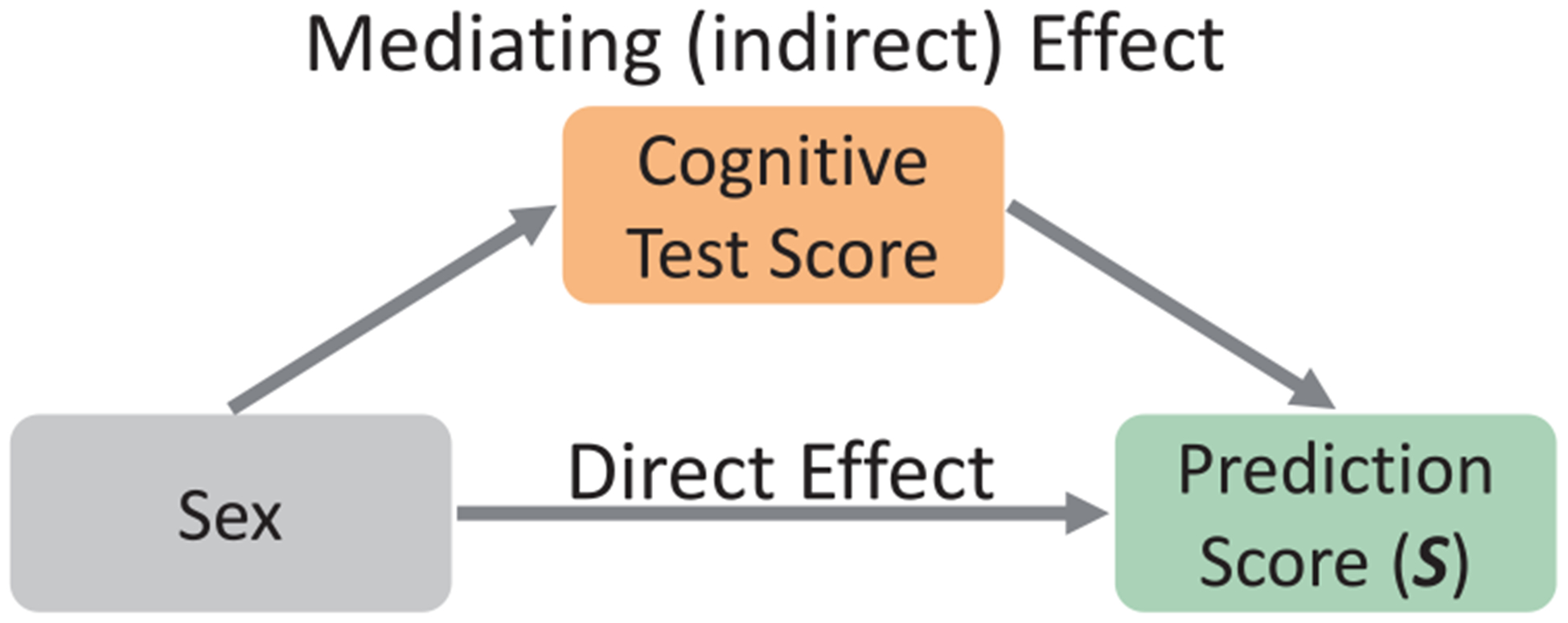
Mediation analysis to observe how much of the variance in the prediction score was explained by the observed sex and how much was influenced by the NIH toolbox score.
Fig. 3.
Fig. 3.
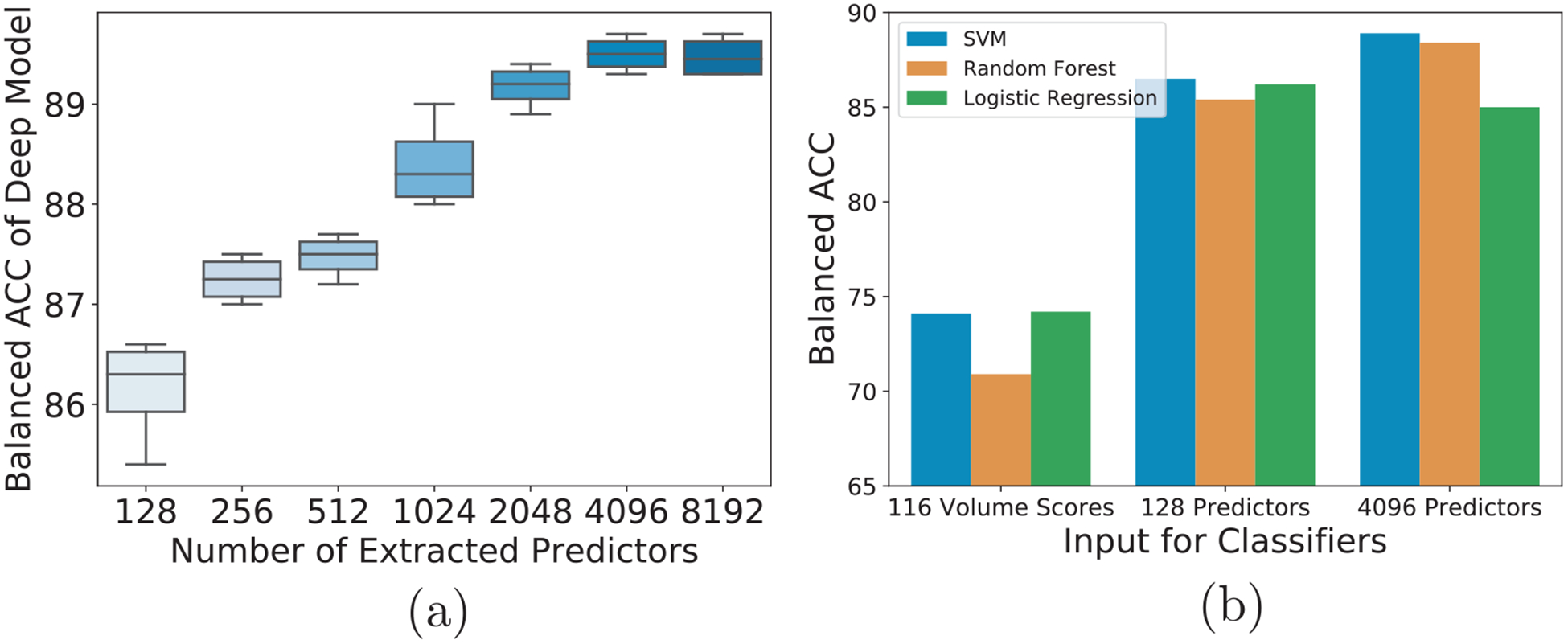
Results of the deep learning model predicting sex with different numbers of predictors (a), and different classifiers (b).
Fig. 4.
Fig. 4.
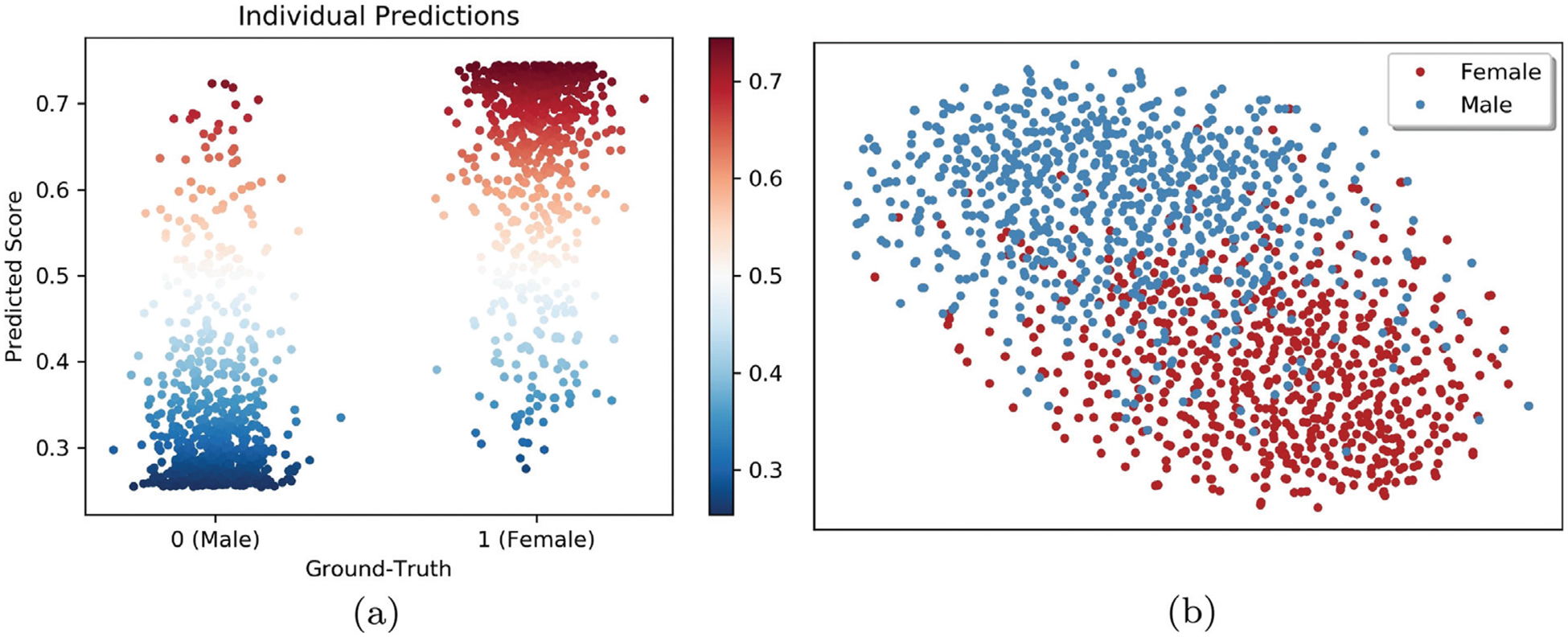
Visualization of Predictors and the Prediction Score as determined by the deep learning model. (a) Prediction Score (S) of each participant as a function of their observed sex. These two figures show that our deep learning model can effectively reduce the MRIs to a vector of predictors (P) and then to a scalar value (S) that distinguishes girls from boys. (b) t-Distributed Stochastic Neighbor Embedding (tSNE) (Maaten and Hinton, 2008) projection of extracted Predictors (P) in 2D space. Each point indicates one adolescent; color represents sex. The axes show the relative location of each individual with respect to their neighbors in 2D with neighborhoods reflecting those of the high dimensional space (according to Maaten and Hinton, 2008).
Fig. 5.
Fig. 5.
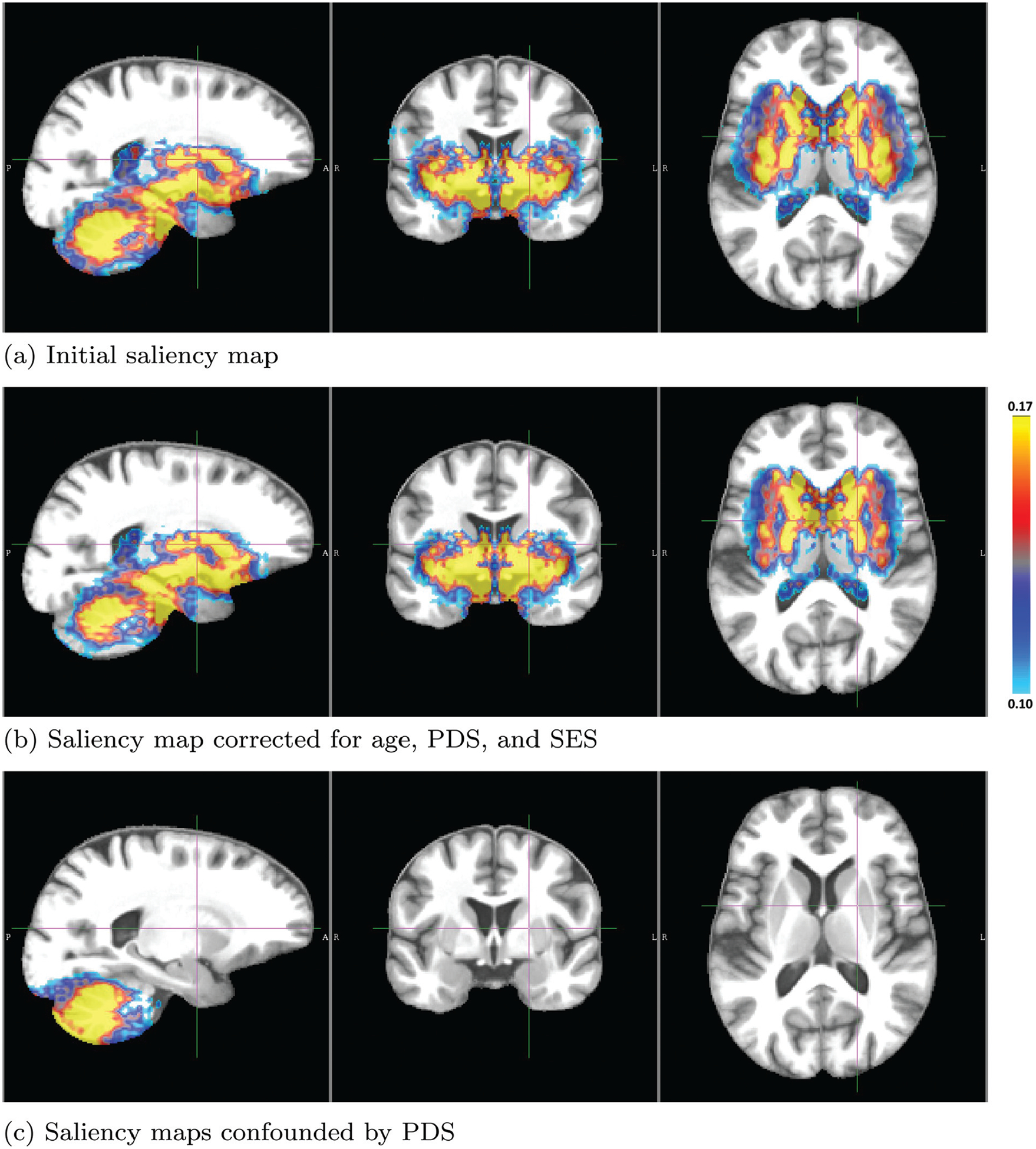
Saliency maps defining predictive brain areas for distinguishing boys from girls in the ABCD study; (a) original and (b) corrected for confounding factors. In the developing brain of 9 and 10-year-olds, the factors distinguishing boys from girls mainly lie in the subcortical and cerebellar regions. (c) Regional brain pattern of sex differences confounded by PDS. Note, computing saliency maps requires scaling of the maps so that the resulting importance values are only meaningful within one saliency map but cannot be directly compared across maps.
Fig. 6.
Fig. 6.
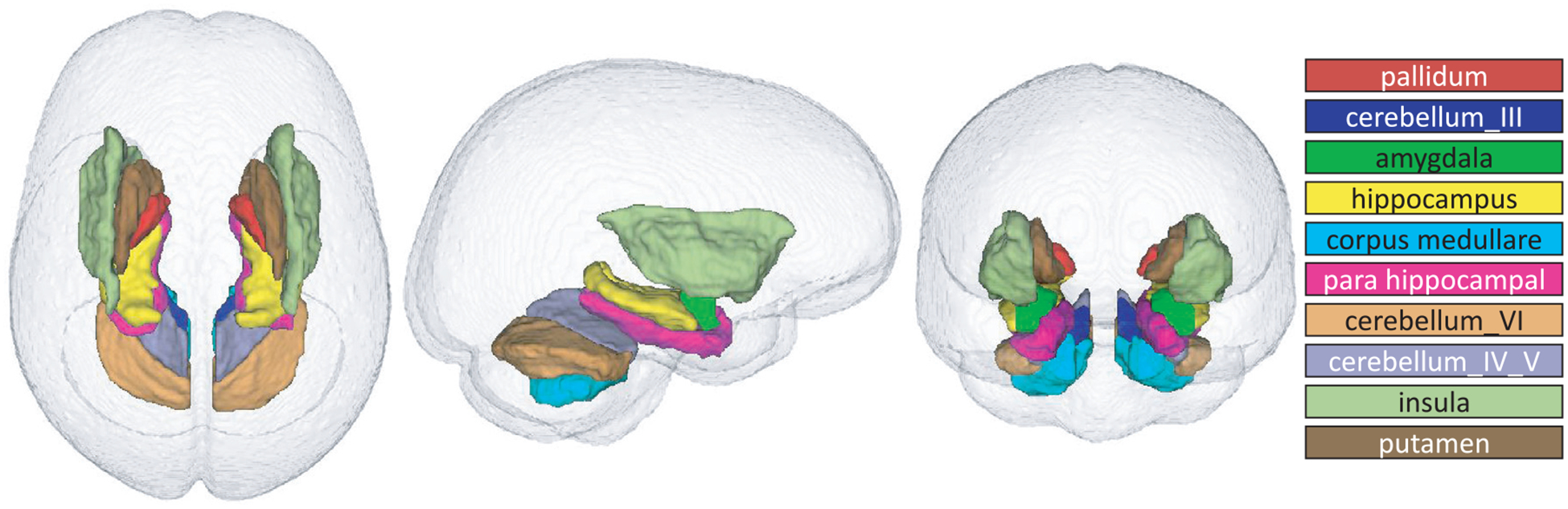
Top 10 regions relevant for distinguishing sex as determined by the deep learning framework. Some of these regions are smaller in girls (cerebellar lobules III and IV/V, amygdala; and insula, pallidum, para hippocampus, and putamen), while hippocampus, corpus medullare, and cerebellar lobule VI are smaller in boys. p-Values of group differences of ROI volumes were calculated using two sample t-test. NS denotes not significant

References

    1. Abadi M, Barham P, Chen J, Chen Z, Davis A, Dean J, Devin M, Ghemawat S, Irving G, Isard M, 2016. Tensorflow: A system for large-scale machine learning. In: Proceedings of the 12th USENIX Symposium on Operating Systems Design and Implementation (OSDI 16), pp. 265–283
    1. Adeli E, Kwon D, Zhao Q, Pfefferbaum A, Zahr NM, Sullivan EV, Pohl KM, 2018. Chained regularization for identifying brain patterns specific to HIV infection. NeuroImage 183, 425–437 - PMC - PubMed
    1. Adeli E, Li X, Kwon D, Zhang Y, Pohl K, 2020. Logistic regression confined by cardinality-constrained sample and feature selection. IEEE Trans. Pattern Anal. Mach. Intell 42 (7), 1713–1728 - PMC - PubMed
    1. Aggleton JP, O’Mara SM, Vann SD, Wright NF, Tsanov M, Erichsen JT, 2010. Hippocampal-anterior thalamic pathways for memory: uncovering a network of direct and indirect actions. Eur. J. Neurosci 31 (12), 2292–2307. doi: 10.1111/j.1460-9568.2010.07251.x - DOI - PMC - PubMed
    1. Akshoomoff N, Newman E, Thompson WK, McCabe C, Bloss CS, Chang L, Amaral DG, Casey B, Ernst TM, Frazier JA, 2014. The NIH Toolbox Cognition Battery: Results from a large normative developmental sample (PING). Neuropsychology 28 (1), 1. - PMC - PubMed

Publication types